





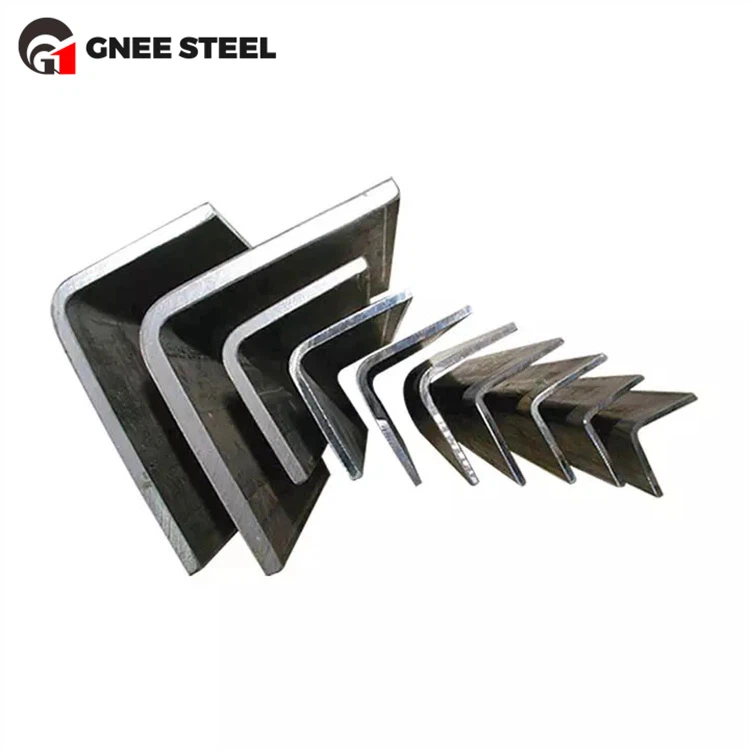


Gnee Steel (Tianjin) Co., Ltd. is one of the most professional carbon structrual angle steel manufacturers and suppliers in China, also supports customized service. If you're going to buy carbon structrual angle steel made in China, welcome to get free sample from our factory. Quality products and low price are available.
Gnee Angle Bar
Gnee Angle Bar Products Components
Carbon is one of the main components of angle steel, accounting for more than 50% of angle steel, because carbon can improve the hardness and strength of angle steel. Generally speaking, the carbon content of angle steel is between 0.12% and 0.20%. If the carbon content is too low, the hardness and strength of angle steel will decrease; if the carbon content is too high, the machinability of angle steel will decrease.
Sulfur is another key component, because too much sulfur will make the angle steel brittle. In order to ensure the strength and toughness of the angle steel, the sulfide content should be controlled below 0.05%. In addition, manganese and phosphorus are also important components of angle steel. Manganese can increase the hardness and tensile strength of angle steel, but if the manganese content is too high, it will reduce the NMenability of angle steel. It should be controlled between 0.15%-0.40%. Phosphorus is a brittle element that will reduce the toughness and impact resistance of angle steel. It should be controlled below 0.045%.
Gnee Angle Bar Products Production Process
Raw material preparation: The main raw material of angle steel is hot-rolled or cold-rolled steel plate, and steel plates of different thicknesses and sizes are selected according to needs. In addition, some auxiliary materials such as welding wire, arc welding equipment, etc. need to be prepared.
Processing preparation: According to the specifications and size requirements of the angle steel, use professional cutting equipment to cut the steel plate into appropriate sizes. The cut steel plate needs to be rust-proofed to remove surface oxides and impurities to improve the purity of the steel and the quality of subsequent processing.
Angle steel forming: The cut steel plate is formed into the shape of the angle steel by a roller press. This process requires precise control to ensure that the size and shape of the angle steel meet the requirements.
Welding: The formed angle steel needs to be welded, usually using arc welding method. Welding wire and arc welding equipment are used during the welding process to ensure the stability and strength of the angle steel.
Pickling: After welding, pickling is carried out to remove surface dirt and oxides to make the surface of the angle steel clean and smooth.
Surface treatment: The surface of the angle steel usually needs to be galvanized, sprayed with anti-corrosion paint, etc. to protect its surface from corrosion and oxidation.
Shaping: After the surface treatment is completed, it is shaped by mechanical forming equipment to ensure the accuracy of the size and shape of the angle steel.
Inspection and packaging: Finally, the angle steel is inspected for quality, including size, shape, welding quality, etc. Qualified angle steels are packaged, labeled and stored as needed.
Gnee Angle Bar Products Image


If you have more needs and questions about Gnee Angle Bar, please contact us!