





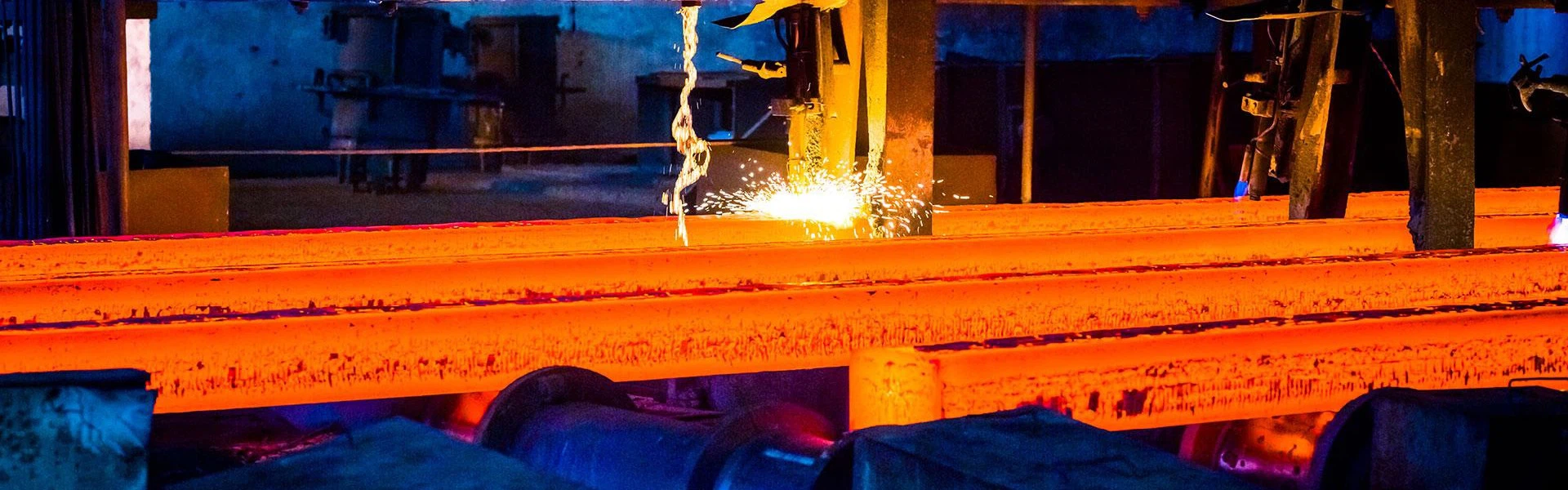
Shipbuilding Steel Plate
What Is Ship Steel Plate
Ship plate refers to the hot rolled steel plate produced according to the requirements of the Classification Society construction specification for the manufacture of hull structure, hull structural steel in accordance with its minimum yield point divided into strength levels: general strength structural steel and high strength structural steel.
Advantages of ship plate
High Strength
Shipbuilding steel plate has high yield strength and tensile strength, which can withstand a large amount of external loads and play an important role in shipbuilding and ocean engineering.
Good Corrosion Resistance
Shipbuilding steel has good corrosion resistance when immersed in seawater or other corrosive media, which makes Shipbuilding steel plate very suitable for engineering projects in the marine environment.
Excellent Impact Toughness
Marine steel plates have excellent impact toughness and are able to maintain outstanding impact resistance at low temperatures, which is essential for the safety of ships in extreme sea conditions.
Compliance With International Standards
The chemical composition and mechanical properties of marine steel comply with relevant international standards and are certified by nine major classification societies, which makes Marine Steel Plate a globally recognised and widely used shipboard material.


Classification Of Hull Structural Steel
General strength hull structural steel, that is, the former marine carbon steel (mild steel), divided into A, B, D, E four grades, applicable to the thickness of not more than 100mm steel plate. General strength hull structural steel four grades of steel carbon, phosphorus and sulfur content directly affects its strength, the higher the carbon content, high strength, general strength hull structural steel in the repair of small and medium-sized ships in the application of more.
High strength hull structural steel is also known as marine low alloy steel. High-strength hull structural steel according to its minimum yield strength classified strength level, each strength level and according to the different impact toughness is divided into A, D, E, F and so on 4 levels.
A32, D32, E32, F32 yield strength of not less than 315N/mm ^ 2, tensile strength of 440 ~ 570N/mm ^ 2, A, D, E, F, respectively, that their respective 0 °, -20 °, -40 °, -60 ° can be achieved under the circumstances of the impact toughness;
The yield strength of A36, D36, E36, F36 is not less than 355N/mm^2, the tensile strength is 490-620N/mm^2, and A, D, E, F indicate the impact toughness that each of them can achieve at 0°, -20°, -40°, -60° respectively;
A40, D40, E40, F40 have a yield strength of not less than 390N/mm^2 and a tensile strength of 510 to 660N/mm^2, and A, D, E, and F denote the impact toughness that each of them can achieve at 0°, -20°, -40°, and -60°, respectively.
Types Of Marine Steel Applications
Steel plate is the main part of the hull structure, accounting for about 60% to 65%, such as the hull plate, deck plate and compartment bulkheads, etc., the general thickness of the steel plate in the 4mm and below is called thin plate, more than 4mm is called thick plate; the size range of the marine steel plate is generally: 6 ~ 10mm thick, 1200 ~ 3000mm wide, 6000 ~ 14000mm long.
The proportion of steel section in the hull structure is second only to the steel plate, about 35% to 40%, mainly used as the hull skeleton. According to its cross-section shape can be divided into: flat steel, ball flat steel, angle steel, I-beam, T-beam and channel steel.
Ship's head and tail column, anchor, guide cable hole, bollard and tail shaft tube, etc. often use cast steel, while the ship's rudder rod, shaft and other simple shape of the components are more often used forged steel. Forged steel mechanical strength and toughness is better than cast steel, but because of the limitations of the processing technology, the structure of its components should not be too complex.


Quality Review Of Hull Steel Plates
Quality certificate review
Steel delivery must be based on the user's requirements in accordance with the contract agreed specifications for delivery and provide the original quality certificate.
Certificate, with the following contents: specification requirements; quality record number and certificate number; furnace batch number, technical grade; chemical composition and mechanical properties; classification societies approved by the certificate and the surveyor's signature.
Physical examination
Classification Society approval mark; using paint frame or paste mark, including technical parameters such as: furnace batch number, norms and standards grade, length and width dimensions; the appearance of clean and smooth, no defects.
Nine major classification societies
China Classification Society (ccs), Germanischer Lloyd (GL), Korean Register of Shipping (KR), Japan Maritime Association (NK), Italian Register of Shipping (RINA), Det Norske Veritas (DVN), the United States Classification societies (ABS), Bureau Veritas (BV), Lloyd's Register (LR).

Application Areas Of Shipbuilding Steel Plate
Shipbuilding: shipbuilding plate is mainly used in the manufacture of large ships hull structure, decks and cabins and other parts of the ship, ship steel plate's high strength and toughness can withstand large loads and impacts, to ensure the safety and stability of the ship.
Offshore oil platform: marine steel sheet can be used to manufacture offshore oil platform support structure, pipelines and storage tanks and other equipment, marine grade steel plate good corrosion resistance and welding performance to meet the requirements of the marine environment, to ensure the safe operation of the oil platform.
Liquefied natural gas storage tanks: ship steel can be used to manufacture liquefied natural gas storage tanks of the main structure and reinforcement and other parts of the hull plates ship of high strength and low-temperature toughness can withstand the impact of liquefied natural gas at low temperatures, to ensure the safety and stability of the tanks.
Other fields: hull structural steel can also be used in bridges, buildings, pressure vessels and other fields, hull steel's good mechanical properties and corrosion resistance are widely recognised.
Material of ship plate
Steel Shipbuilding Steel Plate
Steel shipbuilding steel is one of the most commonly used ship hull materials and is mainly composed of iron, carbon and small amounts of alloying elements. Among them, iron is the main component of ship plates, carbon can increase the strength and hardness of ship plates, and alloying elements can improve the corrosion resistance and other properties of ship plates.
The manufacturing process of steel ocean steel includes two processes: hot rolling and cold rolling. The hot rolling process is to smelt iron ore into molten steel at high temperature, and then process it into a steel plate with a certain thickness through a rolling mill; the cold rolling process is to make a hot-rolled steel plate with a certain thickness and surface quality through pickling, cold rolling, annealing and other processes. steel plate. The advantages of steel and marine ship steel include high strength, hardness, and good corrosion resistance.
Aluminum Alloy Marine Steel Plate
Aluminum alloy ship building steel plate is a lightweight, high-strength ship hull material, mainly composed of aluminum, magnesium, silicon and other elements. The advantages of aluminum alloy ship plate include light weight, good corrosion resistance, good thermal conductivity, etc.
The manufacturing process of aluminum alloy ship plates includes casting and extrusion. The casting process is to smelt aluminum into liquid and pour it into a mold to cool and solidify; the extrusion process is to process aluminum ingots into aluminum alloy profiles of a certain shape through an extrusion machine.
Fiberglass Shipbuilding Plate
FRP ship plates are a non-metallic hull material, mainly composed of glass fiber and resin. The advantages of FRP ship plates include light weight, good corrosion resistance, and good impact resistance.
The manufacturing processes of FRP ship plates include hand lay-up, spraying and lamination. The hand lay-up method is to mix glass fiber and resin, apply it on the surface of the mold, and demould after drying; the spray method is to mix glass fiber and resin, spray it on the surface of the mold through a spray gun, and demould after drying; layer The pressing method is to alternately stack multiple layers of fiberglass cloth and resin and then heat press them.
why choose us
Rich Experience
Our company has many years of production work experience. The concept of customer-oriented and win-win cooperation makes the company more mature and stronger.
Quality Control
In the processing of production, our professional technical engineers inspect the processing to ensure the quality of products,After our machine finish , our engineer will make 24 hours test constantly and ensure the machine reach to the best performance.
One-Stop Solution
With rich experience and one-to-one service,we can help you choose products and answer technical questions.
Competitive Price
We have professional sourcing team and cost accounting team, stive to reduce cost and profit and provide you a good price.
Our Factory
GNEE has been specialising in marine plates since 2008. All our hull plate products are quality certified by ISO, API, SGS, MTC, etc. Our marine plates are certified by nine classification societies such as ABS, LR, BV, CCS, DNV, KR, NK, RINA and GL.
We can provide third-party tests, such as chemical composition test, mechanical property test, yield strength, tensile strength, elongation, fatigue test, impact test, etc. We can also provide test certificates.GNEE can provide machining services, such as cutting, drilling, polishing, bending, and welding. In addition, we can also design drawings and manufacture according to customer requirements.
We are happy to provide you with the most favourable prices and product advice, including stock of goods and applications; we will always provide you with the latest market price information. If you have any other questions about Hull Structural Steel Plate or other steel materials, you can contact us. We also welcome you to visit us anytime and look forward to meeting you!


FAQ
Q: Are you a manufacturer?
Q: Can we visit your factory?
Q: How do we ensure quality?
Q: Do you accept third-party inspection?
Q: Do you have a quality control system?
Q: How long is your delivery time?
Q: How do you maintain long-term business and good relationships?
Q: Can you arrange shipment for us?
Q: Will you deliver on time?
Q: Why buy from us instead of other suppliers?
Q: How can I get your quote as soon as possible?
Gnee Steel (Tianjin) Co., Ltd. is one of the leading shipbuilding steel plate manufacturers and suppliers in China. We warmly welcome you to buy high-grade shipbuilding steel plate for sale here and get free sample from our factory. All customized products are with high quality and low price.
DH36 shipbuilding plate, shipbuilding steels, EH36 Steel Plate For Shipbuilding