





Round Bar
What Is Round Bar
Round Bar, also known as round steel bar or round shaft, is a cylindrical metal bar with a circular cross-section. It is commonly used in various industries and applications due to its mechanical properties and versatility.Round Bar is typically manufactured from steel alloys, although it can also be made from other metals or materials. The diameter of Round Bar can vary depending on the specific application and requirements. It is available in different sizes, lengths, and grades to meet diverse engineering needs.
Advantages of Round Bar
Uniformity
The circular cross-section of round bars provides uniform strength around the entire length of the bar, making them well-suited for applications where structural integrity under load is crucial.
Compatibility
Round bars fit seamlessly into many types of machinery and equipment, including lathes, drills, and presses, which are designed to handle cylindrical shapes efficiently.
Strength
Due to their shape, round bars can withstand bending and torsional forces effectively. This makes them an excellent choice for applications requiring high strength-to-weight ratios.
Ease of connection
Round bars can be connected using various techniques such as welding, threading, and bolting, providing flexibility in design and assembly.
Versatility
Round bars can be easily machined, welded, and formed into different shapes and sizes. This versatility allows them to be used in a wide range of applications, from construction and manufacturing to engineering and automotive industries.
Corrosion Resistance
Depending on the material used, round bars can offer excellent corrosion resistance. Stainless steel round bars, for example, are highly resistant to rust and corrosion, making them suitable for applications in harsh environments or exposed to moisture.


Why Choose Us
Rich Experience
Our company has many years of production work experience. The concept of customer-oriented and win-win cooperation makes the company more mature and stronger.
Quality control
In the processing of production, our professional technical engineers inspect the processing to ensure the quality of products,After our machine finish , our engineer will make 24 hours test constantly and ensure the machine reach to the best performance.
One-stop Solution
With rich experience and one-to-one service,we can help you choose products and answer technical questions.
Competitive Price
We have professional sourcing team and cost accounting team, stive to reduce cost and profit and provide you a good price.
Types of Round Bar
There are various types of round bars available, each with its own unique properties and applications. Some common types of round bars include:
Carbon Steel Round Bar
Carbon steel round bars are made primarily from iron and carbon. They are known for their high strength and durability. Carbon steel round bars are widely used in construction, manufacturing, and engineering applications.
Stainless Steel Round Bar
Stainless steel round bars are alloyed with chromium and other elements to provide excellent corrosion resistance. They are commonly used in applications where resistance to rust and staining is required, such as in the food industry, chemical processing, and marine environments.


Alloy Steel Round Bar
Alloy steel round bars are made by adding various alloying elements, such as manganese, nickel, chromium, or molybdenum, to carbon steel. This enhances their strength, hardness, and resistance to wear and tear. Alloy steel round bars are commonly used in automotive, aerospace, and machinery applications.
Tool Steel Round Bar
Tool steel round bars are specifically designed for applications that require high hardness, wear resistance, and toughness. They are commonly used in the manufacturing of cutting tools, dies, and molds.
Application of Round Bar
Some common applications of round bars include:

Construction: Round bars are widely used in construction for structural purposes. They are used as reinforcement in concrete structures, such as beams, columns, and slabs, to provide added strength and stability. Round bars are also used in the fabrication of bridges, buildings, and other infrastructure projects.
Manufacturing and Engineering: Round bars are used in manufacturing and engineering industries for various applications. They are commonly used as shafts, axles, and spindles in machinery and equipment. Round bars are also used in the production of gears, valves, fasteners, and other components that require high strength and durability.
Automotive: Round bars are extensively used in the automotive industry for various applications. They are used in the manufacturing of engine components, such as crankshafts, camshafts, and connecting rods. Round bars are also used in suspension systems, steering components, and drive shafts.
Oil and Gas: Round bars are used in the oil and gas industry for applications that require high strength and corrosion resistance. They are used in the production of drill rods, downhole tools, and pump shafts. Round bars made from stainless steel or alloy steel are commonly used in offshore platforms and pipelines.
Aerospace: Round bars find applications in the aerospace industry due to their high strength-to-weight ratio. They are used in the manufacturing of aircraft components, such as landing gear, engine mounts, and structural supports. Round bars made from lightweight alloys, such as aluminum or titanium, are commonly used in aerospace applications.
Marine: Round bars are used in marine applications that require resistance to corrosion and high strength. They are used in the manufacturing of boat fittings, propeller shafts, and marine NMware. Round bars made from stainless steel or bronze are commonly used in marine environments.

Round bars are typically manufactured through two main processes: hot rolling and cold drawing. The specific manufacturing process used depends on the type of metal being used and the desired properties of the round bar.
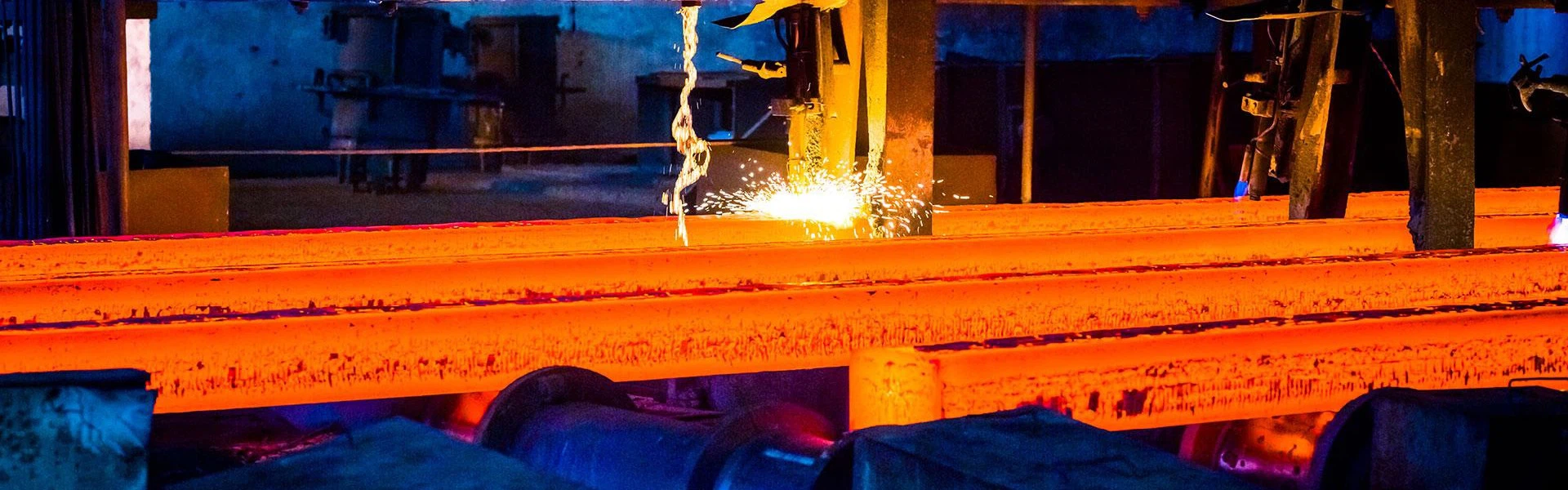
Hot rolling is the most common method for manufacturing round bars, especially for steel. The process involves heating a metal billet or ingot to a high temperature (above its recrystallization temperature) and then passing it through a series of rollers to shape it into a round bar. The metal is continuously fed through the rollers, which gradually reduce its diameter and increase its length. The hot rolling process helps to refine the grain structure of the metal, improving its mechanical properties.
Cold drawing is another method used to manufacture round bars, particularly for metals like stainless steel, aluminum, and copper. In this process, a metal rod or wire is pulled through a die to reduce its diameter and increase its length. The metal is typically preheated to improve its ductility and then drawn through the die using a combination of pulling force and lubrication. Cold drawing helps to achieve precise dimensions and a smooth surface finish. It also enhances the mechanical properties of the metal, such as strength and hardness.
After the initial manufacturing process, the round bars may undergo additional treatments or processes to further enhance their properties. These can include heat treatment, such as annealing or quenching and tempering, to improve the strength and hardness of the metal. Surface treatments, such as polishing or coating, may also be applied to enhance the appearance or provide corrosion resistance.
Here are some additional differences between Round Bars and Hex Bars:
Torque transmission: Hex Bars provide better torque transmission compared to Round Bars. The hexagonal shape allows for a more secure grip, preventing rotation when applying torque.
Socket fit: Hex Bars are designed to fit into corresponding hexagonal sockets, providing a tight and stable connection. Round Bars do not have this specific socket compatibility.
Stacking and alignment
Round Bars can stack and align more precisely, while Hex Bars may have some play or misalignment when stacked.
Vibration damping
Round Bars may have better vibration damping properties due to their smooth surface, whereas the hexagonal shape of Hex Bars can potentially introduce more vibration.
Cost and availability
The cost and availability of Round Bars and Hex Bars can vary depending on the market and specific applications. Some industries or projects may have standardized on one or the other based on cost or supply considerations.
Customization options
While both Round Bars and Hex Bars can be customized, the hexagonal shape of Hex Bars offers more possibilities for markings, threading, or other custom features.
Fatigue resistance
The hexagonal shape of Hex Bars may have slightly different fatigue resistance characteristics compared to Round Bars, depending on the application and loading conditions.
Friction properties
The surface area and shape of Hex Bars can affect friction coefficients, which may be important in certain applications where friction is a consideration.
Round Bar handles stress and deformation based on its mechanical properties and the applied loads. When Round Bar is subjected to tensile or compressive forces, it undergoes deformation in the direction of the applied load. The amount of deformation depends on the magnitude of the load and the stiffness of the Round Bar.
Under tensile stress, Round Bar stretches and becomes longer, while under compressive stress, it compresses and becomes shorter. The amount of deformation is directly proportional to the applied load and inversely proportional to the stiffness of the Round Bar.
The stiffness of Round Bar depends on its material and geometry. Higher stiffness materials, such as steel, will deform less under the same load compared to materials with lower stiffness, such as aluminum. Additionally, increasing the diameter of the Round Bar will increase its stiffness and reduce the amount of deformation under load.
Round Bar can also undergo bending stress, where it deforms in the lateral direction. The amount of bending depends on the applied moment and the stiffness of the Round Bar. Bending stress can cause the Round Bar to deflect or bend, which can affect its performance and functionality in applications such as shafts and axles.
To prevent excessive deformation or failure under stress, Round Bar is often designed and sized based on the expected loads and the required stiffness. Load calculations and stress analysis are commonly performed to ensure the Round Bar can handle the applied forces without exceeding its maximum allowable stress or deformation limits.
In some applications, Round Bar may be heat-treated or otherwise treated to improve its mechanical properties and resistance to stress and deformation. This can include processes such as annealing, quenching, and tempering, which modify the microstructure of the material to increase its strength and hardness.
What Are The Chemical Composition Requirements For Round Bar
The chemical composition requirements for round bars depend on the material being used. Here are some examples of common materials and their chemical composition requirements:
Carbon Steel
The chemical composition of carbon steel round bars typically includes carbon, manganese, phosphorus, sulfur, and sometimes silicon and copper. The exact composition will vary depending on the grade of carbon steel being used.
Stainless Steel
The chemical composition of stainless steel round bars typically includes chromium, nickel, and sometimes molybdenum, titanium, and copper. The exact composition will vary depending on the grade of stainless steel being used.
Aluminum
The chemical composition of aluminum round bars typically includes aluminum, magnesium, silicon, iron, and sometimes copper, zinc, and manganese. The exact composition will vary depending on the grade of aluminum being used.
Brass
The chemical composition of brass round bars typically includes copper and zinc, with small amounts of other elements such as lead, tin, and iron. The exact composition will vary depending on the type of brass being used.
A Round Bar, also known as a Round Rod or shaft, is measured primarily by its diameter. The diameter is the distance across the bar through its center, which is the longest possible distance between any two points on the bar.
The diameter measurement is crucial when ordering or specifying round bars because it determines the size and capacity of the rod for various applications. Standard round bars are available in a range of diameters, often specified in millimeters (mm), inches, or fractions of inches. For example, a common dimension for a round bar could be 10 mm, 1/2 inch, or 8 mm, etc.
In addition to diameter, other important measurements may include the length of the bar and the material composition, which can affect the strength, weight, and suitability for particular uses. Length is usually measured in millimeters, meters, feet, or inches.
For precise applications, the tolerance of the diameter is also important. A tolerance specifies how much the actual diameter of the bar can vary from the specified nominal diameter. Tolerances are generally tighter for higher-precision applications.
That when purchasing round bars, especially for engineering purposes, the material specifications should be clearly stated, as different materials have different properties and applications. Common materials for round bars include carbon steel, stainless steel, aluminum, brass, and copper, among others.
To measure a round bar accurately, a caliper or micrometer can be used. These tools allow for a precise reading of the diameter and can also measure the length if necessary. When measuring with a caliper, it's important to ensure the caliper jaws are parallel to the axis of the bar to get an accurate diameter measurement. With a micrometer, the spindle and thimble are rotated until they make contact with the surface of the bar, at which point the measurement can be read from the scale.
What Are The Mechanical Properties Of Round Bar
The mechanical properties of Round Bar depend on the specific material and grade it is made from. The following are some common mechanical properties of Round Bar:
Tensile strength: This measures the maximum stress a Round Bar can withstand before failure under tensile loading. It is expressed in units of force per unit area.
Compressive strength: This measures the maximum stress a Round Bar can withstand before failure under compressive loading. It is also expressed in units of force per unit area.
Yield strength: This is the stress at which a Round Bar begins to deform under tensile or compressive loading. It is an important design parameter.
Elastic modulus: This measures the stiffness of a Round Bar and represents its resistance to deformation under elastic loading. It is expressed in units of force per unit area.
Shear modulus: This measures the stiffness of a Round Bar in shear and represents its resistance to deformation under shear loading. It is also expressed in units of force per unit area.
Poisson's ratio: This is the ratio of transverse strain to longitudinal strain in a Round Bar under tensile loading. It provides information about the deformation behavior of the material.
Ductility: This measures the ability of a Round Bar to deform plastically without failure. It is expressed as the percentage elongation or reduction in area at failure.
hardness: This measures the resistance of a Round Bar to indentation or penetration. It is commonly measured using hardness testing methods such as Rockwell hardness or Brinell hardness.
What Are The Inspection Methods For Round Bar
Inspection methods for round bars involve a series of procedures to ensure that the product meets the specified quality and dimensional standards. These methods can be categorized into non-destructive testing (NDT), visual inspection, dimensional verification, and material testing.
Visual Inspection: This involves examining the surface and overall appearance of the round bar. Inspectors look for defects such as cracks, scratches, dents, inclusions, and other irregularities that might affect the mechanical properties of the bar.
Dimensional Verification: Round bars are measured for length, diameter, and sometimes roundness using precision instruments such as calipers, micrometers, and dial indicators. For longer lengths or high-precision applications, laser measurement tools or coordinate measuring machines (CMMs) may be used.
Non-Destructive Testing (NDT): Various NDT methods can be applied to detect internal defects or imperfections without damaging the part. These methods include.
Magnetic Particle Inspection (MPI): Used for ferromagnetic materials to identify surface and shallow subsurface discontinuities.
Liquid Penetrant Inspection (LPI): Reveals surface defects by employing a dye that penetrates cracks and is then observed with a developer.
Ultrasonic Testing (UT): Utilizes high-frequency sound waves to detect flaws from one side of the material. Dual-system UT with both manual and automated scanning is often employed for thorough inspection.
Radiographic Testing (RT): X-rays or gamma rays penetrate the material to create images on film or digitally, revealing internal flaws.
Eddy Current Testing: Particularly useful for conductive materials, this method induces eddy currents that interact with any imperfections in the material.
Material Testing: Chemical analysis is performed to confirm the composition of the alloy, ensuring it meets the specified standards. Spectrographic analysis is commonly used for this purpose. Mechanical property tests, such as tensile testing, hardness testing (e.g., Brinell, Rockwell, Vickers), and impact testing (e.g., Charpy or Izod), are conducted to evaluate the strength, ductility, and toughness of the material.
Surface Roughness Measurement: If surface finish is a concern, instruments like profilometers can be used to quantify the roughness of the bar's surface.
Heat Treatment Verification: For heat-treated round bars, the hardness and sometimes microstructure are checked to confirm that the treatment was successful.
Traceability and Documentation: Records are kept of the heat number, batch number, and any other identifying marks to ensure traceability throughout the manufacturing and inspection process.
What Are The Storage Requirements For Round Bar
The storage requirements for round bar, which is commonly used in construction and engineering projects, are important to maintain the quality and integrity of the material. Here are some key storage considerations for round bars:
Proper Shelf
Round bars should be stored on a flat, level surface to ensure that they do not become deformed. The shelf should be strong enough to support the weight of the round bars.
01
Ventilation
The storage area for round bars should be well-ventilated to prevent rust and corrosion. This will help to extend the life of the material and reduce the risk of damage.
02
Protection
Round bars should be protected from the elements, such as rain and snow, to prevent rust and corrosion. They should be covered with a protective coating or wrapped in plastic to keep them dry.
03
Separation
Round bars should be separated from each other to prevent scratches and dents. They should be stacked in such a way that there is space between each bar to allow air to circulate and prevent corrosion.
04
Labeling
Round bars should be properly labeled to identify the material type, grade, size, and quantity. This will make it easier to locate and manage the inventory.
05
Our Factory
GNEE (Tianjin) Multinational Trading Co., Ltd. is located in Anyang City, Henan Province, China, is a comprehensive, modern, high quality enterprise integrating steel production, processing and sales. GNEE specialises in the production of heavy duty H-beams, all types of section products, hot rolled steel plates, seamless steel pipes, welded steel pipes, stainless steel tubes, plates, coils and fittings, flanges, etc. A one-stop-shop service company.
FAQ
Gnee Steel (Tianjin) Co., Ltd. is one of the leading round bar manufacturers and suppliers in China. We warmly welcome you to buy high-grade round bar for sale here and get free sample from our factory. All customized products are with high quality and low price.
round stock steel, 416 Stainless Round Bar, alloy steel rod