





Angle Steel
What Is Angle Steel
Angle steel, also known as angle iron, is a hot-rolled carbon steel product with an L-shaped cross-section. It consists of two legs at a 90-degree angle, which can be of equal or unequal lengths. The angle formed by the two legs provides structural stability, making it an ideal material for various construction and engineering applications.
Advantages of Angle Steel
Structural Support
The L-shaped profile allows angle steel to provide support across two planes simultaneously, making it an excellent material for creating frames, braces, and supports in buildings, bridges, and other structures.
Easy Installation
Angle steel can be easily cut, drilled, and welded, which simplifies the installation process and facilitates its integration into different construction projects.
Compatibility
Angle steel can be used in conjunction with other materials such as concrete, timber, and other metals, providing flexibility in construction methods.
Versatility
Angle steel comes in a variety of sizes and can be used in both small-scale and large-scale projects. It can be adapted to fit a wide range of structural needs.
Strength
Despite its simple shape, angle steel has good tensile and compressive strength, allowing it to withstand significant loads without bending or breaking.
Corrosion Resistance
Stainless steel angle iron is available, which offers excellent corrosion resistance. This makes it suitable for outdoor or marine applications where exposure to moisture or chemicals can cause corrosion.


Why Choose Us
Rich Experience
Our company has many years of production work experience. The concept of customer-oriented and win-win cooperation makes the company more mature and stronger.
Quality control
In the production process, our professional technical engineers inspect the processing to ensure the quality of products. After our machine finish, our engineer will constantly make 24-hour tests and ensure the machine reach to the best performance.
One-stop Solution
With rich experience and one-to-one service, we can help you choose products and answer technical questions.
Competitive Price
We have a professional sourcing team and cost accounting team, striving to reduce cost and profit and provide you with a good price.
Material Types of Steel Angle

Carbon Angle Steel
Carbon steel angles are typically made from mild structural steels such as Q235B or ASTM A36.
They offer good strength, weldability, and machinability, along with low cost, making them one of the most commonly used structural steel sections.
They are widely used in steel structure building supports, equipment frames, structural reinforcement, power transmission towers, and various mechanical structures, suitable for general load-bearing engineering applications.

Stainless Angle Steel
Stainless steel angles are typically made from grades such as 304, 316, or 316L. They offer excellent corrosion resistance, oxidation resistance, and long service life, maintaining stable performance even in humid or corrosive environments.
They are widely used in chemical equipment, marine engineering, food processing equipment, medical facilities, as well as architectural decoration and outdoor structures, making them suitable for applications with high corrosion resistance requirements.

Galvanized Angle Steel
Steel angle offers remarkable flexibility and adaptability beyond its strength and resistance to wear.
Its design can suit various applications despite being a rigid material. From varying its lengths and thicknesses to bending it into specific angles other than the standard 90 degrees, it can be tailored to meet the unique requirements of different projects.
This adaptability ensures that architects and engineers can innovate and optimize designs using this versatile material.
How Does Angle Steel Compare To Other Types Of Steel
When comparing angle steel to other types of steel, several factors should be considered:


Shape and Size: Angle steel has a fixed L-shape cross-section, which makes it suitable for bracing and supporting structures where this shape is advantageous. Other steel products like I-beams (or H-beams), channels, and bars have different cross-sections optimized for different structural loads and purposes.
Strength and Stiffness: Angle steel provides good stiffness for its weight in applications where loads are applied primarily in the plane of the angle. However, it may not be as strong as other shapes under complex loading conditions. For instance, H-beams are stronger along their length, making them more suitable for long spans with heavy loads.
Weight: Angle steel is relatively lightweight compared to other heavy-duty structural steels. Its lightweight nature can be an advantage in applications where load-bearing capacity is sufficient and transportation or installation constraints are a concern.
Corrosion Resistance: Angle steel can be galvanized or painted to improve its corrosion resistance. Its corrosion resistance is generally similar to other structural steels unless specific treatments are applied.
Weldability and Fabrication: Angle steel is relatively easy to weld and fabricate, which makes it a popular choice for manual construction and repairs. other steels with different compositions may require specific welding techniques or heat treatments to achieve optimal performance.
Cost: Angle steel is often less expensive per unit length when compared to other structural steel profiles. Its cost-effectiveness makes it a common choice for many construction projects.

The width of angle steel plays a significant role in determining its weight. Angle steel, also known as angle iron, is a type of steel structural section that is shaped like the letter "L". It consists of two legs that are equal in length and a transverse web connecting them. The weight of angle steel is influenced by several factors, including its width, thickness, and material grade.
The width of angle steel directly affects its weight because it determines the cross-sectional area of the steel. The wider the angle, the larger the cross-sectional area, and consequently, the heavier the steel will be. For example, a wider angle steel will have a greater volume of material, which leads to a higher weight.
The width of angle steel can also impact its load-bearing capacity and strength. A wider angle steel will generally have a higher load-bearing capacity and greater resistance to bending and twisting forces. This makes it suitable for applications that require more substantial structural support.
It's important to consider that the weight of angle steel is also influenced by its thickness and material grade. Thicker angle steel will weigh more than thinner versions, and angle steel made from higher-grade materials will also be heavier.
How Is Angle Steel Made
Angle steel, also known as angle iron, is a structural steel product primarily used for building frames and bridges, among other applications. The manufacture of angle steel involves several steps:
Steelmaking: The process begins with the production of steel. This can be done via the basic oxygen furnace (BOF) method, electric arc furnace (EAF) method, or other steelmaking processes, depending on the source of raw materials and desired quality of steel.
Ingredient Control: The chemical composition of the steel is carefully controlled to meet specific standards for angle steel. Elements like carbon, manganese, phosphorus, sulfur, silicon, and sometimes alloying elements like vanadium or molybdenum are added to achieve the desired mechanical properties.
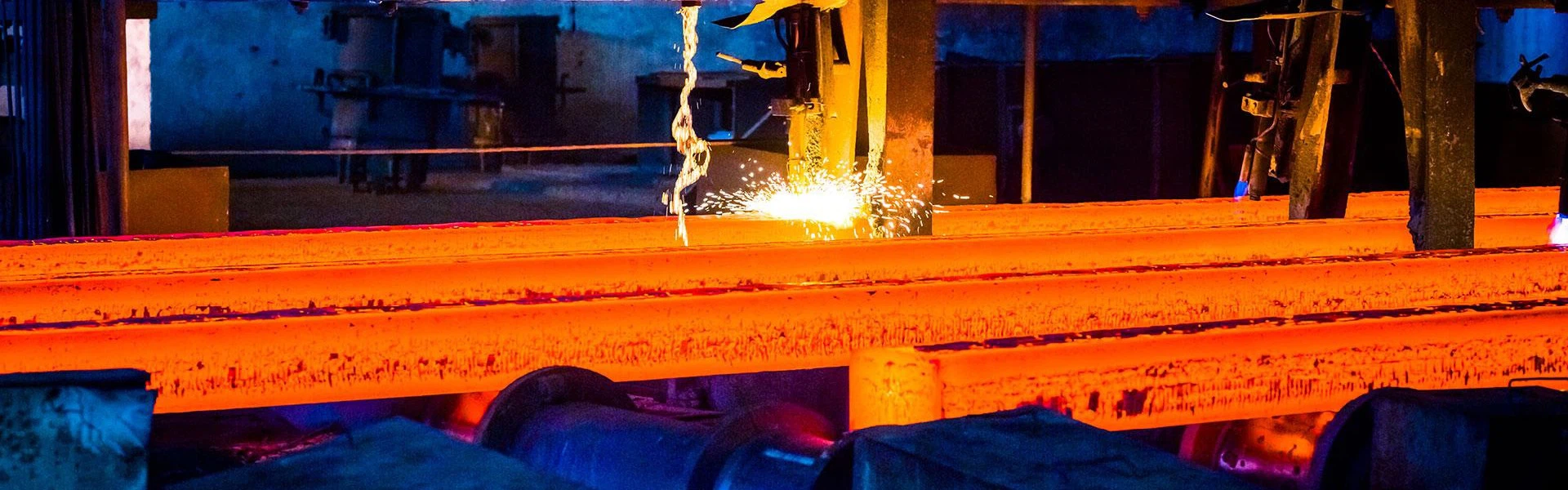
Hot Rolling: Once the steel has been produced to the appropriate specifications, it is heated to a high temperature until it becomes malleable. This molten steel is then passed through a series of rollers in a hot rolling mill to shape it into the profile of an angle. The angle size can vary, but the cross-section is typically L-shaped.
Cooling: After hot rolling, the angle steel needs to be cooled down to room temperature. This can be done using air cooling, water quenching, or another suitable method. Proper cooling is essential to achieve uniform mechanical properties across the length of the angle steel.
Cutting to Length: The continuously cast or rolled angle steel comes out in long strips, which are then cut to the desired lengths using saws or shears.
Heat Treatment: Depending on the application, angle steel may undergo heat treatment to improve its strength, hardness, or ductility. Common heat treatments include normalizing, annealing, and tempering.
Inspection and Testing: Quality control is performed throughout the manufacturing process to ensure that the angle steel meets the necessary standards. Tests may include chemical composition analysis, tensile testing, bending tests, and visual inspection for surface defects.
Packaging and Shipping: Once the angle steel passes all inspections and tests, it is packaged for shipment to distributors, fabricators, or end-users.
What Are The Properties Of Angle Steel
Here are some key characteristics of angle steel:
Strength and Durability
Angle steel is typically made from mild steel, a steel alloy that has proven to be strong and durable. It is commonly used in structural applications due to its ability to withstand significant loads and stresses.
Right Angle Formation
The most notable feature of angle steel is the 90-degree angle formed between its two legs. This right-angled shape is ideal for applications that require a vertical projected section for upright support.
Versatility
Angle steel is versatile and can be used in a variety of applications. It is commonly used on frames, brackets, supports and other structural components. Due to its shape, it can be easily welded or bolted to other components, making it a convenient building material.
Corrosion Resistance
Angle steel can be produced with various coatings or treatments to enhance its corrosion resistance. Galvanizing is a common method used to protect steel from rust and corrosion. This makes it ideal for indoor and outdoor applications.
Angle steel and flat bar steel are both structural steel products commonly used in construction and engineering applications. They differ primarily in shape, dimension, and application.
Angle steel, also known as L-shaped bar or angle iron, has a distinctive L-shaped profile, with two legs of equal or unequal length that meet at a 90-degree angle. The angle provides strength in both directions perpendicular to the legs, making angle steel suitable for applications where bending resistance is needed in multiple planes. For instance, angle steel is often used for framing, bracing, and support in structures like buildings, bridges, and machinery. The dimensions of angle steel are typically specified by the lengths of the legs (e.g., 3" x 2" x 1/4" refers to an angle with 3-inch legs and a 1/4-inch wall thickness).
Flat bar steel, also referred to simply as flat bar, is a long product with a rectangular cross-section that is flat along its length. Flat bars are generally used for applications requiring bending or forming, such as when constructing handrails, frames, or supports. Their flat profile makes them easier to weld and join compared to angle steel, which may require more preparation to achieve a flush joint. The dimensions of flat bar steel are specified by its thickness (height) and width, as well as its length.
Both angle steel and flat bar steel are available in various grades and sizes to suit different mechanical properties and load requirements. The choice between angle steel and flat bar steel will depend on the specific demands of the project, such as load bearing, structural support, aesthetics, and ease of fabrication.

What Factors Should Be Considered When Choosing Angle Steel
When selecting angle steel, several factors should be considered to ensure it meets structural requirements and is suitable for the intended application:
Mechanical Properties: Determine the required yield strength and tensile strength based on the loads the angle steel will carry. The material grade of the angle steel should align with the minimum strength requirements for the project.
Size and Dimensions: Select the appropriate leg lengths, thickness, and cross-sectional dimensions that match the load-bearing needs and space constraints of the project.
Material Grade: Choose the correct type of steel based on the application's demands. For example, carbon steel may suffice for general structural use, while stainless steel could be necessary for projects exposed to corrosive environments.
Weight: Consider the weight of the angle steel, as it affects handling, transportation, and the load-bearing capacity of supports and foundations.
Cost: Factor in the budget constraints, as the price can vary significantly depending on the size, thickness, and material grade of the angle steel.
Corrosion Resistance: For projects in harsh environments, select angle steel with adequate corrosion resistance. Options include galvanized steel or stainless steel.
Weldability and Workability: Ensure that the chosen angle steel is suitable for the fabrication methods used, whether welding, drilling, cutting, or bending.
Standards and Codes: Adhere to local building codes and industry standards, which may dictate the specifications and requirements for structural steel components.
Availability: Check the availability of the desired angle steel from suppliers, as some sizes or grades may not be readily available and could result in extended lead times.

The strength of angle steel increases with its thickness due to the larger cross-sectional area that can resist applied forces. As the thickness of the angle steel increases, so does its moment of inertia, a measure of its resistance to bending. The moment of inertia is directly proportional to the second moment about the axis of bending, which means that a larger moment of inertia results in a greater resistance to bending moments.
Similarly, the section modulus, which is a geometric property that relates the bending moment to the strain in the member, also increases with thickness. The section modulus is the ratio of the maximum bending moment to the maximum curvature. Therefore, a higher section modulus implies that the angle steel can withstand greater bending before reaching its yield point.
For axial loads, the strength of angle steel is related to its cross-sectional area, which determines the amount of force it can support without yielding. A thicker angle steel has a larger cross-sectional area, allowing it to withstand greater axial forces.
That while increased thickness improves strength, it also adds weight and cost. There is an economic and practical limit to the thickness that can be used, as excessively thick sections may not be necessary for the application and can be difficult to handle and install. Moreover, very thick angle steel may not provide proportional increases in strength beyond certain design thresholds, and other considerations such as deflection, weight bearing capacity of supports, and dynamic effects may become more significant.
How Angle Steel Connections Are Usually Made
Angle steel connections are typically made in a variety of ways, depending on the structural requirements, the type of angle steel being used, and the load-bearing capacity needed. Here are some common methods:
Welding
Welding is a common method for connecting angle steels. It provides a strong, permanent bond between the steels. Welding can be done using various processes such as arc welding, MIG/MAG welding, TIG welding, or gas welding, depending on the thickness of the angle steel and the quality of the weld required.
Bolting
Bolts can be used to connect angle steels, especially when a non-permanent joint is needed or when additional flexibility is desired. Angle steels can be drilled and bolted together with washers and possibly a gusset plate to distribute the load effectively.
Splicing
In some cases, angle steels can be spliced together by cutting a groove in the ends of the angle steels and then using a splice plate to join them. This method is often used in steel frame construction where increased load-bearing capacity is required.
Riveting
Riveting is another method that can be used for connecting angle steel members. It is less common in modern construction due to the advancements in welding technology and the fact that riveted joints are generally less flexible than bolted or welded joints.
Clamping
Temporary clamps can be used during assembly to hold angle steels in place before they are permanently connected by welding or bolting.
Fastening
Various types of screws, nuts, and bolts can be used to connect angle steels, especially in light-duty applications or for assembly purposes.
Here are some ways in which angle steel contributes to the structural integrity of a building or structure:
Load-bearing capacity: Angle steel has a high strength-to-weight ratio, which allows it to carry heavy loads over long spans. This property makes it an excellent choice for beams, braces, and other elements that need to support significant weight.
Stability: The L-shaped cross-section of angle steel provides excellent torsional stability, which is crucial for resisting lateral forces such as wind or earthquake loads. This helps in maintaining the overall structural integrity during extreme conditions.
Connection
Angle steel can be easily connected to other structural members, such as columns, beams, and slabs, using bolts, welds, or other joining methods. This allows for the creation of strong, rigid frames that can resist various types of forces.
Deflection
Angle steel has a relatively low flexural rigidity, which means that it can resist deflection under load. This is important for maintaining the integrity of floors, roofs, and other horizontal structural elements.
Fire resistance
Angle steel has good fire resistance properties. While steel itself does not burn, the protective coatings or fire-retardant treatments on angle steel can prevent the spread of fire and maintain structural integrity for a significant period.
Aesthetics
Angle steel can be used for exposed structural elements, providing a modern and industrial aesthetic to the building. This is often seen in contemporary architecture where the structural framework is left visible as a design feature.
Durability
Angle steel is resistant to environmental factors such as moisture, temperature changes, and corrosion. It is often coated with protective materials like paint or galvanized to increase its lifespan and maintain structural integrity.
Flexibility
Angle steel can be easily cut, drilled, and shaped to fit various design requirements. This allows structural engineers and architects to create custom solutions that meet specific project needs.
Our Factory
GNEE (Tianjin) Multinational Trading Co., Ltd. is located in Anyang City, Henan Province, China, is a comprehensive, modern, high quality enterprise integrating steel production, processing and sales. GNEE specialises in the production of heavy duty H-beams, all types of section products, hot rolled steel plates, seamless steel pipes, welded steel pipes, stainless steel tubes, plates, coils and fittings, flanges, etc. A one-stop-shop service company.
FAQ
Gnee Steel (Tianjin) Co., Ltd. is one of the leading angle steel manufacturers and suppliers in China. We warmly welcome you to buy high-grade angle steel for sale here and get free sample from our factory. All customized products are with high quality and low price.
steel iron angle, angle steel dimension, pallet rack angle steel