





H Beam
What Is H Beam
Gnee Steel (Tianjin) Co., Ltd. is a professional steel supplier specializing in premium H Beam products for construction, industrial, and infrastructure projects worldwide. We supply H Beams in multiple international standards and grades such as ASTM A36, A572 Gr50, S235, S275, S355, Q235B, and Q355B. Customized sizes, lengths, and processing services are available to meet different project requirements.
Advantages of H Beam
High Strength
H beams have a wide web and flanges, which means they can resist bending and shear forces effectively, making them strong enough to support heavy loads.
Versatility
Their H-shape allows them to be used in a variety of configurations, such as spanning long distances without intermediate supports, or being combined with other structural members to create complex frameworks.
Easy to Fabricate
The parallel flanges of H beams make them simple to connect using welding or bolting, facilitating quick and efficient construction processes.
Standardization
H beams come in standard sizes defined by industry norms, which simplifies the design and procurement process. Engineers can choose from a catalog of available sizes, ensuring compatibility with other structural components.
Reduced Deflection
Due to their wide flanges, H beams experience less deflection under load compared to I beams of similar size, which is important for maintaining structural integrity and serviceability.
Attachment Flexibility
H beams allow for attachment in multiple planes, which can be advantageous for connecting bracing systems, floor framing, and other structural elements.
Weight Distribution
The wide flanges of an H beam help distribute weight more evenly along their length, reducing stress concentrations and contributing to overall structural stability.
Availability
H beams are commonly available from steel manufacturers and suppliers, which ensures a ready supply for construction projects.


Why Choose Us
Rich Experience
Our company has many years of production work experience. The concept of customer-oriented and win-win cooperation makes the company more mature and stronger.
Quality control
In the processing of production, our professional technical engineers inspect the processing to ensure the quality of products,After our machine finish , our engineer will make 24 hours test constantly and ensure the machine reach to the best performance.
One-stop Solution
With rich experience and one-to-one service,we can help you choose products and answer technical questions.
Competitive Price
We have professional sourcing team and cost accounting team, stive to reduce cost and profit and provide you a good price.
When Should You Use H-Beams
H-beams find most of their use in residential projects (like homes and apartment units, but they’re also perfect for the following builds:


Bridges: Beam bridges are simple structures that are supported by H-beams, depending on their load requirements. H-beams enable the weight to be distributed evenly throughout the beam, making them a better choice for the bridge, as the structure can now support more weight without any trouble.
Platforms: H-beams can be ideal when you’re on a construction site and you’re looking to give the structure greater durability and strength. When you’re considering H-beam vs I-beam, consider your construction requirements. H-beams are more suitable when you’re looking to build solid structures, like platforms.
Mezzanines: If you’re planning to build various intermediate floors in a building, you need beams that can hold the weight without looking too unsightly. H-beams are perfect for this because they enable even weight distribution and ultimate functionality without ruining the aesthetics of the mezzanine floor from any angle.
Trailers: Any trailer model requires a solid structure so that it can remain durable throughout the years. Just as beams in a building help support the roof and other physical components, beams in a trailer help ensure its structural integrity long-term.
Commercial Buildings: When you’re looking to ensure that the commercial building you’re constructing can withstand higher load requirements without any problems, using heavier and sturdier H-beams can be an ideal option. H-beams can ensure that your customers are also satisfied with the quality of the building.
Skyscrapers: High-rise buildings require innovative and creative ways to be supported while ensuring that they don’t lose their visual charm. When you’re looking to create the ideal skyscraper without various, unsightly supporting structures, using H-beams within the structural foundation can be ideal.
Industrial Complexes: All industrial processes require handling large volumes and weights almost daily. The key considerations when constructing such buildings are that
●They don’t fall under excessive weight and
●That they’re safe for the employees.
H-beams are the ideal support to use for high-load and high-volume areas like industrial complexes.
Framing for Truck/Trailer Beds: Trucks need to handle a lot of volume and weight while transporting various goods across thousands of miles. Using H-beams to support these frames helps ensure that there are no accidents or adverse incidents that might otherwise occur when using weaker support beams.
Any job that calls for larger load-bearing will involve H-beams. Their broad surfaces make them perfect for connecting building components with high-strength bolts. While it’s difficult to generalize the appropriateness of each beam type, these supports often find their way into large-scale construction projects.
Difference Between H Beam And I Beam
Shape and design
There’s a simple way to tell the two types of beam apart. I beams have a much longer web, with the web height being greater than the width of the flanges. They also have tapered edges. This gives them the appearance of a letter “I”. Meanwhile, the web and flanges of an H beam are of similar lengths. This gives them a square shape, resembling a letter “H”.
Construction
Whilst H beams look like they’re made from just one piece of metal, they’re actually constructed from three pieces of metal. These are joined together with bevelled edges. Meanwhile, I beams are constructed from a single piece of steel.
Weight
H beams are considerably heavier than I beams. For projects that require a more lightweight option, I beams are the best choice.
Spans
The spans that steel H beams and I beams can cover varies. I beams are less flexible and may be more suitable for shorter spans. Depending on the specifications, The Metal Store stocks I beams with a span of 1m to 3m. H beams can carry larger loads over longer spans. Our H beams can cover a variety of different spans, including 1m, 1.5m, 2m and 3m.
Centre web
The thicker the web, the stronger the beam. I beams usually feature a much thinner centre web, which means they’re more suitable for lighter loads. In contrast, H beams feature a much thicker web, so they can provide stronger support.
Strength
H beams offer a high level of strength, meaning that they can hold a heavier load. Meanwhile, I beams are usually deeper, so they provide a strong defence against buckling.
Resistance
Steel beams need to carry large loads, so they must be able to resist any bending. As H beams are generally the stronger option, they provide a much more robust defence against bending under pressure.

H beams, also known as wide flange beams, are primarily used in construction for their high strength-to-weight ratio and versatility. Their distinctive H-shaped cross-section creates channels that are excellent for resisting bending moment and shear force, which makes them ideal for supporting floors and roofs in buildings, bridges, and other structures.
The broad, flat flanges of H beams provide stability and resistance to torsional forces, allowing them to span long distances without requiring additional support. This reduces the need for intermediate columns or walls, which can be advantageous in architectural design and space planning.
Furthermore, H beams can be easily connected to one another and other structural components using welding, bolting, or riveting, providing flexibility in the overall construction process. Their standardized sizes and shapes simplify design and engineering calculations, contributing to efficient construction practices.
What Are The Types Of Connections Used For H Beams
The connections used for H Beams depend on the structural system, the design requirements, and the materials being used. Here are some common types of connections for H Beams:
Welded Connections: Welding is a common method used to connect H Beams. It provides a strong, permanent bond between the beams. Welding can be done on-site or in a factory setting. The welds are typically made by certified welders using appropriate welding techniques and standards.
Bolted Connections: Bolted connections involve using bolts to join two H Beams together. This method is quicker and often easier to inspect than welding. Bolted connections can be stronger than welded connections, depending on the quality of the welds and the material properties. They also allow for easier disassembly if needed.
Splice Plates: Splice plates are steel plates that are bolted or welded between two H Beams to increase the span of the beam or to join beams of different sizes. They distribute the load from the beams to each other, effectively creating a single, longer beam.
Shear Connectors: Shear connectors are used to transfer shear forces between beams and columns or between two beams. They can be in the form of shear studs welded to the flanges of the H Beams or bolted gusset plates.
Cold-Formed Steel Connectors: Cold-formed steel connectors are pre-fabricated steel components designed to connect H Beams and transfer load between them. These connectors are often used in light-frame construction and can be easily installed on-site.
Rigid Frame Connections: In rigid frame construction, H Beams are connected to form a continuous frame that transfers loads vertically and laterally. This type of connection typically involves welding or bolting and is designed to behave as a single structural member.
Cable Connections: In some specialized applications, H Beams might be connected using cables, which are tensioned to hold the beams together. This method is often used in bridges and other structures where spans are very long.
How Do H Beam Sizes Correlate With Their Strength
Here's how these dimensions correlate with the beam's strength:
Depth (Height): Generally, the deeper the beam, the greater its load-carrying capacity. This is because a deeper beam has more material to resist bending moments. However, the depth also affects the overall weight and the ease of handling.
Width of Flanges: Wider flanges distribute the load over a larger area, which can increase the beam's capacity, especially under shear. But wider flanges also make the beam heavier and potentially more difficult to work with.
Thickness of Web: The web thickness also contributes to the beam's resistance to bending. A thicker web can handle more bending moments. However, like the other dimensions, thickness is balanced against weight and ease of construction.
Cross-Sectional Area: The total cross-sectional area of the beam is the most direct determinant of its strength. Beams with larger cross-sectional areas can carry more load.
Material Properties: The grade of steel used for the beam greatly affects its strength. Higher-strength steels can be thinner and lighter while still carrying the same load.
Beam Span and Support Conditions: The actual strength of an H-beam in service can also depend on the span over which it is supporting load and how it is supported at each end. Beams that are simply supported (resting on supports without any intermediate supports) will carry less load than those that are continuous or cantilevered.
Fatigue: The number of cycles the beam will experience (up and down loading) can affect its fatigue life, which is also a measure of its strength over time.
Deflection: The maximum deflection allowed in a beam under load is also a design consideration. Deeper beams will typically deflect less under the same load.
Selecting the appropriate H beam for a construction project involves considering several key factors to ensure structural integrity, safety, and efficiency. These factors include:
Load Requirements: The anticipated dead loads (weight of the structure itself), live loads (weight of occupants, furniture, etc.), environmental loads (wind, snow), and any dynamic loads (vibrations) must be evaluated to determine the necessary strength of the beam.
Span Length
The distance between supports directly influences the deflection and strength requirements. Longer spans will require stronger beams to prevent excessive bending.
Material Grade
Different grades of steel have varying yield strengths, which affects the beam's load-carrying capacity. The selected grade should align with the required mechanical properties and the service environment.
Cross-Sectional Size
The depth and flange widths of the beam affect its bending resistance. A larger cross-section can carry heavier loads and longer spans.
Safety Factors
Building codes require safety factors to account for uncertainty in loads and material properties. The chosen beam must meet these code-mandated safety requirements.
Local Building Codes and Standards
Compliance with local regulations, which may dictate material standards, design criteria, and construction methods, is mandatory.
Cost
The budget for the project should inform the choice of beam. While a more robust beam can handle greater loads, it may not be cost-effective if the additional strength is unnecessary.
How Are H Beams Inspected For Quality Assurance Before Being Used In Construction
Before H beams are used in construction, they undergo a series of inspections to ensure they meet the required quality standards. The inspection process typically includes the following steps:
Visual Inspection: Experts look for surface defects such as cracks, corrosion, dents, and scratches. They also check for proper labeling and identification, including size, grade, and heat number (for traceability).
Dimensional Measurement: Using precision tools like micrometers and calipers, inspectors measure the beam’s critical dimensions, including its height, width, thickness of the flanges and web, and overall length, to confirm they conform to the manufacturer's specifications and industry standards.
Material Testing: Samples of the steel from the H beams may be subjected to chemical analysis to verify the composition of the material and ensure it matches the specified grade. Mechanical testing, such as tensile and yield strength tests, is also conducted to assess the material's strength and ductility.
Ultrasonic Testing (UT): This non-destructive testing technique is used to detect internal flaws such as seams, laps, cracks, and other discontinuities within the beam's material.
Magnetic Particle Inspection (MPI): MPI is often used for detecting surface and shallow subsurface discontinuities in the steel, especially in the flange and web areas of the beam.
Radiographic Testing (RT): In some cases, radiographic testing is performed to get a clear picture of any internal imperfections that might not be detected by UT or MPI.
Documentation Review: Inspectors verify that the H beams come with the proper certification and compliance documents, confirming that they have been manufactured according to the relevant standards, such as ASTM, EN, or other national or international codes.
Traceability Check: It is important to track the origin and history of the steel used in the beams. This helps in case of any quality issues or recalls.
Finishing Inspection: If the H beams are painted or coated, inspectors will check the quality of the finish to ensure it meets the specified standards and will provide adequate protection against corrosion.
How Is An H Beam Manufactured
The manufacturing process of an H beam involves several steps:
Melting
The process begins with melting iron ore to create pig iron. This is typically done in a blast furnace where coal is burned to provide the heat needed to melt the ore.
Refining
The pig iron is then refined in a basic oxygen furnace (BOF) to remove impurities and adjust the carbon content to produce the desired steel grade.
Casting
The refined steel is cast into ingots, which are typically square or rectangular in cross-section. These ingots are the raw material for making H-beams.
Hot Rolling
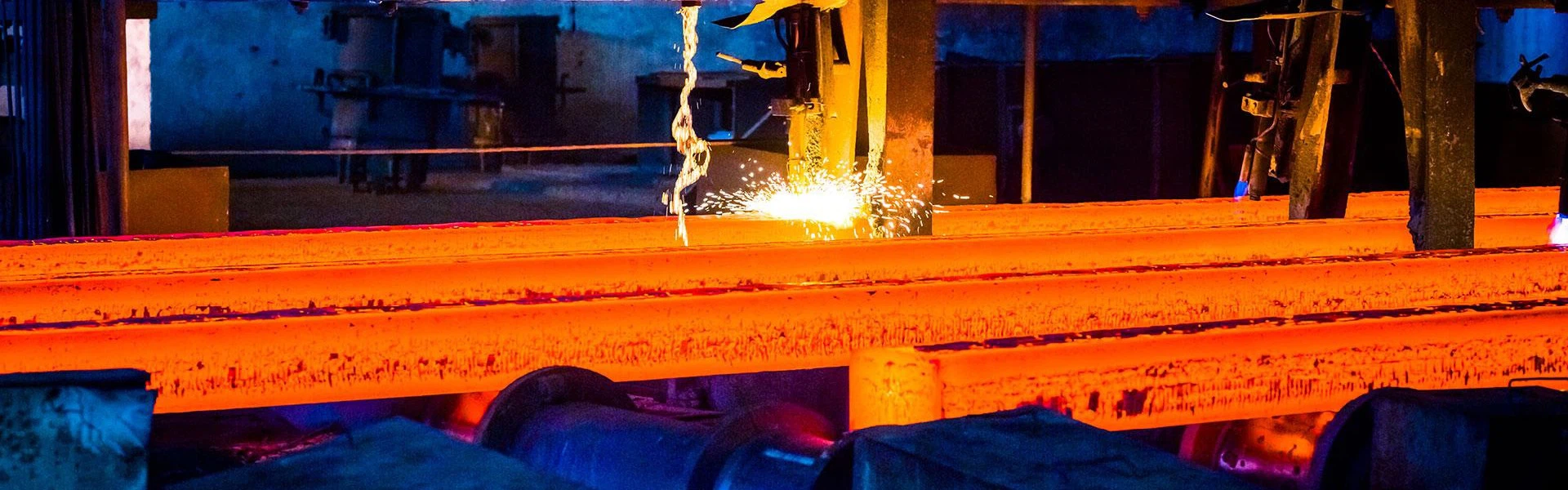
The ingots are heated to a high temperature and then passed through a rolling mill. The rolling process bends the ingot into the "I" or "H" shape, giving it the cross-section needed for its load-bearing properties. The hot rolling process also sizes the beam to the desired width and depth.
Cooling
After rolling, the H-beam is cooled, which helps to NMen the steel and improve its strength.
Heat Treatment
To further improve the beam's mechanical properties, it may undergo heat treatment processes such as tempering or normalizing. These processes involve heating the beam to a specific temperature and then cooling it down at a controlled rate.
Machining
The H-beam may undergo machining to remove any imperfections or excess material, ensuring a precise and smooth surface finish.
Testing
The manufactured H-beams are tested to ensure they meet the required strength and quality standards. This may include bend tests, tensile tests, and other mechanical property assessments.
Treatment
To protect the steel from corrosion, H-beams may be coated with a layer of paint, galvanized, or undergo other surface treatments.
Are there any special coatings or finishes for H Beams
While the core of H-beams is typically uncoated to provide optimal structural performance, there are several special coatings and finishes that can be applied to the surface of H-beams to enhance their durability, corrosion resistance, and other properties. Here are some common types:
Painting: Protective coatings such as paint or enamel can be applied to H-beams to prevent corrosion and extend their lifespan. This is a common finish for H-beams used in outdoor or indoor environments where the steel may be exposed to moisture or other corrosive elements.
Galvanization: Hot-dip galvanized (HDG) or electro-galvanized coatings are applied to H-beams to provide a layer of zinc that protects against corrosion. Galvanized beams are especially useful in outdoor construction and in environments with high humidity or exposure to water.
Mill Scale: A natural oxide layer that forms on the surface of steel during the manufacturing process. While not a coating that is intentionally applied, mill scale can offer some level of corrosion resistance if left intact.
Aluminum Coating: Some H-beams may be coated with a layer of aluminum to enhance corrosion resistance, particularly in environments with high salt content or where additional protection is required.
Plastic Coating: Polymer coatings, such as vinyl or plastic, can be applied to H-beams to provide insulation or protection against certain chemicals. This is less common for structural steel but may be found in specialized applications.
Fireproofing: For use in fire-resistant construction, H-beams can be coated with materials that reduce the spread of fire and protect the structural integrity of the beam.
Anti-Rust Treatment: H-beams may undergo an anti-rust treatment before being used in construction to ensure they remain in good condition during storage and transportation.
E-Coating: Electrocoating is a process that provides a protective, corrosion-resistant finish on metal products, including H-beams. It is often used for parts that require a smooth finish and good adhesion for paint.
Our Factory
GNEE (Tianjin) Multinational Trading Co., Ltd. is located in Anyang City, Henan Province, China, is a comprehensive, modern, high quality enterprise integrating steel production, processing and sales. GNEE specialises in the production of heavy duty H-beams, all types of section products, hot rolled steel plates, seamless steel pipes, welded steel pipes, stainless steel tubes, plates, coils and fittings, flanges, etc. A one-stop-shop service company.
FAQ
Gnee Steel (Tianjin) Co., Ltd. is one of the leading h beam manufacturers and suppliers in China. We warmly welcome you to buy high-grade h beam for sale here and get free sample from our factory. All customized products are with high quality and low price.
201 202 stainless h beam, h shaped steel beam, metal beam