


Sheet Pile
What Is Sheet Pile
Sheet Pile is a form of reinforced concrete that is commonly used in basement construction. It is a good option for basement walls because it can be made from relatively thin materials, which means it costs less than other forms of reinforcement and it has a relatively low weight compared with other types of reinforcement.Sheet Pile can be used in place of conventional pilings in deep basements to support the wall thickness at the footings and to provide additional support to the wall above ground level.
Advantages of Sheet Pile
Strength and Durability
Steel sheet piles offer high load-carrying capacity and are resistant to corrosion and deformation. Vinyl and timber piles also have their respective strengths and can be engineered for durability.
Waterproofing
Sheet pile installations effectively seal off water from entering the excavation area, which is particularly useful for waterproofing basements and retaining structures near bodies of water.
Minimal Disruption
Since sheet piling is a deep excavation technique, it can be implemented without causing significant surface disruption, which is beneficial in urban or densely populated areas.
Versatility
Sheet piles can be driven vertically, inclined, or combined with other structural elements to accommodate complex site geometries and loading conditions.
Reusability
Steel sheet piles can be reused for different projects, which makes them a sustainable option from an economic and environmental standpoint.
Minimal Foundation Footprint
The slim profile of sheet piles allows for minimal footprint, which is advantageous in areas where space is limited.


Why Choose Us
Rich Experience
Our company has many years of production work experience. The concept of customer-oriented and win-win cooperation makes the company more mature and stronger.
Quality control
In the processing of production, our professional technical engineers inspect the processing to ensure the quality of products,After our machine finish , our engineer will make 24 hours test constantly and ensure the machine reach to the best performance.
One-stop Solution
With rich experience and one-to-one service,we can help you choose products and answer technical questions.
Competitive Price
We have professional sourcing team and cost accounting team, stive to reduce cost and profit and provide you a good price.
Sheet piles need to be examined for cracks and interlocking systems before being installed in a variety of processes. Below are three of the most standard installation techniques:
Vibration: This is the most common method which uses a vibratory hammer. Piles are interlocked next to each other with a clamp. Afterward, vibration is used to embed them in the excavated ground.
Pressing: Through this process, sheet piles are pressed into the ground with the use of a hydraulic machine. This is a low noise method that is ideal for sites with noise prohibition.
Excavation: Sheet piles are installed in an excavated ground. Cement bentonite is filled within the trench to retain its walls. The sheets are then installed while the cement bentonite is set.
While there are a lot of ways to install piles, deciding for the best method is made according to these parameters: pile’s condition, section and length, driving equipment, type of wall (permanent vs. temporary), soil conditions, and interlock sealing systems. Installation could also be hindered by soil obstacles. For instance, partial excavation is used for removal.
Different Types Of Sheet Pile
Timber sheet pile
Timber sheet piles are made of wood planks that are fit for resisting light pressures. Given its composition, they are not ideal for heavy construction. Whereas ground excavation is not immense and the water problem is not serious, this type of pile is commonly used. While they are not suitable for heavy lateral loads, they could potentially last longer in marine environments. However, this process would require proper preservation to increase its durability.
Reinforced concrete sheet pile
Reinforced concrete sheet piles consist of precast concrete members, usually with tongue and groove joints. This type of pile is usually heavy and bulky which increases its driving resistance. Therefore, reinforcement is provided to avoid damage due to driving stresses. Considering its design, they are advantageously used in river embankments, canals, and other marine structures.


Steel sheet pile
Steel sheet piles are the most common form of sheet piles. This type of pile is equipped with long steel sections that are connected with an interlocking system, enabling the formation of a continuous wall. Provided its steel composition, it has good resistance over driving stresses, has excellent water tightness, highly adaptable pile length, and has long life spans on both above and underwater.
Vinyl sheet pile
An effective alternative to steel sheet piling for bulkheads, seawalls and cutoff walls. They are also superior to alternative materials like concrete and wood. The main advantage of vinyl sheet piles is the superior corrosion resistance when exposed to seawater, where no oxidation occurs.
Applications Of Sheet Pile
One of a sheet pile’s reliable characteristics is its ability to resist water and soil pressure. Because of this, it’s used for creating both temporary and permanent retaining walls. This structure is designed to withstand pressure from soil or hold back other forms of soil materials. It is commonly found in areas with a downhill slope since soil can be prone to erosion.
Retaining walls can be built in various places. Temporary structures are commonly found in deep excavation sites near water. These are used to facilitate construction that happens on a water level. More permanent structures for retaining walls include underground storage tanks, car parks, and quay walls.
Aside from its durability, a sheet pile is also used for retaining walls because it does not disturb the existing ground once installed. It’s compatible with many soil types, making it quick and easy to construct as well compared to concrete walls. On top of that, it is all a sustainable material that can be easily extracted from sites.
Sheet piles are traditionally used along river banks. They are installed to support and protect these bodies of water. Sheet piles are not only durable and easy to use but they can also be driven through the water. This makes it the best choice for flood defense.
Aside from that, this material can also be used to build a lock or sluice gate for irrigation. This is a passage for water, fitted with a gate. It either regulates or stops the flow of water acting as a floodgate in various sites.
At seaports, a berthing structure is where vessels and cargo do their loading and unloading. It’s also where the passengers go to embark on ships and ferries for sea traveling. In this structure, they are used for the berthing structure foundation. Its robust and durable material proves to workers that are reliable for these structures since sheet piles are manufactured and designed to carry heavy vertical loads and bending movements.
Aside from berthing structures, sheet piles also have numerous marine applications. They can be used to block floods, especially for establishments near the shoreline. They can also be used for tide walls, seawalls, jetties, and bulkheads. They may also be used for quay walls since they are easy to install.
Throughout history, sheet piles were first seen in the construction of many pumping stations. They acted as temporary support for this building as it was built. However, many construction projects found that it was durable enough to be used on permanent structures as well. This made it a cost-effective solution for many buildings.
Aside from pumping stations, it was also used as an abutment on a bridge. These are structures found at the edges of a budge that support its entire structure. They act as a retaining wall to resist later movement underground. Sheet piles are used for this structure because it require only a minimum amount of space it takes up.
The main concept of sheet piles is providing a retention job that will ensure the firm foundation of certain structures. Wherever a portion of land or water needs to be held back, steel sheets are wedged to withstand probable damage.
For example, in building foundations for high rise buildings, ground excavation is required. Once the earth’s layers are removed in deeper depths, an exceeded amount of terrain emerges and would otherwise collapse if not held back. This is where the use of sheet piles enters. They are driven side by side, creating a retaining border that withstands pressure and keeps the soil away from the structure. Variable designs of sheet piling are used for a specific retention job. When applied properly, this prevents the risk of erosion, landslides, and water breech.

Method of Sheet Pile
Driving must be carefully monitored and should stop immediately if the pile ceases to penetrate the soil, before moving on to the next pile along. In some cases, several adjacent piles will be unable to penetrate to the design depth. At this point, effort should be made to remove the obstacle, either by partial excavation or using a water jet. There is an acceptable number of ‘under-driven’ sheet piles, but this will vary according to the specific design requirements.
Guide controls should be used to counter this. One technique is to drive piles in panels. This involves pitching and driving two piles to part or full penetration at either end of a panel of piles. The panel is therefore supported by the ‘bookended’ piles during driving to their final position. The pair left on the end then forms the support of the next panel along. Another technique is to use trestles and walings to support and position sheet piles during driving. Vibratory hammers are often used to install sheet piles, although if soils are too NM or dense, an impact hammer can be used. At certain sites where vibrations are a concern, the sheets can be hydraulically pushed into the ground. The sequence is as followed;
‣Situ soil to placed behind of the proposed structure
‣Drive the sheet piles
‣The level of the anchor backfilled up and placed the system of the anchor. and backfill up to the height of the wall
‣Dredge the front side of the wall
How Are Sheet Pile Manufactured
Sheet piles are typically manufactured through one of the following methods:
Rolling
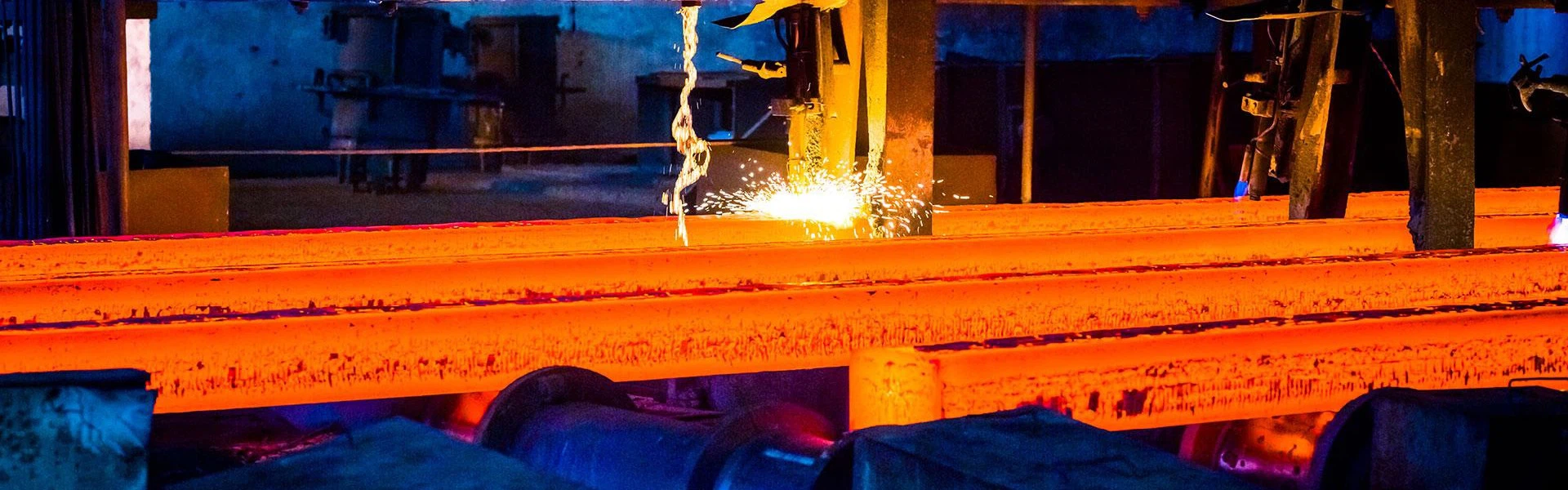
The most common method involves rolling steel plates or sections into the desired shape and dimensions. This can be done using specialized rolling mills or forming machines.
01
Welding
In some cases, sheet piles may be fabricated by welding separate steel plates or sections together. This method allows for greater customization and the use of different materials.
02
Casting
Some sheet piles are produced by casting molten steel into molds to create the desired shape. This process is often used for larger or more complex sheet pile designs.
03
Extrusion
Extrusion is another manufacturing method where the steel is forced through a die to form the sheet pile shape.
04
Coating
To enhance corrosion resistance, sheet piles may be coated with materials such as zinc, paint, or epoxy. This coating process can be done before or after the sheet pile is formed.
05
How To Calculate The Required Sheet Pile Length
Calculating the required sheet pile length involves several factors including soil properties, loading conditions, water pressure, and embedment depth. Here's a step-by-step process to determine the necessary length for a sheet pile:


Determine Design Loads: Estimate the active and passive soil pressures based on the planned use of the excavation area (e.g., building foundation, temporary support) and the height of the excavation.
Soil Properties: Obtain the soil properties from soil tests, including unit weight, friction angle, and allowable passive resistance.
Water Pressure: If water tables are present, calculate the hydrostatic pressure at the maximum excavation depth.
Allowable Capacity of Sheet Pile: Determine the allowable capacity of the selected sheet pile material based on its cross-sectional area, modulus of section, and material strength.
Passive Resistance: Calculate the passive resistance required to resist the lateral forces from the soil behind the sheet pile. Passive resistance is typically calculated using empirical formulas that relate to the soil properties and the embedment depth.
Active Earth Pressures: Estimate the active earth pressures using the soil properties and the excavation height. These pressures act in front of the sheet pile and must be resisted by the pile.
Hydrostatic Pressure: Add the hydrostatic pressure to the design load if water is present behind the sheet pile.
Embedment Depth: Factor in an embedment depth to ensure the stability of the sheet pile. Embedment depth is usually a fraction of the pile length and depends on the soil conditions.
Safety Factors: Apply safety factors to account for uncertainties in soil properties, load variations, and other environmental conditions.
Total Length Calculation: Sum up the embedment depth, passive resistance depth, and any additional length required to accommodate safety factors and other design considerations to arrive at the total required sheet pile length.
What Are The Common Materials Used For Sheet Pile
The choice of material for sheet piles depends on the project's requirements, such as load capacity, durability, and cost considerations. Common materials used for sheet piles include:
Steel
Hot-rolled steel is a widely used material for sheet piles due to its high strength and durability. It can be supplied in various forms, including straight web piles, z-shaped piles, and u-shaped piles. Steel sheet piles can be connected using interlocks or welding and are suitable for both temporary and permanent structures.
01
Timber
Wooden sheet piles are less common today but are still used in some applications, particularly for temporary works or when environmental considerations favor natural materials. They are relatively easy to drive and remove but have lower structural integrity compared to steel or concrete.
02
Concrete
Precast concrete sheet piles are used for their excellent resistance to corrosion and abrasion. They can be solid or hollow and are suitable for marine environments or where there is a risk of chemical attack on the materials.
03
Vinyl (PVC)
Vinyl sheet piling is used mainly for its resistance to corrosion and chemical attack. It is often used in waterfront applications where saltwater exposure is a concern. Vinyl piles are lightweight and can be easily driven into the ground.
04
Composite Materials
Composite materials like fiberglass and polymer-based sheet piles have gained popularity due to their resistance to environmental factors and maintenance-free properties. They are lighter than traditional materials and can be molded into complex shapes.
05
Sheet piles are a type of earth retention system used to support soil and prevent it from collapsing or eroding during excavation or construction activities. They function as a temporary or permanent vertical barrier that retains soil at a desired level while allowing the construction of foundations, basements, and other underground structures.
The primary role of sheet piles in soil retention is to transfer the active earth pressures from the soil to a more stable stratum below. This is accomplished through the driving or installation of the piles into the ground. The design of the sheet pile system considers factors such as soil composition, water table, and the loads that will be imposed by the superstructure or surcharges.
Sheet piles can be installed using various methods, including vibratory driving, hydraulic pushing, or impact driving. The installation method chosen depends on the soil conditions, the type of sheet pile material, and the required precision of the installation.
Once installed, the interlocking joints between adjacent sheet piles create a continuous wall capable of resisting the lateral forces exerted by the soil and water. The effectiveness of the sheet pile wall in retaining soil is enhanced by the passive earth pressure at the back of the wall (the side facing the retained soil) and the active earth pressure at the front of the wall (the side facing the direction of the retained soil). The interaction between these pressures and the structural capacity of the sheet pile wall determines the overall stability of the soil retention system.
Sheet piles are particularly useful in situations where space is limited or where there is a need to retain soil close to existing structures. They are also employed in marine and riverine environments to create cofferdams for construction or to protect against erosion.
How To Maintain And Inspect Sheet Pile Structures
Maintaining and inspecting sheet pile structures is essential for ensuring their longevity and structural integrity. Here are key steps and considerations for maintenance and inspection:
Inspection
Visual Inspection: Conduct regular visual inspections to look for signs of wear, corrosion, damage, or deformation. Check the connections and joints for tightness and integrity.
Water Level Monitoring: Keep track of water levels around the sheet pile structure, as changes in water levels can affect the lateral earth pressures and the performance of the structure.
Soil Conditions: Monitor soil conditions near the sheet piles for any signs of settlement, erosion, or other changes that could impact the structure’s stability.
Cracks and Defects: Look for any cracks, splits, or other defects that might indicate structural issues. Pay special attention to areas where water might be seeping through, indicating a breach in the barrier.
Accessories and Supports: Inspect all accessories such as tiebacks, struts, and bracing for proper installation and condition. Ensure they are functioning correctly and are not showing signs of fatigue or failure.
Maintenance
Cleaning: Remove debris, sediment, and plant growth from around the sheet piles and behind the wall. This prevents accumulation that could lead to increased loads or undermine the structure.
Protective Coatings: Maintain protective coatings on steel sheet piles to prevent corrosion. This includes checking for peeling or flaking and applying touch-ups where necessary.
Repairs: Promptly repair any damage found during inspection. This may involve welding, replacing sections of the sheet pile, or re-installing connections.
Lubrication: If the sheet piles were installed with mechanical connectors, ensure these are properly lubricated to prevent rust and facilitate disassembly if needed.
Monitoring Systems: Employ monitoring systems such as tilt meters, strain gauges, or settlement plates to detect movement or deformation in real-time, which can help identify potential issues early.
Regular Scheduling
Establish a regular maintenance and inspection schedule based on the operating conditions and the expected lifespan of the sheet pile structure. More severe environments or higher-use applications may require more frequent checks.
Record Keeping
Keep detailed records of all inspections, maintenance actions, and repairs performed. This historical data is valuable for tracking the condition of the structure over time and can inform future decisions regarding maintenance and replacement.
Professional Input
For complex or critical structures, consult with engineers or other professionals with expertise in geotechnical or structural engineering to assess findings and recommend appropriate actions.
Our Factory
GNEE (Tianjin) Multinational Trading Co., Ltd. is located in Anyang City, Henan Province, China, is a comprehensive, modern, high quality enterprise integrating steel production, processing and sales. GNEE specialises in the production of heavy duty H-beams, all types of section products, hot rolled steel plates, seamless steel pipes, welded steel pipes, stainless steel tubes, plates, coils and fittings, flanges, etc. A one-stop-shop service company.
FAQ
Gnee Steel (Tianjin) Co., Ltd. is one of the leading sheet pile manufacturers and suppliers in China. We warmly welcome you to buy high-grade sheet pile for sale here and get free sample from our factory. All customized products are with high quality and low price.
steel sheet wall, sheet piles construction, hot rolled sheet pile