





Flat Steel
What Is Flat Steel
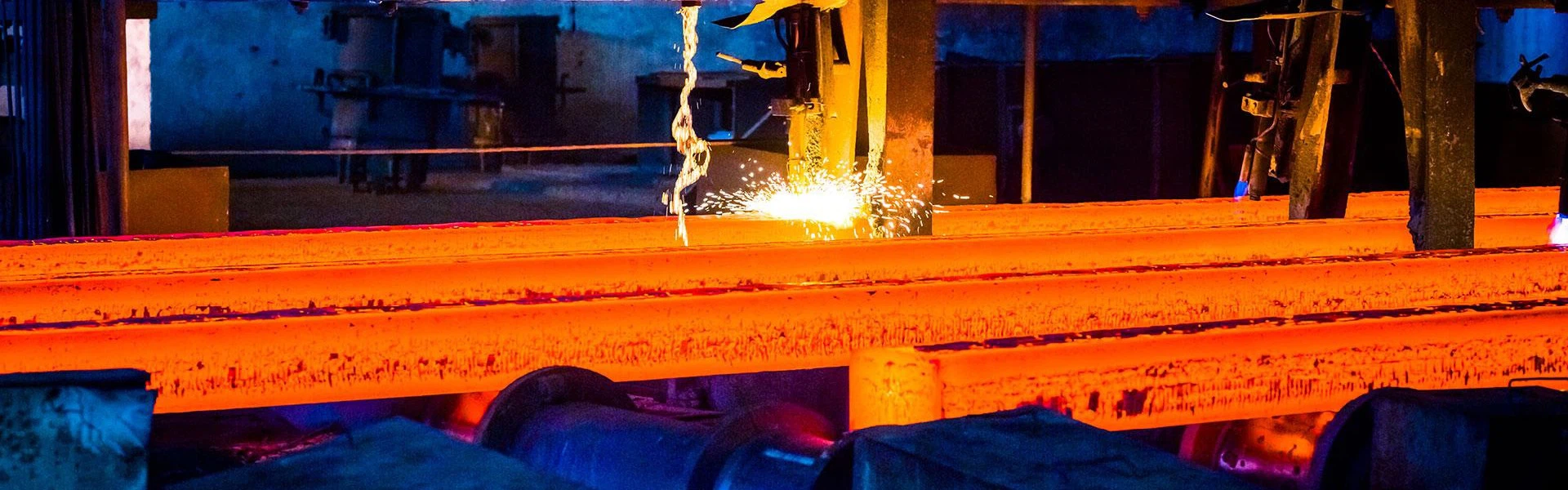
Flat Steel, also known as Flat Steel or flat metal, refers to a type of steel that is rectangular in shape and has a flat surface. It is commonly used in construction, manufacturing, and other industries for various applications. Flat steel can be made from different types of steel, such as carbon steel or stainless steel, and it can be produced through processes like hot rolling or cold rolling. The dimensions and thickness of flat steel can vary depending on the specific requirements of the project.
Advantages of Flat Steel
Malleability
Flat steel is highly malleable, which means it can be easily shaped and formed into various structures without breaking. This property allows for a wide range of applications in construction, automotive, and appliance industries.
Weldability
Flat steel typically welds well due to its homogenous metal composition, allowing for strong joints that are critical in fabrication processes.
Easy to Cut and Machine
Flat steel can be cut and machined using a variety of tools and techniques, such as shearing, sawing, laser cutting, and bending, which facilitates customization and manufacturing efficiency.
Recyclability
Steel is one of the most recycled materials in the world. Flat steel can be reprocessed and repurposed with minimal loss of quality, contributing to a more sustainable material cycle.
Availability
Flat steel is widely available in various grades, sizes, and finishes, catering to diverse industrial and consumer product needs.
Compatibility with Coatings
Flat steel surfaces can be effectively coated with paints, varnishes, and other protective coatings, enhancing its aesthetic appeal and functional properties like weather resistance.


Why Choose Us
Rich Experience
Our company has many years of production work experience. The concept of customer-oriented and win-win cooperation makes the company more mature and stronger.
Quality control
In the processing of production, our professional technical engineers inspect the processing to ensure the quality of products,After our machine finish , our engineer will make 24 hours test constantly and ensure the machine reach to the best performance.
One-stop Solution
With rich experience and one-to-one service,we can help you choose products and answer technical questions.
Competitive Price
We have professional sourcing team and cost accounting team, stive to reduce cost and profit and provide you a good price.
Top 8 Uses of Flat Steel


Frame constructions
Undeniably, Flat Steel make up massive parts of building frames. Flat Steel bars specifically are easy to cut, drilled, and welded, making them the first choice in a range of frame construction and other applications. Flat Steel can be prefabricated at the factory stage into the desired shape, meaning a more significant part of work can be done before materials reach the construction site, thereby cutting costs and overall building time.
Improvements and additions
Flat Steel are not only used during building stages. They are also an integral part of the construction process that reinforces the existing structures. Flat Steel are essential for ensuring a structure remains safe for domestic, commercial, and industrial use. Flat Steel can be easily cut and formed to fit, replace and support the materials already in place. They can also be used to reinforce and replace existing materials that have been damaged or those that have degraded over time due to wear and tear. Mild steel is quite reworkable even once already used, thus allowing for easy reinforcement of parts of the structure in severe need of an overhaul.
Industrial artwork
Flat Steel are the natural choice for industrial artists and artisans working on large-scale industrial projects such as statues. They are malleable and workable, thus ideal for several art forms, décor, and industrial art pieces. High-quality steel flat bars can be utilized in just about anything from sculptures to modern shelving units. Steel sections can go through additional manufacturing processes that add a smoother finish and outer layering. This ensures the pieces of art get a cleaner, sharper appearance and shinier and reflective surfaces.
Renewable energy
Flat Steel bars are undeniably one of the prime materials for the energy industry. It is a recyclable material that boosts sustainability efforts in several renewable energy processes. Flat bars are also used as a foundation in water tower structures and as concrete reinforcing bars for foundations in turbines, generators, and water gates.
Home appliances
Flat Steel form integral parts of myriads of home appliances, from latches, overhead doors, and heaters to refrigerators and chest freezers. They are also used in washing machines, extractor hoods, microwaves, and other everyday items. Mild steel flat bars offer unmatched versatility and strength that guarantee the safety of the appliances and reliability. The flat bars used in home appliances are given robust coatings and surface treatments to boost their functionality and durability.
Construction industry
The construction industry is arguably one of the most common industries where steel bars are mostly utilized. Flat Steel can function in the same manner as hollow steel bars. They may also be fitted into several types of constructional installations in combination with hollow bars. Flat Steel bars offer a high level of versatility that allows cutting to preferred dimensions, sizes, and varying lengths.
The following are some of the typical applications of flat bars in the construction industry:
Steel parking construction works
Flat steel bars used as constructional frames in steel parking projects provide an additional layer of durability and lightweight support. They also provide a high level of illumination in the parking area that helps drivers navigate safely in the event they find themselves driving in low visibility.
Drilling and ductwork
During construction, Flat Steel are also used in areas like welding or drilling when a frame needs to be given some form of shape. They are also used as a basic building support material to support braces for ductwork areas.
Mainstream industrial works
Construction projects vary widely in scope. However, any large project requires high-quality materials to guarantee its integrity. The right construction materials should be durable and NM-wearing to survive all levels of abuse and extreme environments. Flat Steel are a natural choice that gives your industrial project the strength to protect from damages. In addition to its strength and malleability, this metal is also highly flexible. This means industrialists will take less time to cut, drill and operate. They also ease the process of bolting and riveting.
Fabrication works
Mild steel Flat Steel are a versatile product commonly used in the fabrication industry. It boasts a flat surface and square edge, making it an ideal building support material. Notably, the Grade 300 Flat Bar is most commonly used in fabrication works requiring higher structural integrity.
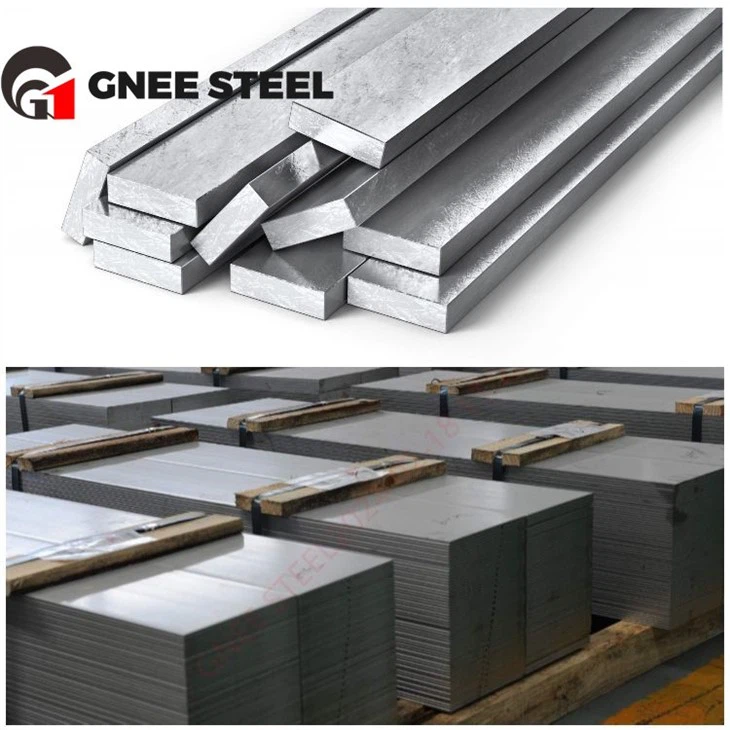
Steel sheet/coil and steel plate are two typical names for flat steel products. Hot rolled coil (HRC), cold rolled coil (CRC), metallic coated steel, organic coated steel, coil plate, and reversing mill plate are some of the different varieties.
The majority of steel plate is produced in thicknesses ranging from 5 mm to 80mm. Plates are hot rolled coil overlaps in lower gauges. Steel plates are classified into two types: reversing mill plates and coil plates. Reversing mill plates are made by rolling a slab back and forth and have a higher thickness than coil plates. Coil plates, on the other hand, are produced by rolling in tandem mills in a single direction.
The thickness of steel sheet/coil is often less than 5mm. Hot-rolled sheet, cold-rolled sheet, metallic coated sheets, and organic coated sheets are also steel sheet products. Hot rolling is done when the recrystallisation temperature of steel exceeds 1700° F. Steel is easily deformed at this temperature. In comparison to cold rolled steel, HRC provides less precision and a lower surface polish after cooling.
HRC can be marketed for a variety of uses or further processed to produce cold rolled coils. Cold rolling is typically done at room temperature. It improves both the mechanical qualities and the surface finish.
CRC has a wide range of applications, primarily in construction and automotive. It can also be treated further to produce corrosion-resistant steel, often known as coated steel. Hot dip galvanized (HDG) steel is one of the most common varieties of metallic coated steel. It is zinc-coated to protect steel from corrosion by minimizing its exposure to the outside environment. Organic coated steel, also known as color coated steel or pre-painted galvanized iron (PPGI), can be made from metallic coated steel.
Cutting flat steel can be done using several methods, depending on the tools and equipment available to you. Here are some common ways to cut flat steel:
Power tools: Using power tools such as angle grinders, circular saws, or plasma cutters can efficiently cut through flat steel. These tools require proper safety gear and operating skills.
Hand tools
For smaller or simpler cuts, hand tools like hacksaws, metal cutting shears, or tin snips can be used. These methods may require more effort but are suitable for limited cutting tasks.
Cutting torch
A oxy-acetylene or plasma cutting torch can be used for cutting thick or large pieces of flat steel. This method requires expertise and safety precautions.
Band saw
A band saw specifically designed for cutting metal can provide precise and straight cuts.
Laser cutting
In industrial settings, laser cutting machines can be employed for high-precision cuts in flat steel.
Mechanical shears
Some dedicated metal shearing machines are available that can cut flat steel with ease and accuracy.
Drilling and sawing
If you only need to make holes or cut along specific lines, using a drill and a metal saw can be an option.
What Role Does Alloying Play In Enhancing The Properties Of Flat Steel
Alloying plays a significant role in enhancing the properties of flat steel. Here are some of the ways alloying can impact the properties:
Strengthening: Alloying elements can increase the strength of flat steel. By adding elements such as carbon, manganese, or silicon, the steel's hardness and tensile strength can be improved.
Toughness: Alloying can also enhance the toughness or ductility of flat steel. Elements like nickel or molybdenum can contribute to better fracture resistance and increased fatigue life.
Corrosion resistance: Alloying elements can provide resistance to corrosion. For example, adding chromium to steel creates stainless steel, which is highly resistant to rust and corrosion.
hardening: Some alloys can NMen the steel, making it more wear-resistant. Alloying with elements like chromium, vanadium, or manganese can increase the hardness and wear resistance of the flat steel.
Magnetic properties: Alloying can affect the magnetic properties of steel. Certain alloys can make the steel more or less magnetic, depending on the desired application.
Temperature resistance: Alloying can improve the steel's resistance to high temperatures. Elements like chromium and nickel can enhance the steel's ability to withstand elevated temperatures without losing its mechanical properties.
Machinability: The addition of specific alloying elements can improve the machinability of flat steel, making it easier to shape and fabricate.
Special properties: Alloying can introduce specific properties depending on the desired application. For instance, adding elements for enhanced conductivity or specific chemical resistance.
The primary raw materials used in the production of flat steel are iron ore, coal, and recycled scrap metal. Iron ore is reduced to iron in blast furnaces using coke, which is a form of carbonized coal. This iron is then converted into steel in basic oxygen furnaces or electric arc furnaces.
In the case of electric arc furnaces, which are commonly used for producing flat steel from scrap, the main input is recycled steel scrap. Scrap metal is collected and sorted before being melted down in the furnace. The addition of fluxes and other alloying elements helps in refining the steel to achieve the desired chemical composition and properties.
Moreover, certain chemical elements like manganese, silicon, nickel, chromium, vanadium, and tungsten may be added in small quantities to impart specific characteristics to the steel, such as strength, corrosion resistance, or wear resistance. These alloying elements are also considered part of the raw materials used in the production of specialized flat steels.
Flat steel, also known as sheet steel or plate steel, is a specific form of steel that is characterized by its flat shape and relatively thin thickness. It can be compared to other types of steel in terms of its properties, applications, and advantages. Here are some comparisons:
Shape: Flat steel is distinguished by its flat shape, whereas other types of steel, such as round bars, beams, or tubes, have different shapes. This flat shape makes flat steel suitable for applications where a flat surface is required, such as construction, automotive panels, and appliances.
Thickness: Flat steel is typically thinner compared to other types of steel. It is available in various thicknesses, ranging from a few millimeters to several centimeters. Thicker steel plates are often used in heavy construction, shipbuilding, and industrial machinery.
Manufacturing Process: Flat steel is commonly produced through hot rolling or cold rolling processes. Hot rolling involves heating the steel above its recrystallization temperature and then passing it through rollers to achieve the desired thickness. Cold rolling, on the other hand, involves rolling the steel at room temperature, resulting in a smoother surface finish.
Applications: Flat steel finds applications in a wide range of industries. It is commonly used in construction for building structures, roofing, and cladding. It is also used in automotive manufacturing for body panels, chassis components, and reinforcement. Additionally, flat steel is utilized in appliances, shipbuilding, machinery, and general fabrication.
Strength and Durability: Flat steel can be engineered to have high tensile strength and excellent durability, making it suitable for load-bearing applications. Its strength can be further enhanced through alloying or heat treatment processes.
Formability: Flat steel is highly formable and can be easily shaped into various forms, such as bending, stamping, or welding. This formability allows for the creation of complex structures and customized designs.
Cost: Flat steel is generally more cost-effective compared to other types of steel, such as structural steel or specialty alloys. Its affordability makes it a popular choice for a wide range of applications.
Availability: Flat steel is readily available in various sizes and grades from steel manufacturers and distributors. It can be easily sourced and supplied in large quantities.
Surface Finish: Flat steel can be produced with a smooth, clean surface finish, which is important for applications where appearance or corrosion resistance is a concern. The surface finish can be further enhanced through additional treatments, such as galvanizing or painting.
Recyclability: Like other types of steel, flat steel is highly recyclable. At the end of its life cycle, it can be easily recycled and repurposed, contributing to environmental sustainability.
How Does Flat Steel Affect The Structural Integrity Of a Building
Flat steel plays a crucial role in the structural integrity of a building. It is commonly used in various structural components, such as beams, columns, plates, and floor systems. Here are some ways in which flat steel affects the structural integrity of a building:
Load Bearing Capacity: Flat steel, especially in the form of beams and columns, provides the primary load-bearing capacity of a building. It supports the weight of the structure, including the floors, walls, and roof, and transfers the loads to the foundation. The strength and stiffness of the flat steel components are essential for ensuring the structural stability and safety of the building.
Flexural Strength: Flat steel beams and plates are designed to resist bending or flexural loads. They are subjected to various loads, such as dead loads (weight of the structure), live loads (occupant and furniture loads), and environmental loads (wind, snow, seismic forces). The flexural strength of flat steel determines its ability to withstand these loads without excessive deflection or failure.
Tensile Strength: Flat steel is also subjected to tensile forces, especially in applications where it is used as tension members or in suspended structures. Tensile strength refers to the ability of the steel to resist pulling or stretching forces. It is crucial for ensuring the stability and safety of the building under tension loads.
Connection and Joint Strength: Flat steel is often used in structural connections and joints, such as welded or bolted connections. The strength and integrity of these connections are critical for the overall structural performance of the building. Flat steel components must be properly connected to ensure load transfer and to resist forces such as shear, moment, and torsion.
Stability and Rigidity: Flat steel components contribute to the stability and rigidity of the building. They help resist lateral loads, such as wind or seismic forces, and prevent excessive deflection or deformation. Flat steel plates are commonly used in floor systems to provide rigidity and distribute loads evenly.
Fire Resistance: Flat steel can be designed to have fire-resistant properties, which is crucial for the safety of the building occupants. Fire-resistant flat steel components, such as fire-rated beams or columns, can withstand high temperatures and maintain their structural integrity for a specified period, allowing for safe evacuation and minimizing structural damage during a fire.
Corrosion Resistance: Flat steel components exposed to corrosive environments, such as coastal areas or industrial settings, must have adequate corrosion resistance. Corrosion can weaken the steel and compromise its structural integrity over time. Proper protective coatings or the use of corrosion-resistant steel grades can enhance the longevity and structural performance of flat steel components.
What Factors Should You Consider When Choosing Flat Steel
When choosing flat steel, several factors should be taken into consideration to ensure it meets the requirements of the application:
Grade and composition
Different flat steels have varying chemical compositions, which affect their mechanical properties such as strength, hardness, and corrosion resistance. Common grades include mild steel (e.g., ASTM A36), structural steel, alloy steel, and stainless steel.
Mechanical properties
The tensile strength, yield strength, elongation, and hardness of the flat steel should align with the demands of the project. For instance, higher strength steels are suitable for load-bearing structures, while those with higher elongation may be preferable for forming applications.
Size and shape
Flat steel comes in various widths, thicknesses, and lengths. The dimensions should match the design specifications and tolerances of the intended application.
Surface finish
The smoothness and texture of the steel surface can impact welding, painting, and aesthetic aspects. Some applications may require pickling or grinding to remove scale or surface imperfections.
Heat treatment
The heat treatment process (annealing, normalizing, hardening, tempering) can significantly alter the mechanical properties of steel. Understanding the effects of heat treatment is important for selecting the right material for specific service conditions.
Fabrication considerations
The ease of forming, cutting, machining, and joining methods should be evaluated based on the fabrication process. Some steels may be more difficult to weld or machine due to their composition and structure.
Cost
The price of flat steel varies based on grade, size, and market conditions. Cost-effectiveness is an important factor, balancing the material's performance against budget constraints.
Availability and supply chain
Ensuring that the chosen flat steel is readily available from suppliers and that there are no potential issues with the supply chain is important for project timelines.
Standards and certifications
Compliance with relevant industry standards and certifications, such as ASTM, EN, or ISO, ensures quality and consistency in the material's properties.
Our Factory
GNEE (Tianjin) Multinational Trading Co., Ltd. is located in Anyang City, Henan Province, China, is a comprehensive, modern, high quality enterprise integrating steel production, processing and sales. GNEE specialises in the production of heavy duty H-beams, all types of section products, hot rolled steel plates, seamless steel pipes, welded steel pipes, stainless steel tubes, plates, coils and fittings, flanges, etc. A one-stop-shop service company.
FAQ
Gnee Steel (Tianjin) Co., Ltd. is one of the leading flat steel manufacturers and suppliers in China. We warmly welcome you to buy high-grade flat steel for sale here and get free sample from our factory. All customized products are with high quality and low price.
rust resistant treatment flat steel, quality flat steel, bent flat steel