


EN10025-4 H-Beam
EN 10025-4 specifies the technical requirements for non-alloy structural steels (such as S235JR, S275JR, S355JR, etc.), including chemical composition, mechanical properties (yield strength, tensile strength, elongation, etc.) and delivery state (usually hot rolled).
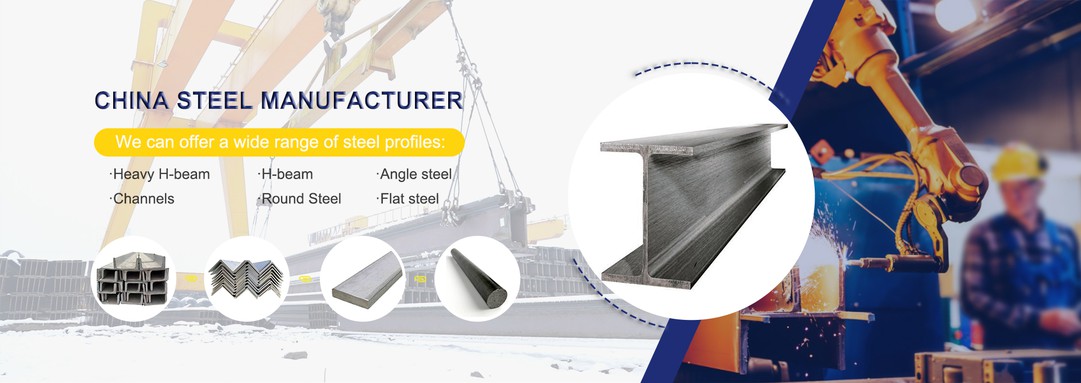
The cross section of an H Beam is "H" shaped, consisting of two parallel flanges and a vertical web.


Advantage
- High strength and light weight:
The cross-sectional design of H-beam makes it have higher section modulus and bending resistance than ordinary I-beam at the same weight, which is suitable for bearing heavy loads.
- Excellent mechanical properties:
The steel specified in EN 10025-2 (such as S355JR) has a yield strength of 355 MPa and a tensile strength of 470-630 MPa, which meets the needs of high-load structures.
- Convenient construction:
The flanges are wide and parallel, which is convenient for bolting or welding.
Standardized dimensions reduce processing time and improve engineering efficiency.
- Economical:
High material utilization rate and reduced waste.
Low long-term maintenance costs due to the corrosion resistance of steel (which can be enhanced by galvanizing or spraying).
- Stability:
The symmetrical cross-section of H-beam makes it stable under axial pressure and lateral force, suitable for seismic design
Application
- Building structures:
Frames and beams of high-rise buildings (such as commercial buildings and industrial plants).
Roof trusses and floor support systems.
- Bridge engineering:
Main beams and support structures of railway/highway bridges (anti-corrosion treatment is required).
- Industrial facilities:
Heavy equipment brackets, crane track beams, oil platform structures.
- Infrastructure:
Transmission towers, subway tunnel support, port terminals.
- Temporary structures:
Construction of temporary supports, fast-assembly buildings (such as exhibition halls).
Gnee Group

