




Hey there! As a supplier of H Beams, I've been getting a lot of questions about the seismic performance of these structural components. So, I thought I'd take a moment to break it down for you and explain what makes H Beams so great when it comes to withstanding earthquakes.
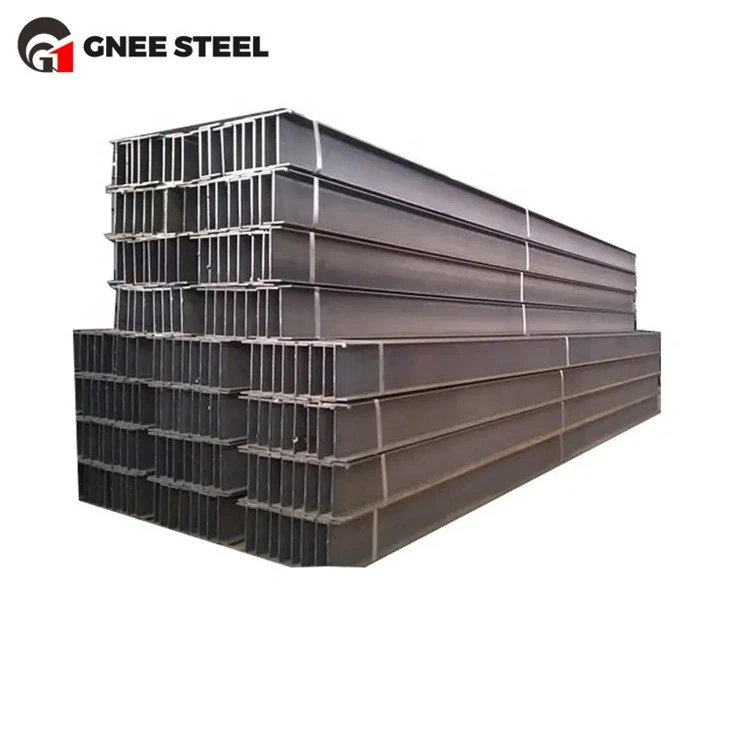
First off, let's talk about what H Beams are. H Beams, also known as I Beams, are a type of structural steel beam that have a cross-section in the shape of the letter "H". They're commonly used in construction projects because they're strong, durable, and can support heavy loads. H Beams are made by rolling or welding steel plates together, and they come in a variety of sizes and shapes to suit different applications.
Now, let's get into the seismic performance of H Beams. When an earthquake hits, buildings and structures are subjected to a lot of stress and movement. The ground shakes, and the building has to be able to withstand the forces that are being applied to it. This is where H Beams come in.
One of the key factors that determines the seismic performance of H Beams is their shape. The "H" shape of the beam provides a high moment of inertia, which means that it's able to resist bending and twisting forces better than other shapes. This is important because during an earthquake, the building is likely to experience a lot of lateral movement, and the H Beam needs to be able to resist this movement without failing.
Another important factor is the material that the H Beam is made of. Most H Beams are made of steel, which is a strong and ductile material. Ductility is the ability of a material to deform without breaking, and it's an important property when it comes to seismic performance. During an earthquake, the building is likely to experience a lot of stress and strain, and the H Beam needs to be able to deform without breaking. Steel is able to do this, which makes it a great material for use in seismic-resistant structures.
In addition to their shape and material, the way that H Beams are designed and installed also plays a role in their seismic performance. For example, the connections between the H Beams and other structural components need to be strong and flexible. This allows the building to move and flex during an earthquake without causing the H Beams to fail.
Now, let's take a look at some specific types of H Beams and their seismic performance. One popular type of H Beam is the EN S355JR 1016x305x222 H Type Steel Structural Beam. This beam is made of high-strength steel and has a large cross-section, which makes it very strong and able to support heavy loads. It's also designed to be flexible, which allows it to deform without breaking during an earthquake.
Another type of H Beam that's commonly used in seismic-resistant structures is the ASTM A572 H Beam Section Carbon Steel. This beam is made of carbon steel, which is a strong and ductile material. It's also designed to be easy to install, which makes it a popular choice for construction projects.
Finally, the Mild Universal Structural S275J2 Steel H Beam is another type of H Beam that's commonly used in seismic-resistant structures. This beam is made of mild steel, which is a strong and flexible material. It's also designed to be cost-effective, which makes it a popular choice for construction projects on a budget.

So, there you have it! That's a brief overview of the seismic performance of H Beams. As you can see, H Beams are a great choice for use in seismic-resistant structures because of their shape, material, and design. If you're in the market for H Beams for your next construction project, I'd be happy to help you find the right ones for your needs. Just get in touch, and we can start a conversation about your project and what you're looking for.
References:
- "Seismic Design of Steel Structures" by John E. Breen and Wai-Fah Chen
- "Structural Steel Design" by Jack C. McCormac and Russell H. Wood