


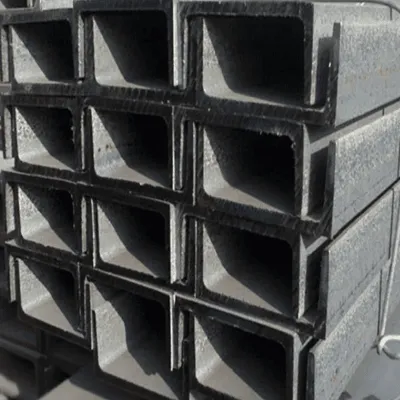


Product Description
ApplicationStructural parts of medium and large cross sections and high surface hardness, e.g., valve and gate valves, cylinders for combustion engines, superheated steam valves and fittings.All Grades Comparison
| DIN | EN |
| 1.7707 | 30CrMoV9 |
Quality StandardEN 10250 Open steel die forgings for general engineering purposes. Alloy special steelsChemical Composition(%)
| C | Mn | Si | P | S | Cr | Ni | Mo | V |
| 0.26-0.34 | 0.40-0.70 | 0.40 max | 0.035 max | 0.035 max | 2.30-2.70 | 0.60 max | 0.15-0.25 | 0.10-0.20 |
Mechanical Properties(T=20°C if not differently stated)
| Process | Diameter(mm) | Tensile Strength Rm (Mpa) | Yield Strength Rp0.2 (Mpa) | Elongation A5 (%) | Impact Value Kv (J) Room Temperature |
| QUENCHED AND TEMPERED | 160 max | 900 min | 700 min | 12 min | 35 min |
| QUENCHED AND TEMPERED | 160-330 | 800 min | 590 min | 14 min | 35 min |


1.Which steel is best suited for nitriding?
Low-carbon alloys of steel containing these metals are typically good candidates for nitriding. The primary steel alloys used for nitriding include: -SAE 4130. -SAE 4140.
2.What does nitriding do to steel?
Nitriding offers numerous advantages, making it a popular choice for improving the properties of metal components: Increased hardness: the formation of hard nitrides on the surface of the material significantly increases surface hardness, improving wear resistance and reducing surface deformation.
3.Can EN24 be nitrided?
EN24 is very suitable for nitriding, which gives it a very hard wear-resistant core in the 61 to 65Rc range. The nitriding process typically consists of low temperatures, which produce components with a scale-free surface and minimum distortion.
4.What are the disadvantages of nitriding?
The disadvantages of gas nitriding are:
Reaction kinetics heavily influenced by surface condition – an oily surface or one contaminated with cutting fluids will deliver poor results.
Surface activation is sometimes required to treat steels with a high chromium content – compare sputtering during plasma nitriding.
5.Can mild steel be nitrided?
The oxidation resistance of mild steel in a simulated boiler flue gas atmosphere has been shown in laboratory tests to be significantly enhanced by a surface nitriding treatment which forms a controllable fine-grained martensitic layer without precipitation of iron nitrides.