




Q: What makes hot-rolled A36 I-beams better for my steel structure than cold-rolled ones?A: Hot-rolled A36 I-beams outperform cold-rolled options for steel structures in several key ways. First, the hot-rolling process (heating steel to over 1,000°C before shaping) creates a uniform, coarse grain structure in the A36 steel, which boosts ductility-critical for steel structures that may need to flex slightly under loads (like wind or snow) without cracking. Cold-rolled beams, by contrast, have compressed grains that make them harder but brittle, increasing the risk of breakage under stress. Second, hot-rolled A36 I-beams have excellent weldability: their grain structure and low carbon content (max 0.29% for A36) let them be welded easily with standard techniques (MIG, TIG) without preheating, saving your team time and labor costs. Cold-rolled beams often require special welding consumables to avoid cracking, adding complexity. Third, hot-rolled beams are more cost-effective for large structural projects-cold rolling uses more energy and precision, driving up costs, while hot rolling is a simpler, faster process that keeps prices lower. Fourth, hot-rolled A36 I-beams come in larger sizes (taller heights, wider flanges) that are essential for structural support, whereas cold-rolled beams are typically smaller and suited for non-load-bearing parts. Fifth, hot-rolled beams have minimal internal stresses, so they don't warp or deform after installation-cold-rolled beams can develop residual stresses during manufacturing, leading to alignment issues in your steel structure. For most structural needs, hot-rolled A36 I-beams are the more reliable, affordable choice.
Q: Can A36 H-beams and I-beams be used together in the same steel structure?A: Absolutely, A36 H-beams and I-beams work seamlessly together in the same steel structure, and this combination is common for optimizing strength and cost. First, their shared A36 material ensures compatibility: both have identical mechanical properties (36 ksi yield strength, 58-80 ksi tensile strength) and weldability, so you can join them with welding or bolts without worrying about mismatched strength or joint failure. Second, they serve complementary roles: H-beams (with wider, symmetric flanges) excel at carrying heavy, multi-directional loads, making them perfect for main structural components like columns, large floor beams, or bridge girders. I-beams (with narrower flanges) are ideal for secondary support-like floor joists, roof purlins, or wall studs-where they efficiently handle vertical bending loads without taking up excess space. Third, using both reduces material waste and costs: you can use larger H-beams for critical load points and smaller I-beams for less demanding areas, instead of overusing expensive large beams everywhere. Fourth, their similar installation requirements simplify construction-your team can use the same tools and techniques (e.g., crane lifting, welding) for both, cutting down on training or equipment needs. Fifth, this combination meets global building codes: as long as the beams are sized correctly for their loads (per your structural engineer's design), inspectors will approve the structure. For example, a warehouse might use A36 H-beams as main frame columns and A36 I-beams as roof purlins-creating a strong, efficient system.
Q: What's the maximum span an A36 hot-rolled I-beam can cover without extra supports?A: The maximum span of an A36 hot-rolled I-beam depends on its size and the load it carries, but there are standard guidelines for common uses. First, for residential or light commercial projects (e.g., floor joists with typical live loads of 40 psf/1.92 kPa), a small I-beam like W10x33 (10-inch height, 33 lbs/ft) can span up to 12 meters (39 feet) without extra supports. A larger beam like W14x61 (14-inch height, 61 lbs/ft) can cover 18 meters (59 feet) for the same load, as its thicker web and wider flanges distribute weight better. Second, for heavier industrial loads (e.g., 100 psf/4.79 kPa for warehouse floors), the span shortens: a W14x61 might only span 10 meters (33 feet), while a W18x86 (18-inch height, 86 lbs/ft) could handle 14 meters (46 feet). Third, the load type matters too-uniform loads (like a full floor) allow longer spans than concentrated loads (like heavy equipment). A concentrated load of 5 tons at the center of a W14x61 beam would reduce its maximum span to around 8 meters (26 feet). Fourth, your structural engineer will calculate the exact span using software that accounts for beam size, load, and local codes (e.g., snow load in cold climates). They'll also consider deflection-A36 beams can flex slightly, but codes limit deflection to prevent damage (e.g., 1/360 of the span for floors). Fifth, while these are general guidelines, never rely on estimates alone: always have an engineer size the beam for your specific project to ensure safety. We can provide beam size charts to help your engineer start, but their final calculation is critical.
Q: Do you offer anti-corrosion treatments for A36 H/I-beams used outdoors?A: Yes, we offer several effective anti-corrosion treatments for A36 H/I-beams used outdoors, protecting them from rain, humidity, and salt (in coastal areas). First, the most common option is epoxy paint coating: we apply a high-quality industrial epoxy paint that forms a tough, waterproof barrier against moisture. This treatment is cost-effective and lasts 3-5 years outdoors, with easy touch-ups if needed-ideal for outdoor structures like canopies, park pavilions, or non-coastal building exteriors. Second, hot-dip galvanizing is a more durable choice: we dip the beams in molten zinc (450°C), which bonds to the A36 steel to form a thick, rust-resistant layer. Galvanized A36 beams last 10-20 years outdoors without maintenance, making them perfect for coastal projects, bridges, or outdoor storage structures where saltwater spray is a risk. Third, we offer zinc-rich primer + topcoat for a balance of durability and cost: the zinc primer provides cathodic protection (slowing rust even if the topcoat chips), and the topcoat adds extra waterproofing. This works well for outdoor beams that need a longer lifespan than paint but are too large for easy galvanizing. Fourth, all treatments are applied in our controlled facility to ensure even coverage-we clean the beams first (removing oil, rust, or scale) to help the coating adhere, and we test thickness with a coating gauge to meet industry standards. Fifth, we can customize treatments based on your project's location and budget: for example, a beam in a dry desert might only need paint, while one in a coastal city needs galvanizing. We'll advise you on the best option and include treatment costs in your quote upfront.
Q: What quality checks do A36 hot-rolled H/I-beams go through before delivery?A: Our A36 hot-rolled H/I-beams undergo rigorous quality checks to ensure they meet ASTM standards and your structural needs. First, chemical composition testing: we use a spectrometer to verify the steel has the correct A36 makeup-max 0.29% carbon, 0.40-0.70% manganese, max 0.04% phosphorus, and max 0.05% sulfur. Any batch with off-spec elements is rejected to avoid strength issues. Second, mechanical property testing: we cut samples from each beam batch and run tensile tests (to measure yield/tensile strength) and elongation tests (to check ductility). A36 requires a minimum 36 ksi yield strength and 20% elongation-we only pass beams that meet or exceed these values. Third, dimensional inspection: our team uses precision tools (calipers, laser measures, straightness gauges) to check every beam's height, flange width, web thickness, length, and straightness. We follow ASTM A6/A6M standards (for structural shapes), so a W10x33 beam must have a 10.01-inch height, 5.81-inch flange width, etc.-any beam with errors beyond ±0.03 inches is reworked or discarded. Fourth, surface quality checks: we visually inspect each beam for defects like scratches, dents, or scale buildup. Minor surface issues are fixed with grinding; severe defects (like deep cracks) mean the beam is scrapped. Fifth, non-destructive testing (NDT) for welded beams: if your order includes custom-welded sections, we use ultrasonic testing (UT) to check for internal weld defects (like voids or cracks) and magnetic particle testing (MPT) for surface flaws. We provide a detailed test report with every order, including batch numbers and results, so you can confirm compliance with inspectors. These checks ensure your beams are safe, strong, and ready for installation.
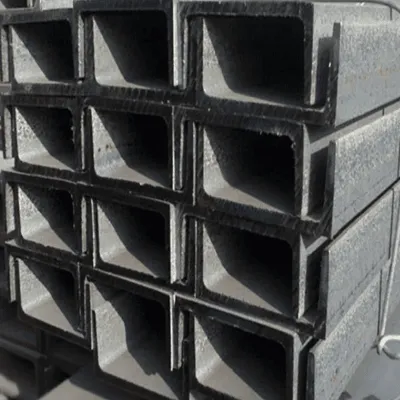
A36 Hot Rolled Structural I-Beams Steel Structure Welding Iron Carbon Steel H Beam - Group 2
Q: Can A36 I-beams be cut to custom lengths on-site, or is factory cutting better?A: A36 I-beams can be cut on-site, but factory cutting is almost always better for precision, safety, and efficiency. First, factory cutting uses CNC (computer numerical control) equipment that delivers unmatched accuracy-we cut to your exact length (error within ±1mm per meter) and smooth the ends to remove burrs. On-site cutting (with flame or plasma torches) often has larger errors (±5mm or more) and leaves rough ends, which can cause alignment issues when welding or bolting to other components. Second, factory cutting is safer: our facility has proper ventilation, fire suppression, and trained operators to handle steel cutting, reducing risks like sparks starting fires or workers inhaling fumes-on-site cutting can be hazardous if the area isn't properly prepped (e.g., flammable materials nearby). Third, factory cutting saves time on-site: your team won't need to set up cutting equipment, wait for cuts to cool, or clean up debris-they can start installing beams immediately. On-site cutting adds extra steps to your timeline, especially for large orders. Fourth, factory cutting reduces material waste: we optimize cuts to use the full length of raw steel beams, minimizing scrap. On-site cutting often leads to more waste if measurements are off or beams are cut too short. Fifth, we can add custom features during factory cutting (like drilled holes for bolts) that are hard to do on-site. While on-site cutting works for small adjustments (e.g., trimming 10cm off a beam), factory cutting is the best choice for most projects-just provide us with your exact length needs, and we'll deliver ready-to-install beams.
Q: What's the weight difference between A36 I-beams and H-beams of the same height?A: The weight difference between A36 I-beams and H-beams of the same height comes down to their flange design, and this affects their load capacity and cost. First, H-beams are heavier than I-beams of the same height because they have wider, thicker flanges. For example, a 10-inch (254mm) tall A36 I-beam (W10x33) weighs 33 lbs/ft (49.1 kg/m), while a 10-inch tall A36 H-beam (W10x49) weighs 49 lbs/ft (73.0 kg/m). The H-beam's wider flanges (6.52 inches vs. 5.81 inches for the I-beam) and thicker web (0.315 inches vs. 0.230 inches) add the extra weight. Second, the extra weight gives H-beams more load-bearing capacity: the W10x49 H-beam can carry 50% more uniform load than the W10x33 I-beam over the same span, making it better for heavy structural roles. Third, the weight difference impacts transportation and installation: heavier H-beams need larger cranes or more workers to lift, which adds minor costs-but this is often worth it for the extra strength. I-beams, being lighter, are easier to handle for secondary support roles (like joists) where heavy strength isn't needed. Fourth, the weight difference affects cost: H-beams cost more per foot than I-beams of the same height (e.g., $3.50/ft for W10x33 vs. $5.20/ft for W10x49) because they use more steel. This means you'll pay more for H-beams, but you'll need fewer supports, which can offset the cost. Fifth, your structural engineer will choose between I-beams and H-beams based on weight vs. strength needs: if a span requires heavy load capacity, they'll specify a heavier H-beam; if it's a light load, a lighter I-beam is more cost-effective. We can provide weight and cost comparisons for specific heights to help your decision.
Q: Are A36 hot-rolled H/I-beams suitable for high-rise residential building frames?A: A36 hot-rolled H/I-beams are suitable for mid-rise residential buildings (up to 10-12 stories) and can be used in parts of high-rises (12+ stories), depending on the design. First, their strength meets mid-rise needs: A36's 36 ksi yield strength is enough to support the weight of 10-12 residential floors, plus live loads (people, furniture) and environmental loads (wind, snow). For example, a W16x57 A36 H-beam can serve as a column in a 8-story building, supporting the floors above without issue. Second, their weldability and compatibility with other materials (concrete, wood) make them easy to integrate into mid-rise frames-you can weld A36 beams to concrete cores or bolt them to wood partitions, creating a flexible design. Third, they're cost-effective for mid-rises: high-strength steel (like A992) is more expensive, and mid-rises don't need its extra strength, so A36 saves you money without sacrificing safety. Fourth, for high-rises over 12 stories, A36 beams are often used for secondary components (like floor joists or balcony supports) while main columns use A992 or other high-strength grades-this balances strength and cost. High-rise main columns need to carry extreme loads, so A36 alone may not be enough, but it works well for less critical parts. Fifth, A36 meets building codes for residential use: as long as your engineer sizes the beams correctly (accounting for height, load, and seismic activity), inspectors will approve them. For example, a 10-story apartment building in a low-seismic area could use A36 H-beams for columns and I-beams for floors, creating a safe, affordable frame.
Q: How do I know which size A36 H/beam to choose for my warehouse floor?A: Choosing the right size A36 H/I-beam for your warehouse floor depends on three key factors: load, span, and local codes-and working with your structural engineer is essential, but here's a guide to start. First, define the total load: warehouse floors need to support dead load (floor materials like concrete, 100-150 psf/4.79-7.18 kPa) and live load (pallets, equipment, 200-500 psf/9.58-23.94 kPa). A floor for light storage (200 psf live load) needs a smaller beam than one for heavy forklifts (500 psf). Second, measure the span: the distance between the beam's supports (columns or walls). For a 10-meter (33-foot) span and 300 psf (14.36 kPa) total load, a W14x61 A36 beam (14-inch height, 61 lbs/ft) works well-it can handle the load without exceeding deflection limits (1/360 of the span). For a 15-meter (49-foot) span and the same load, you'd need a larger W18x86 (18-inch height, 86 lbs/ft) to avoid too much flex. Third, check local codes: some areas have stricter deflection limits (e.g., 1/480 of the span for warehouse floors with sensitive equipment) or snow load requirements (adding to the total load). Your engineer will factor these into the size choice. Fourth, use beam load tables: we provide ASTM A36 beam load tables that list maximum spans for each size and load-for example, our table might show that a W12x40 can span 8 meters for 300 psf. These tables are a starting point, but your engineer will confirm with software. Fifth, consider installation and cost: larger beams are stronger but heavier (needing bigger cranes) and more expensive. Your engineer will balance size, strength, and cost to find the most efficient option-they might recommend a W16x77 instead of a W18x86 if it meets load needs and saves money. Never guess the size-an undersized beam can fail, and an oversized one wastes money.
Q: What's the lead time for ordering A36 hot-rolled H/I-beams in large quantities?A: The lead time for large quantities of A36 hot-rolled H/I-beams depends on stock availability and customization, but we keep it predictable to fit your project timeline. First, if the beams are standard sizes and lengths (e.g., W10x33, W14x61 in 6/9/12-meter lengths) and we have them in stock, lead time is just 5-7 working days. We'll pull the beams from our warehouse, inspect them, and arrange shipping-perfect for projects with tight deadlines.


