The standard-making authorities for these steels are different. A36 is an American standard steel under ASME/ASTM specifications, SS400 is a Japanese standard steel under JIS G3101 (rolled steel for common structural use), and Q235 is a Chinese national standard steel under GB/T 700. In short: GB700: Q235, JIS G3101: SS400, ASME: A36.
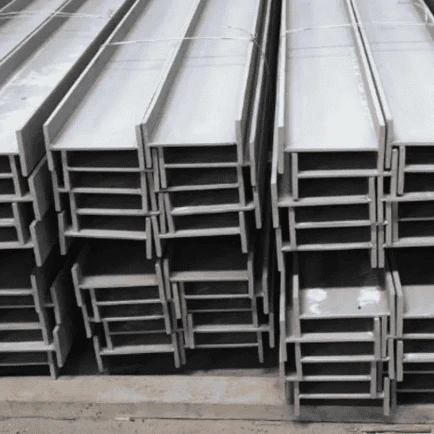
The chemical composition differs slightly among the three materials. A36 contains up to 0.26% carbon, ≤0.40% manganese, ≤0.05% silicon, ≤0.04% sulfur, ≤0.04% phosphorus, and at least 0.2% copper.
Q235-A has 0.14–0.22% carbon, 0.3–0.65% manganese, 0.3% silicon, ≤0.05% sulfur, ≤0.045% phosphorus, while Q235-B has slightly lower carbon (0.12–0.20%) and manganese (0.3–0.70%). SS400 does not limit carbon, manganese, or silicon content but requires sulfur and phosphorus ≤0.05%.
For manganese content, A36 does not specify a value for plates thinner than 20 mm due to thickness variation. Q235 requires control of C, Si, Mn, S, and P, while SS400 only specifies S and P limits.
Mechanical properties of these steels also vary. A36 has tensile strength 58–80 Ksi (~400–550 MPa) and yield strength 36 Ksi (~250 MPa). Q235 has tensile strength 370–500 MPa and yield strength 235 MPa.
SS400 has tensile strength 400–510 MPa and yield strength 245 MPa (values based on plates <16 mm thickness). From this data, A36 and SS400 are named based on yield strength, whereas Q235 is slightly lower in performance but still widely used.
In terms of substitution, although Q235 mechanical properties are slightly lower than A36 and SS400, in most practical engineering projects, the three materials can often be used interchangeably if no strict requirements are imposed by the project owner.
Comparing only mechanical properties, A36 and SS400 are similar to 20# high-quality carbon structural steel, with tensile strength not less than 410 MPa and yield strength not less than 245 MPa, making them suitable for general structural applications. Q235 is slightly lower but remains cost-effective and widely available.
FAQ
What is ASTM A36 Beam?
ASTM A36 Beams are American standard carbon structural steel under ASME/ASTM specifications. They are commonly used in general structural applications due to their balanced strength, weldability, and ductility. A36 Beams contain up to 0.26% carbon and at least 0.2% copper, which improves atmospheric corrosion resistance.
What is Q235 Beam?
Q235 Beams are Chinese national standard structural steel under GB/T 700. They have a carbon content of 0.12–0.22% depending on grade (A or B) and are widely used for structural components like beams, columns, and trusses. Q235 Beams have slightly lower strength than A36 but are cost-effective and easy to source.
What is SS400 Beam?
SS400 Beams are Japanese standard structural steel under JIS G3101, designed for rolled steel used in general structures. SS400 does not strictly control carbon, manganese, or silicon but limits sulfur and phosphorus to ≤0.05%. Its mechanical properties are similar to A36, making it suitable for general construction.
Which beam has better corrosion resistance?
A36 Beams have higher atmospheric corrosion resistance due to copper content. Q235 and SS400 do not contain copper, so they may require coating or galvanization for outdoor use.
How do the naming conventions differ?
A36 and SS400 are named based on yield strength, while Q235 is named based on carbon content and grade. In practice, A36 and SS400 have slightly higher mechanical properties, while Q235 is slightly lower but still suitable for many structural projects.