Group 1: Basic Information about Angel Steel Angle Irons
What is Angel Steel's hot-rolled carbon steel angle iron?
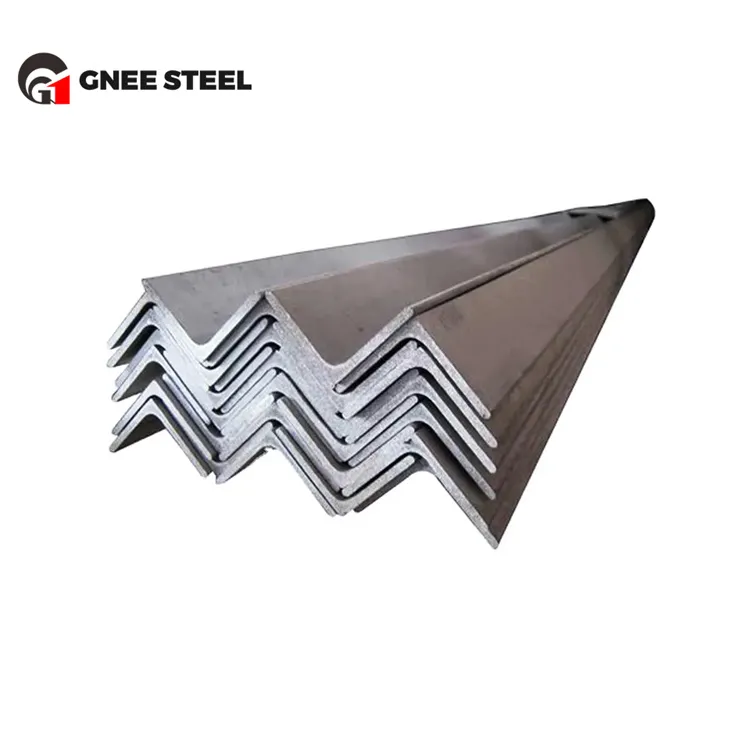
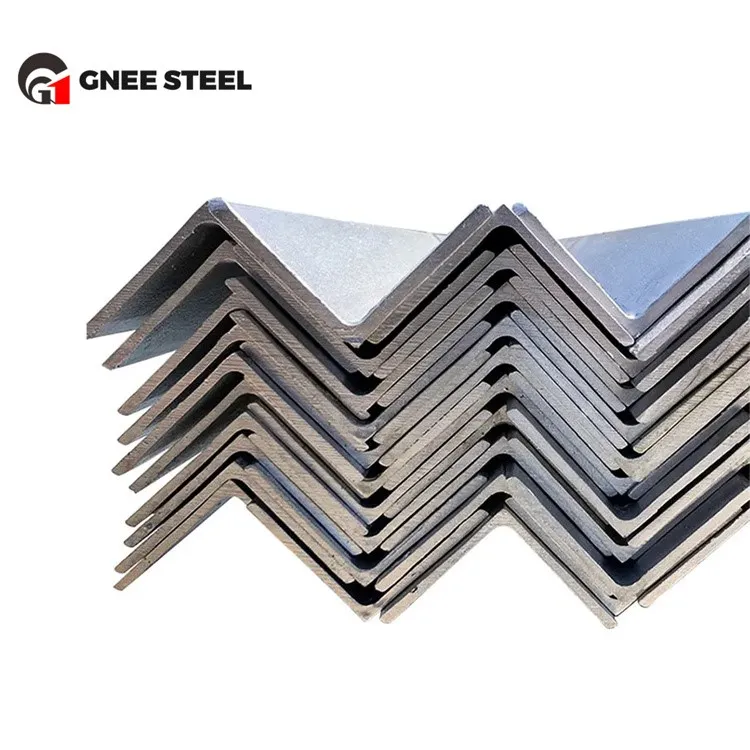
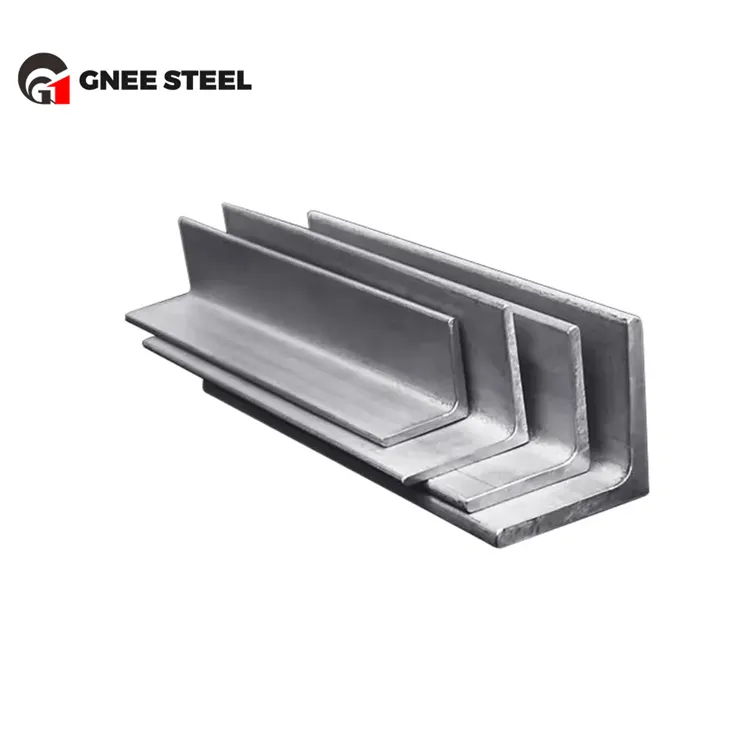
Angel Steel's hot-rolled carbon steel angle iron is a type of structural steel product with an L-shaped cross-section, produced through hot-rolling processes. It is made from carbon steel, which gives it good strength and durability for various construction and industrial uses. The hot-rolling method involves heating the steel billet and shaping it into the desired angle, enhancing its mechanical properties like ductility and toughness. This angle iron is available in both equal (sides of the same length) and unequal (sides of different lengths) forms, catering to diverse structural needs. It is widely recognized for its reliability in supporting loads and reinforcing structures.
What does the specification "50505" mean for Angel Steel's angle iron?
The specification "50505" refers to the dimensions of Angel Steel's equal angle iron. The first two numbers, "50*50", indicate that both legs (the two sides of the L-shape) are 50 millimeters in length. The last number, "5", represents the thickness of the legs, measured in millimeters. This specific size is commonly used in medium-load structural applications, providing a balance between strength and weight. It is suitable for frameworks, bracing, and supports where a stable, right-angled connection is needed. The uniformity of equal angles makes them easy to integrate into symmetric structures.
What grades of carbon steel does Angel Steel offer for its angle irons?
Angel Steel offers several grades for its hot-rolled carbon steel angle irons, including Q235, Q345c, St235jr, and those compliant with ASTM standards. Q235 is a Chinese standard grade with a minimum yield strength of 235 MPa, ideal for general structural use. Q345c is a higher-strength grade (345 MPa yield) with better low-temperature toughness, suitable for harsh environments. St235jr is a European standard grade similar to Q235, known for good weldability. ASTM grades, like A36, meet American standards, ensuring compatibility with international projects. These grades cater to different strength and environmental requirements.
What is the difference between equal and unequal angle steel from Angel Steel?
Equal angle steel from Angel Steel has legs of the same length (e.g., 50505), while unequal angle steel has legs of different lengths (e.g., 50305). Equal angles are often used in symmetric structures, such as frames and trusses, where balanced load distribution is key. Unequal angles are preferred for applications needing asymmetric support, like edge reinforcements or connecting different-sized components. The choice depends on the structural design: equal angles simplify installation in uniform structures, while unequal angles offer flexibility in non-symmetric load-bearing scenarios. Both types maintain the same high-quality hot-rolled properties.
Why is hot-rolling used in producing Angel Steel's angle iron?
Hot-rolling is used in producing Angel Steel's angle iron because it enhances the steel's mechanical properties and workability. During hot-rolling, steel billets are heated above their recrystallization temperature (around 1000°C), making them malleable and easy to shape into the L-angle form. This process refines the grain structure of the steel, improving its strength, ductility, and toughness. Hot-rolled angle irons also have a smoother surface finish compared to cold-rolled alternatives, reducing the need for additional processing. Additionally, hot-rolling is cost-effective for mass production, allowing Angel Steel to offer high-quality angle irons at competitive prices.
Group 2: Mechanical Properties & Grades
What are the key mechanical properties of Q235 grade angle iron from Angel Steel?
Q235 grade angle iron from Angel Steel has a minimum yield strength of 235 MPa, which ensures it can withstand moderate loads without permanent deformation. Its tensile strength typically ranges from 375 to 500 MPa, providing enough toughness to resist breaking under stress. This grade offers good ductility, with an elongation rate of around 25%, allowing it to be bent or welded without cracking. It also has acceptable impact resistance at room temperature, making it suitable for general structural applications. These properties make Q235 a versatile choice for frameworks, supports, and light to medium-load structures.
How does Q345c differ from Q235 in terms of performance?
Q345c is a higher-strength grade compared to Q235, with a minimum yield strength of 345 MPa-significantly higher than Q235's 235 MPa. This makes Q345c better suited for heavy-load applications, such as large buildings or bridges. Q345c also offers superior low-temperature toughness, as indicated by the "c" suffix, which means it meets impact test requirements at -40°C, unlike Q235, which performs best at room temperature. Additionally, Q345c has a higher tensile strength (470-630 MPa) and better fatigue resistance, making it ideal for structures exposed to harsh weather or dynamic loads. However, it is slightly less weldable than Q235 and may require pre-heating in thick sections.
What are the characteristics of St235jr grade angle iron?
St235jr is a European standard grade (EN 10025) offered by Angel Steel, known for its balanced mechanical properties. It has a minimum yield strength of 235 MPa, similar to Q235, and a tensile strength of 360-510 MPa. The "jr" suffix indicates it meets impact toughness requirements at 20°C, ensuring reliability in moderate temperatures. St235jr is highly weldable and formable, making it easy to fabricate into various structural components. It is often used in construction, machinery, and infrastructure projects where consistent quality and European standard compliance are required. Its versatility and cost-effectiveness make it a popular alternative to Q235 in international markets.
What ASTM grades are available for Angel Steel's angle irons, and what do they offer?
Angel Steel's ASTM-compliant angle irons include grades like ASTM A36, a widely used structural steel. ASTM A36 has a minimum yield strength of 250 MPa (for thicknesses ≤203 mm) and a tensile strength of 400-550 MPa, offering good strength for general use. Another grade is ASTM A572, which provides higher strength (yield strengths up to 550 MPa) for heavy-load applications. These ASTM grades are known for their strict quality control, ensuring consistent mechanical properties and dimensional accuracy. They are designed to meet American construction standards, making them suitable for projects in North America or those requiring international certification. Their weldability and formability match or exceed that of Q235, with reliable performance in diverse environments.
How do the mechanical properties of hot-rolled angle irons compare to cold-rolled ones?
Hot-rolled angle irons from Angel Steel have distinct properties compared to cold-rolled versions. Hot-rolled irons have better ductility and toughness due to their refined grain structure from the hot-rolling process, making them easier to weld and bend. They also have higher tensile strength and yield strength than cold-rolled irons of the same grade, as cold-rolling can increase hardness but reduce ductility. Cold-rolled angle irons have tighter dimensional tolerances and a smoother surface finish, but they are more brittle and less suitable for heavy-load structural use. For most construction and industrial applications, hot-rolled angle irons are preferred for their balance of strength, workability, and cost-effectiveness.
Group 3: Applications & Uses
In which construction projects are Angel Steel's 50505 angle irons commonly used?
Angel Steel's 50505 angle irons are commonly used in medium-scale construction projects, such as residential buildings, small commercial structures, and warehouse frameworks. Their 50mm legs and 5mm thickness provide sufficient strength for supporting roof trusses, floor joists, and wall frames. They are also used in bracing systems to add stability to structures, preventing lateral movement during wind or seismic activity. Additionally, these angle irons are ideal for fabricating window and door frames, as their equal dimensions ensure symmetric support. Their versatility and manageable size make them a go-to choice for contractors working on projects that require reliable, medium-strength structural components.
How are unequal angle steels from Angel Steel applied in industrial settings?
Unequal angle steels from Angel Steel are widely used in industrial settings for their ability to provide asymmetric support. They are often used in machinery frames, where one leg attaches to a larger surface (like a machine base) and the shorter leg reinforces a vertical component (like a column). In conveyor systems, unequal angles support the conveyor belt structure, with the longer leg providing a stable base and the shorter leg guiding the belt. They also find use in storage racks, where varying leg lengths allow for secure attachment to both horizontal and vertical beams. Their design flexibility makes them essential for custom industrial equipment that requires non-symmetric load distribution.
Can Angel Steel's Q345c angle irons be used in bridge construction?
Yes, Angel Steel's Q345c angle irons are suitable for bridge construction, especially in components like bracings, railings, and support frames. Q345c's high yield strength (345 MPa) and tensile strength (470-630 MPa) allow it to withstand heavy loads from vehicle traffic and environmental forces like wind and water. Its excellent low-temperature toughness (-40°C impact resistance) makes it reliable in regions with cold climates, where brittle fracture is a risk. The angle iron's shape provides strong right-angled connections, crucial for maintaining bridge stability. Additionally, Q345c's weldability ensures secure joints between components, making it a durable choice for both small bridges and larger infrastructure projects.
What role do St235jr angle irons play in machinery manufacturing?
St235jr angle irons from Angel Steel play a key role in machinery manufacturing as structural supports and frame components. Their good weldability allows for easy assembly into machine frames, ensuring sturdy and precise structures. The grade's ductility makes it suitable for forming brackets, guides, and mounting plates, which are essential for securing moving parts. St235jr's consistent mechanical properties (235 MPa yield strength) ensure machinery can handle operational stresses without deformation. It is often used in agricultural equipment, industrial presses, and material handling machines, where reliability and cost-effectiveness are priorities. Its compliance with European standards also makes it a preferred choice for machinery exported to EU markets.
Are Angel Steel's ASTM grade angle irons suitable for infrastructure projects in North America?
Yes, Angel Steel's ASTM grade angle irons are highly suitable for infrastructure projects in North America, as they meet strict American standards like ASTM A36 and A572. These grades are widely specified in North American construction codes for projects such as road barriers, railway tracks, and water treatment plants. ASTM A36 angle irons, for example, are used in highway guardrails and signpost supports due to their strength and weldability. For larger infrastructure like bridges or tunnels, higher-strength ASTM grades (e.g., A572) provide the necessary load-bearing capacity. Their compliance with local standards ensures compatibility with other materials and simplifies regulatory approval, making them a trusted choice for North American infrastructure developers.
Group 4: Processing & Fabrication
How easy is it to weld Angel Steel's hot-rolled angle irons?
Angel Steel's hot-rolled angle irons are generally easy to weld, thanks to their carbon steel composition and hot-rolled properties. Grades like Q235, St235jr, and ASTM A36 have low carbon content (≤0.25%), reducing the risk of weld cracking. They can be welded using common methods such as shielded metal arc welding (SMAW), gas metal arc welding (GMAW/MIG), and flux-cored arc welding (FCAW). For thicker sections, especially in higher-strength grades like Q345c, pre-heating may be recommended to prevent brittleness in the heat-affected zone. Proper cleaning of the angle iron surface (removing rust or scale) ensures strong, durable welds. Overall, their weldability makes them easy to integrate into complex structural assemblies.
What cutting methods are suitable for Angel Steel's angle irons?
Angel Steel's angle irons can be cut using various methods, depending on the project's precision and volume requirements. For small-scale jobs, hacksaws or band saws are effective for clean, straight cuts. For larger volumes or higher precision, plasma cutting or laser cutting is preferred, as they can handle thick sections (like 5mm) and produce accurate, smooth edges. Oxy-fuel cutting is another option, suitable for thicker angle irons, though it may leave a slight heat-affected zone. Abrasive cutting tools, such as angle grinders with cutoff wheels, are useful for on-site adjustments. All these methods work well with hot-rolled carbon steel, ensuring the angle irons can be tailored to specific structural dimensions.
Can Angel Steel's angle irons be bent or shaped after production?
Yes, Angel Steel's angle irons can be bent or shaped after production, thanks to their good ductility, especially in grades like Q235 and St235jr. Cold bending (at room temperature) is possible for minor adjustments, such as creating small angles or curves, using press brakes or bending machines. For more complex shapes or tighter bends, hot bending (heating the steel to around 800-1000°C) makes the material more malleable, reducing the risk of cracking. However, higher-strength grades like Q345c may require more care during bending, as they are slightly less ductile. Proper tooling and controlled bending speeds ensure the angle irons retain their structural integrity after shaping, making them adaptable to custom designs.
What surface treatments are applied to Angel Steel's angle irons to prevent corrosion?
Angel Steel's angle irons can undergo several surface treatments to prevent corrosion, extending their lifespan in harsh environments. Galvanizing is a common method, where the angle iron is coated with a layer of zinc, forming a protective barrier against moisture and oxygen. Paint coatings, such as epoxy or polyurethane, are also used, providing both corrosion resistance and aesthetic appeal. For industrial applications, powder coating offers a durable, chip-resistant finish. In some cases, a simple primer coat is applied before painting to improve adhesion. These treatments are particularly important for angle irons used outdoors, in humid areas, or near water, ensuring they remain strong and functional over time.
How does hot-rolling affect the dimensional accuracy of Angel Steel's angle irons?
Hot-rolling ensures good dimensional accuracy for Angel Steel's angle irons, though it is slightly less precise than cold-rolling. During hot-rolling, the steel is shaped while malleable, allowing for consistent leg lengths, thicknesses, and right angles (90°) across batches. The process minimizes variations in dimensions, making the angle irons suitable for modular construction where parts must fit together seamlessly. While cold-rolled irons have tighter tolerances, hot-rolled angle irons meet the dimensional requirements of most structural standards (e.g., ASTM, EN). Any minor variations are typically negligible for load-bearing applications, and the hot-rolling process ensures the irons retain their strength and straightness, critical for structural stability.
Group 5: Advantages & Comparisons
What advantages do Angel Steel's hot-rolled angle irons offer over other structural steel products?
Angel Steel's hot-rolled angle irons offer several advantages over other structural steel products. Their L-shaped design provides excellent rigidity for right-angled connections, making them ideal for bracing, framing, and reinforcing structures-more effective than flat bars in such roles. Hot-rolling enhances their strength and ductility, allowing them to withstand heavy loads while remaining easy to fabricate. Compared to hollow sections (like tubes), angle irons are lighter and more cost-effective for many applications, while offering better versatility in joining with other components. They are also available in a range of grades and sizes, from 50505 equal angles to unequal variants, catering to diverse structural needs.
How does Angel Steel's Q235 angle iron compare to mild steel angle irons?
Angel Steel's Q235 angle iron is a type of mild steel but offers better controlled properties than generic mild steel angle irons. Q235 has a defined minimum yield strength (235 MPa), ensuring consistent performance across batches, whereas generic mild steel may have variable strength. Q235 also undergoes stricter quality checks during production, ensuring better dimensional accuracy and fewer defects. It offers superior weldability and formability compared to lower-grade mild steels, making it easier to work with in fabrication. While both are suitable for general use, Q235 is more reliable for structural applications where consistent strength and quality are essential.
Why choose unequal angle steel from Angel Steel over equal angle steel?
Unequal angle steel from Angel Steel is preferred over equal angle steel in applications requiring asymmetric support. For example, when attaching a horizontal beam to a vertical column, the longer leg of an unequal angle can provide a larger surface area for secure bolting or welding to the column, while the shorter leg supports the beam. This design distributes load more effectively in non-symmetric structures, such as machine frames or edge reinforcements. Unequal angles also save material compared to using a larger equal angle, reducing weight and cost. Their flexibility makes them ideal for custom projects where standard equal angles cannot meet specific design requirements.
What makes Angel Steel's angle irons a cost-effective choice for structural projects?
Angel Steel's angle irons are cost-effective due to several factors: their hot-rolled production process is efficient and low-cost compared to cold-rolling or forging. The use of carbon steel (rather than expensive alloys) keeps material costs down, while still providing sufficient strength for most applications. Their versatility reduces the need for multiple steel products-one angle iron can serve as a brace, frame, or connector, lowering procurement and storage costs. Additionally, their easy weldability and formability minimize fabrication time and labor expenses. For projects with moderate load requirements