Group 1
What is an Angle Bar A36 and S235jr Iron Steel Angle?
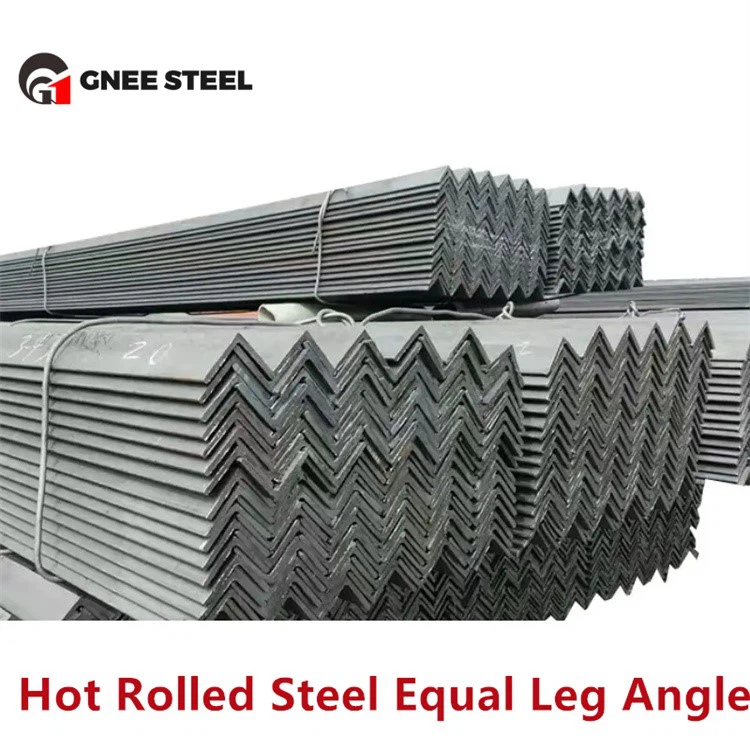
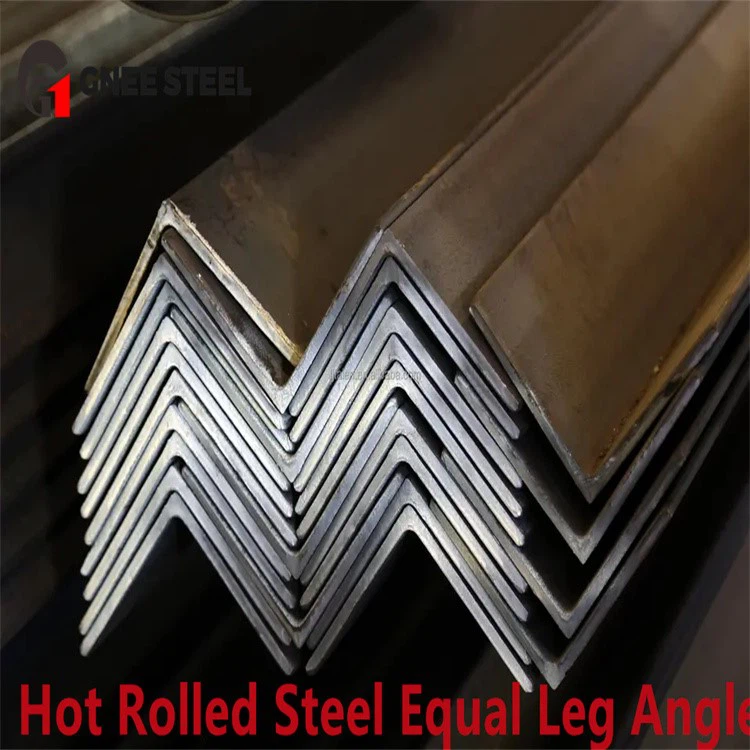
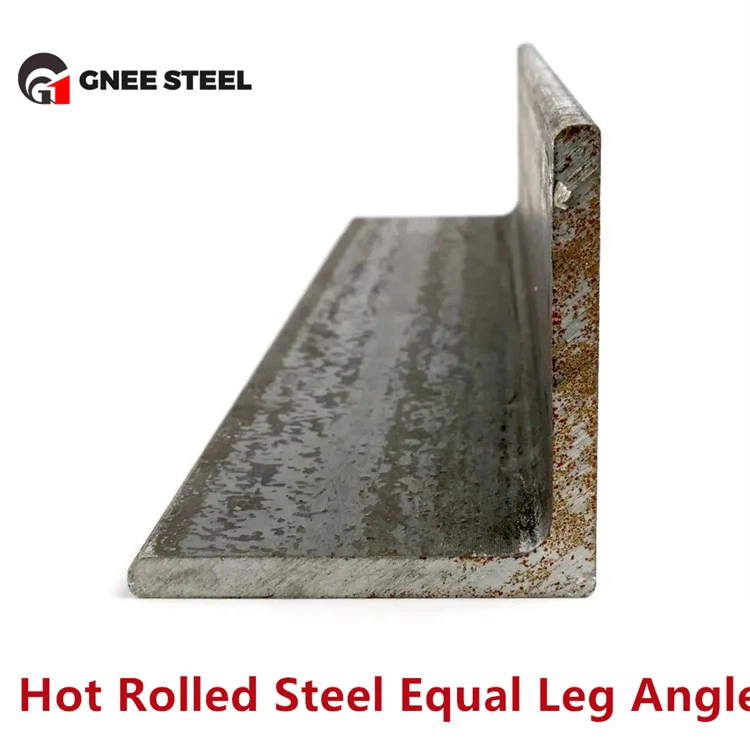
An Angle Bar A36 is a structural steel bar with an L-shape, made from A36 grade carbon steel, known for its good strength and weldability. S235jr Iron Steel Angle refers to angle bars made from S235jr, a European standard structural steel with excellent formability. Both are available in equal (legs of same length) and unequal (legs of different lengths) designs. They are widely used in construction, manufacturing, and engineering for their ability to provide structural support. These angle bars are produced through processes like hot rolling to ensure consistent quality and performance.
What are the key properties of A36 angle bars?
A36 angle bars have a yield strength of 36,000 psi, making them suitable for moderate load-bearing applications. They offer good ductility, allowing for bending and shaping without breaking, which is useful in various fabrication tasks. This grade has excellent weldability, enabling strong and durable connections with common welding methods. A36 steel resists corrosion reasonably well, especially when painted or coated, extending its lifespan in outdoor use. Their versatility makes them a staple in construction, from building frames to bridges.
How does S235jr differ from A36 in terms of mechanical properties?
S235jr has a yield strength of approximately 235 MPa, slightly lower than A36's yield strength. It has higher elongation, meaning it can stretch more before fracturing, enhancing its formability. S235jr is more commonly used in European markets, adhering to EN standards, while A36 is prevalent in North America under ASTM standards. Both have good weldability, but S235jr may require slightly different welding parameters. S235jr's lower carbon content contributes to its superior ductility compared to A36.
What defines equal and unequal angle bars?
Equal angle bars have two legs of identical length, forming a 90-degree angle, ensuring balanced load distribution in symmetric structures. Unequal angle bars have legs of different lengths, making them ideal for asymmetric load scenarios where one direction needs more support. Equal angles are easier to align in construction due to their symmetry, simplifying installation. Unequal angles offer flexibility in design, allowing engineers to optimize material use for specific load requirements. Both types are available in A36 and S235jr grades to suit various projects.
In what basic applications are these angle bars commonly used?
They are widely used in building frames, providing support for walls, roofs, and floors in residential and commercial structures. In manufacturing, they serve as braces and supports in machinery frames and equipment. They are essential in bridge construction, reinforcing girders and connecting structural components. Equal angles are often used in shelving and racking systems for their balanced design. Unequal angles find use in edge reinforcements and where space constraints require asymmetric support, such as in vehicle chassis.
Group 2
How are A36 and S235jr angle bars manufactured?
Both are typically produced via hot rolling, where steel billets are heated to high temperatures and passed through rollers to form the L-shape. The hot rolling process ensures a uniform grain structure, enhancing strength and toughness in the angle bars. After rolling, they may undergo cooling, cutting to standard lengths (usually 6-12 meters), and surface treatments like pickling to remove scale. Quality checks during manufacturing verify dimensions, mechanical properties, and surface quality to meet standards. For precision applications, they might undergo cold finishing to improve dimensional accuracy.
What are the advantages of using equal angle bars in construction?
Equal angle bars provide consistent strength in both leg directions, simplifying load calculation and structural design. Their symmetric shape allows for easy alignment during welding or bolting, reducing installation time. They distribute weight evenly across connections, minimizing stress concentration in the structure. Equal angles are readily available in standard sizes, making them cost-effective for mass construction projects. Their versatility allows them to be used in various components, from trusses to bracing, without design complications.
When would unequal angle bars be preferred over equal ones?
Unequal angles are preferred when one leg needs to attach to a larger surface, such as connecting a beam to a column of different dimensions. They are ideal for asymmetric load-bearing, where one direction carries more weight than the other, optimizing material efficiency. In space-constrained areas, their uneven legs fit better, reducing the need for additional components. They provide stronger support in one direction, making them suitable for cantilever structures or overhangs. Unequal angles also simplify connections between dissimilar structural elements, improving design flexibility.
How do these angle bars perform in corrosive environments?
Without protective coatings, A36 and S235jr angle bars are prone to rust in humid or coastal environments due to their carbon steel composition. Applying paints, galvanization, or powder coatings significantly enhances their corrosion resistance, extending service life. Galvanized angle bars, with a zinc layer, can withstand outdoor exposure for 20-30 years with minimal maintenance. In industrial settings with chemicals, specialized coatings or regular maintenance are necessary to prevent degradation. Proper drainage and ventilation around installed angle bars also reduce corrosion risk by minimizing moisture contact.
What welding methods work best for joining these angle bars?
Shielded Metal Arc Welding (SMAW) is commonly used for on-site construction due to its simplicity and portability. Gas Metal Arc Welding (GMAW/MIG) offers faster welding speeds, suitable for mass production of prefabricated components. Flux-Cored Arc Welding (FCAW) is effective in outdoor conditions as it doesn't require external shielding gas. Both A36 and S235jr weld well with these methods, producing strong joints when proper techniques are used. Cleaning the metal surface before welding ensures better adhesion and reduces defects like porosity.
Group 3
What are the standard sizes available for these angle bars?
Equal angle bars in A36 and S235jr typically range from 20x20mm to 200x200mm in leg length, with thicknesses from 3mm to 20mm. Unequal angles have leg combinations like 30x20mm, 50x32mm, up to 200x125mm, with varying thicknesses. Lengths usually range from 6 meters to 12 meters, though custom lengths can be ordered. European standards for S235jr may have slight size variations compared to A36, which follows American standards. Manufacturers provide size charts detailing weight per meter to aid in material calculation for projects.
How do these angle bars contribute to structural stability?
Their L-shape allows them to resist bending and torsional forces, adding rigidity to structures. When used as bracing, they prevent lateral movement, enhancing stability against wind or seismic activity. They distribute loads evenly across connected components, reducing the risk of structural failure. The combination of A36 or S235jr steel's strength and the angle design ensures long-term stability in static and dynamic load conditions. Proper installation, with secure connections, maximizes their ability to reinforce structures under various stresses.
What factors affect the load-bearing capacity of these angle bars?
The grade of steel (A36 or S235jr) directly impacts capacity, with A36 handling slightly higher loads due to its higher yield strength. Size, including leg length and thickness, is critical-larger, thicker angles carry more weight. The type (equal or unequal) affects how loads are distributed; unequal angles may excel in directional load scenarios. The span length between supports influences capacity, with shorter spans allowing higher loads. Connection methods, such as welding or bolting, also play a role, as weak connections reduce overall capacity.
Can these angle bars be used in outdoor applications?
Yes, with proper protection, they perform well in outdoor settings like bridges, fences, and outdoor structures. Galvanized A36 or S235jr angle bars resist rust effectively, making them suitable for humid or rainy climates. Painting with weather-resistant coatings adds a protective layer, extending their lifespan in outdoor use. In coastal areas, where salt spray is a concern, regular maintenance of coatings is necessary to prevent corrosion. Their durability and strength make them reliable for long-term outdoor applications when protected correctly.
What are the cost differences between A36 and S235jr angle bars?
A36 angle bars are generally priced slightly higher than S235jr in regions where both are available, due to A36's higher yield strength. Cost variations depend on local availability-A36 may be cheaper in North America, while S235jr is more cost-effective in Europe. Size and type (equal vs. unequal) also affect cost, with larger or custom angles costing more. Surface treatments like galvanization add to the cost but enhance longevity, offering better value over time. Bulk purchasing often reduces per-unit costs for both grades.
Group 4
How do these angle bars withstand temperature variations?
A36 and S235jr angle bars maintain their strength in normal temperature ranges, from -20°C to 100°C, common in most environments. At high temperatures, their strength decreases, but they remain stable in non-extreme conditions like building interiors. In cold climates, their ductility prevents brittle fracture, ensuring performance in freezing temperatures. Thermal expansion and contraction are minimal and accounted for in design, avoiding stress on connections. They perform reliably in regions with seasonal temperature fluctuations without significant degradation.
What are the common surface treatments for these angle bars?
Galvanization is a popular treatment, applying a zinc layer to prevent rust, ideal for outdoor use. Painting with epoxy or polyurethane coatings offers both corrosion protection and color customization for aesthetic purposes. Powder coating provides a durable, chip-resistant finish, suitable for industrial and commercial applications. Oil coating is used temporarily during storage to prevent rust before installation. Phosphating creates a primer layer that improves paint adhesion, enhancing long-term coating performance.
How are these angle bars transported and stored?
They are transported on flatbed trucks or trailers, secured with straps to prevent movement and damage during transit. Longer lengths may require specialized transport to avoid bending. Storage should be in a dry, covered area to prevent rust; they are often stacked on pallets or racks to keep them off the ground. Separate storage by grade, size, and type (equal/unequal) simplifies inventory management. Protective wrapping or covers shield them from moisture and dust during storage and transport.
What are the recycling options for these angle bars?
A36 and S235jr are carbon steels, highly recyclable, with minimal loss of properties during recycling. At the end of their service life, they can be collected, sorted, and melted down to produce new steel products. Recycling reduces the need for virgin raw materials, lowering environmental impact. Scrap yards accept these angle bars, often paying for clean, uncoated steel. The recycling process is energy-efficient compared to producing new steel, supporting sustainable construction practices.
What are the advantages of using S235jr angle bars in manufacturing?
S235jr's high ductility makes it easy to form into complex shapes, suitable for custom manufacturing components. Its excellent weldability allows for efficient assembly of machinery and equipment frames. It has consistent mechanical properties, ensuring uniformity in mass-produced parts. S235jr is cost-effective for large-scale manufacturing, fitting tight production budgets. Its availability in European markets simplifies supply chain management for regional manufacturers.
Group 5
How do these angle bars compare to stainless steel angles?
A36 and S235jr angle bars are more cost-effective than stainless steel, making them ideal for budget-conscious projects. They have lower corrosion resistance than stainless steel but perform well with proper coatings. Stainless steel angles offer better rust resistance without coatings, suitable for harsh environments, but at a higher cost. A36 and S235jr have similar or higher strength in load-bearing applications, depending on the stainless steel grade. For non-corrosive environments, these carbon steel angles provide better value.
What are the common installation mistakes to avoid?
Using undersized angles for the load requirement can lead to structural failure, so proper sizing is crucial. Poor welding, such as insufficient penetration, weakens connections and reduces stability. Ignoring surface preparation before painting or galvanizing leads to coating failure and corrosion. Improper alignment during installation causes uneven load distribution, straining parts of the structure. Over-tightening bolts can deform the angles, creating stress concentrations that may lead to cracks.
How do these angle bars perform in high-humidity environments?
Without protection, they are prone to rust in high humidity, but galvanized or painted versions resist moisture effectively. In indoor humid areas like bathrooms or factories, regular coating maintenance prevents corrosion. Proper ventilation in enclosed spaces reduces humidity levels, extending their lifespan. S235jr's slightly higher ductility may offer better resistance to humidity-induced stress compared to A36. Using moisture barriers during installation further protects them in damp environments.
What future trends may impact the use of these angle bars?
Increased focus on sustainability may drive higher recycled content in A36 and S235jr production, reducing environmental impact. Advances in coating technologies could enhance their corrosion resistance, expanding use in harsh environments. Prefabrication growth will likely increase demand for standardized angle bars, optimizing construction efficiency. Digital design tools may improve precision in using these angles, reducing material waste. Integration with smart monitoring systems to track structural health could become more common, ensuring timely maintenance.
What standards ensure the quality of these angle bars?
A36 angle bars adhere to ASTM A36 standards, specifying chemical composition, mechanical properties, and dimensions. S235jr follows EN 10025-2, a European standard ensuring consistent quality across manufacturers. These standards include testing requirements for tensile strength, yield strength, and elongation to verify performance. Compliance is confirmed through certification, providing buyers with assurance of quality. International standards help in cross-border trade, ensuring compatibility in global projects using these angle bars.