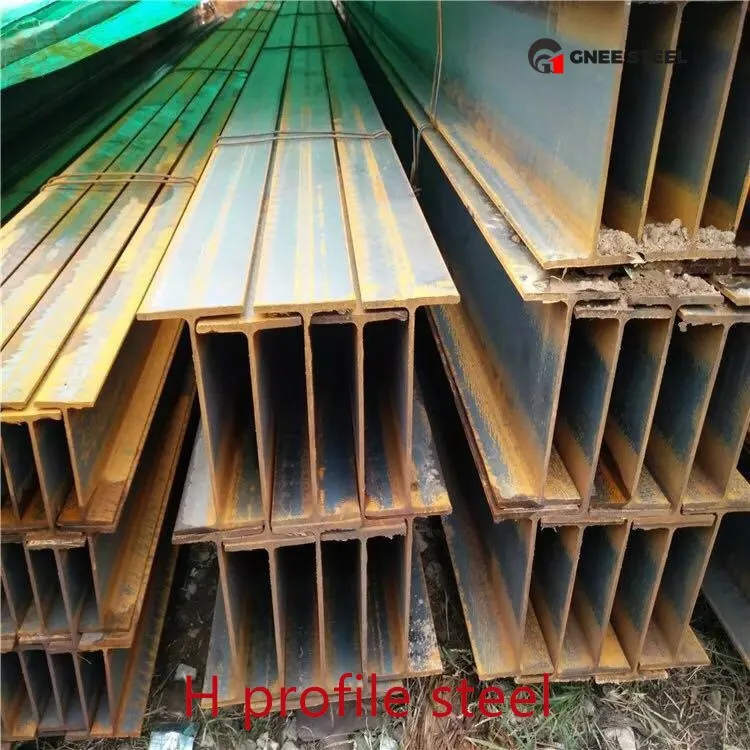
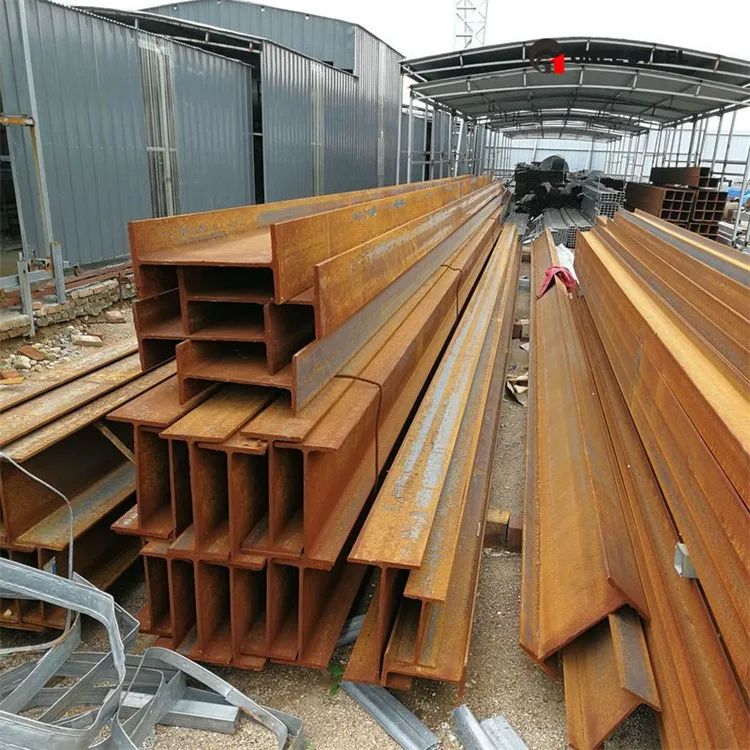
H-beam is an economical section and high-efficiency section with more optimized cross-sectional area distribution and more reasonable strength-to-weight ratio.
Features
H-beam has the advantages of strong bending resistance, simple construction, cost saving and light structure in all directions, and has been widely used.
ASTM A36 Carbon Steel: A versatile, low-alloy carbon steel grade widely recognized for its balanced strength and ductility. With a minimum yield strength of 36 ksi (248 MPa) and a tensile strength range of 58–80 ksi (400–552 MPa), ASTM A36 excels in general structural applications-including bridge deck framing, approach spans, and secondary support structures. Its excellent weldability (compatible with common welding methods like SMAW, GMAW, and FCAW) and formability allow for easy customization, while its moderate corrosion resistance (when paired with protective coatings such as galvanization or epoxy) ensures durability in urban, coastal, and industrial environments.
ASTM A572 Carbon Steel: A high-strength low-alloy (HSLA) grade engineered for heavy-duty structural demands, particularly in long-span bridges and high-load infrastructure. Available in multiple sub-grades (e.g., A572 Grade 50, 60, 65), the most widely used variant-A572 Grade 50-boasts a minimum yield strength of 50 ksi (345 MPa) and tensile strength of 65–100 ksi (448–689 MPa). This enhanced strength-to-weight ratio reduces material volume and structural dead load, a critical advantage for long-span bridges (e.g., beam bridges, cable-stayed bridge substructures) where minimizing weight without compromising strength is essential. A572 also offers superior toughness, even at low temperatures, and retains excellent weldability, making it suitable for harsh climates and seismic zones.
Structural Advantages for Bridge & Structural Engineering
The H-beam's iconic "I/H" cross-sectional design is uniquely optimized for bridge and structural applications, and when paired with ASTM A36 or A572 steel, it delivers three key advantages:
Efficient Load Distribution: The wide flanges and thick web of the H-beam evenly distribute bending moments, shear forces, and axial loads-critical for bridge structures that bear dynamic loads (e.g., vehicle traffic, wind, and thermal expansion). This design minimizes stress concentrations, reducing the risk of fatigue failure over the bridge's service life.
Fabrication Flexibility: Both ASTM A36 and A572 H-beams are compatible with standard fabrication processes, including cutting, drilling, punching, and welding. This allows engineers to integrate them into complex bridge designs (e.g., curved spans, tapered beams) and connect them to other structural components (e.g., concrete decks, steel girders) with precision.
Cost-Effectiveness: ASTM A36's widespread availability and lower material cost make it ideal for budget-conscious projects or secondary bridge structures, while ASTM A572's high strength reduces the need for additional support members-lowering overall construction costs, transportation expenses, and installation time for large-scale bridges.
Compliance & Quality Assurance
All ASTM A36 and A572 H-beams undergo stringent quality control measures to meet ASTM standards:
Material testing (tensile, bend, impact, and chemical composition analysis) to verify mechanical properties.
Dimensional inspection (flange width, web thickness, cross-sectional symmetry) to ensure consistency with structural drawings.
Non-destructive testing (NDT), such as ultrasonic testing (UT) and magnetic particle inspection (MPI), to detect internal or surface defects that could compromise structural performance.
These quality checks ensure compliance with ASTM A36 (ASTM A36/A36M-24) and ASTM A572 (ASTM A572/A572M-24) standards, as well as additional industry regulations for bridge construction (e.g., AASHTO LRFD Bridge Design Specifications).
Application Scope in Bridge Engineering
ASTM A36 and A572 H-beams are integral to a range of bridge types:
Highway & Railway Bridges: Used as main girders, floor beams, and stringers to support heavy traffic loads.
Pedestrian Bridges: Provide lightweight yet sturdy framing, with ASTM A36 offering cost efficiency for shorter spans.
Industrial Bridges (e.g., Overhead Cranes): ASTM A572 Grade 50's high strength supports dynamic crane loads and frequent use.
| Item Name | Structural Steel H Beam |
| Material | Q235B,Q355B, SS400B,A-36, AS300B, S355J0, S450J0-T, S275JR |
| Length | 6-12 m customized |
| Web Thickness | 4-60 mm |
| Web Width | 100-1000 mm |
| Flange Thickness | 100-1000 mm |
| Flange Width | 100-1000 mm |
| MOQ | 1 Ton |