Set 1
Q: What makes ASTM A36 hot rolled H-beams popular for structures?
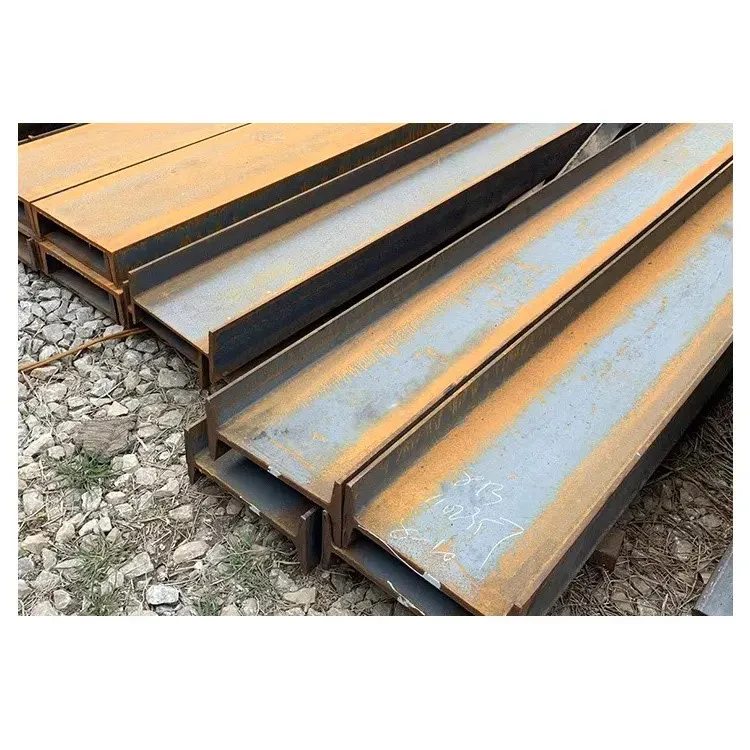
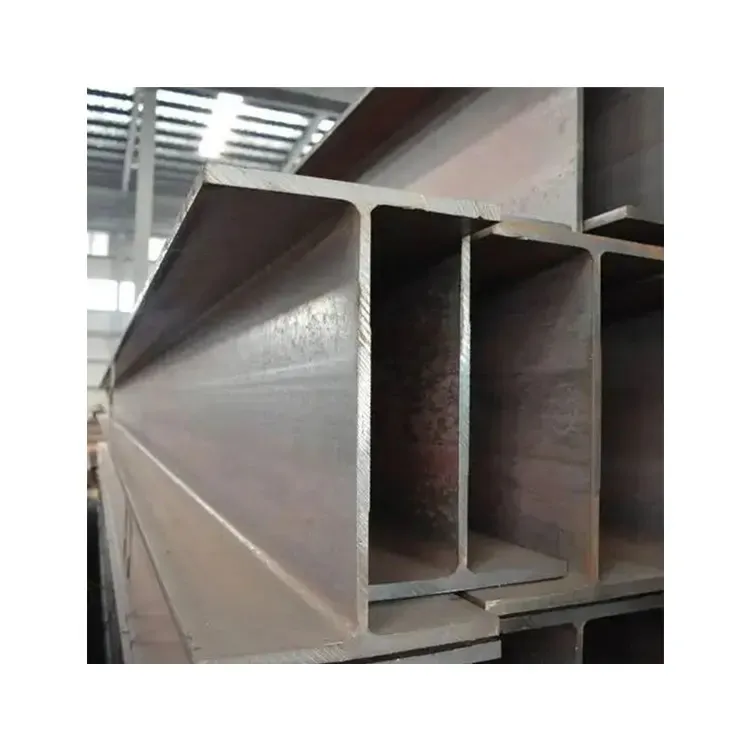
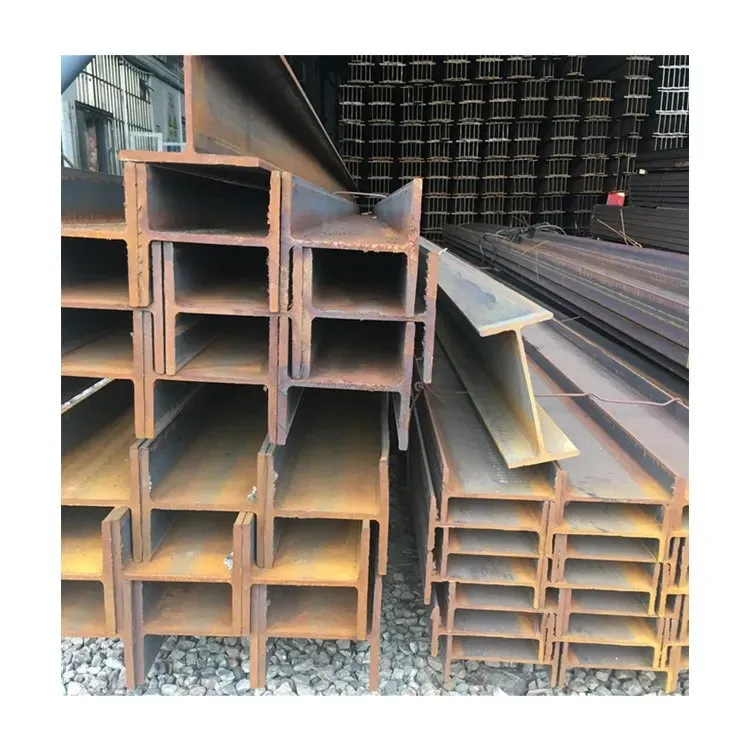
A: ASTM A36 hot rolled H-beams are popular due to their balanced mechanical properties and affordability. They have a minimum yield strength of 36 ksi (250 MPa) and tensile strength of 58-80 ksi, which meets most general structural needs. The hot rolling process enhances their ductility, allowing them to bend and deform slightly under load without breaking-critical for earthquake-resistant designs. They're compatible with common welding methods (SMAW, GMAW) without preheating, simplifying on-site assembly. ASTM A36 is widely produced globally, ensuring stable supply and competitive pricing. From commercial buildings to bridges, their versatility makes them a go-to for engineers and buyers alike.
Q: What does "200" refer to in H-beam 200 specifications?
A: The "200" in H-beam 200 typically refers to the overall height of the beam's cross-section, measured in millimeters. For ASTM A36 H-beams, a 200mm height usually pairs with flange widths around 100-200mm and web/flange thicknesses of 6-12mm (e.g., 200x100x5.5x8mm). This size balances load capacity and weight, making it ideal for light to medium-load structures. It's important to confirm full specs with suppliers, as "200" alone doesn't include flange width or thickness-key factors for load calculations. Common 200-series ASTM A36 H-beams weigh 16-30 kg/m, fitting projects like residential framing or small factory supports. Always check dimensional charts to match the 200mm height to your project's load needs.
Q: How does hot rolling affect ASTM A36 H-beam quality?
A: Hot rolling improves ASTM A36 H-beam quality in multiple ways. The process involves heating steel billets to 1100-1250°C, making the material malleable for shaping into H-profiles-this reduces internal stress compared to cold forming, minimizing post-installation warping. Hot rolling refines the steel's grain structure, enhancing toughness and impact resistance, which is vital for structural safety. It creates a rough surface that improves paint and coating adhesion, boosting corrosion protection. The process also allows for consistent production of standard sizes, ensuring dimensional accuracy across batches. While cold-formed beams have tighter tolerances, hot rolled ASTM A36 H-beams offer superior structural integrity for load-bearing applications.
Q: Are ASTM A36 H-beams compatible with other steel profiles?
A: Yes, ASTM A36 H-beams are highly compatible with other steel profiles, simplifying structural integration. They can be welded or bolted to ASTM A36 I-beams, channels, or angles using standard fasteners and welding materials (e.g., E6013 electrodes). For mixed-grade structures, they pair well with higher-strength ASTM A572 Grade 50 profiles-just ensure joints are designed for the weaker grade (A36) to avoid failure. Compatibility extends to concrete: A36 H-beams are often embedded in concrete columns or used as composite beams with concrete slabs. They also work with prefabricated steel components like brackets and connectors. Consulting a structural engineer ensures proper connection design, but their universal compatibility makes them easy to incorporate into most steel frameworks.
Q: What's the price range for ASTM A36 200 H-beams per kg?
A: The price per kg of ASTM A36 200 H-beams varies by region and market conditions, typically ranging from
0.80to
1.50. Raw material costs (iron ore, steel billets) drive fluctuations-if ore prices rise, beam costs follow. Supply and demand impact pricing too: peak construction seasons (spring/summer) may push prices up 10-20%. Supplier type matters: mills offer lower prices for bulk orders (100+ tons), while distributors charge slightly more for smaller quantities. Additional services like cutting to length or galvanizing add
0.20−
0.50 per kg. Transportation costs (distance, fuel prices) also affect the final rate. To get accurate quotes, specify size, quantity, delivery location, and any processing needs to 3-5 suppliers.
Set 2
Q: What projects suit ASTM A36 200 H-beams best?
A: ASTM A36 200 H-beams excel in light to medium-load projects. They're ideal for residential steel framing (floor joists, roof supports) due to their manageable weight and strength. Small commercial buildings like retail stores or offices use them as main girders and columns, balancing cost and performance. Agricultural structures (barns, greenhouses) rely on them for their durability and resistance to farm equipment impacts. They're also used in temporary structures like construction scaffolding or event stages, thanks to easy assembly. For infrastructure, they work in small bridges or culverts where heavy loads aren't a concern. Any project needing reliable support without the cost of high-strength beams benefits from them.
Q: How to check if H-beams meet ASTM A36 standards?
A: To verify ASTM A36 compliance, first request the Material Test Certificate (MTC) from the supplier. The MTC must list yield strength ≥36 ksi, tensile strength 58-80 ksi, and chemical composition (C ≤0.25%, Mn 0.80-1.20%). Inspect the beam surface for the ASTM A36 grade stamp, which includes the mill name and heat number (matching the MTC). Measure key dimensions (height, flange width, thickness) with calipers to ensure they meet ASTM A6/A6M dimensional tolerances (±1.5mm for height). For critical projects, send a sample to a third-party lab for tensile and impact testing. Check for surface defects (cracks, rust) that may indicate poor manufacturing. Never accept beams without a valid MTC-this is the primary proof of ASTM A36 compliance.
Q: What's the difference between ASTM A36 and A572 H-beams?
A: ASTM A36 and A572 H-beams differ mainly in strength and cost. A36 has a 36 ksi yield strength, while A572 Grade 50 offers 50 ksi-making A572 better for heavy-load structures like industrial cranes. A572 has higher corrosion resistance due to added alloys (niobium, vanadium), suiting outdoor or humid environments. A36 is cheaper (15-20% lower per kg) and more widely available, ideal for budget projects. Weldability is good for both, but A572 may need preheating for thick sections. A36 has better ductility, while A572 offers higher stiffness. Choose A36 for light/medium loads and A572 for heavy loads or harsh conditions-cost vs. performance dictates the choice.
Q: Can ASTM A36 200 H-beams be used outdoors?
A: Yes, ASTM A36 200 H-beams can be used outdoors, but corrosion protection is essential. A36 is carbon steel with minimal alloy content, so it rusts easily when exposed to rain, salt, or moisture. Hot-dip galvanizing is the most effective treatment-it coats the beam in zinc, providing 20-30 years of protection. Epoxy paint (primer + topcoat) is a cheaper option, lasting 5-10 years with regular touch-ups. For coastal areas, a combination of galvanizing and paint offers double protection against salt spray. Design the structure to allow water drainage (avoid standing water on beams) and use stainless steel fasteners to prevent galvanic corrosion. With proper treatment, A36 200 H-beams work well in outdoor projects like canopies, pergolas, or small bridges.
Q: What's the lead time for ASTM A36 200 H-beams?
A: Lead time for ASTM A36 200 H-beams typically ranges from 3 to 14 days. Standard sizes (e.g., 200x100x5.5x8mm) in stock can ship in 3-7 days. Custom sizes or lengths (e.g., 15m instead of 12m) add 2-5 days for processing. Bulk orders (50+ tons) may take 7-14 days as mills prioritize large batches. Seasonal demand affects lead times-peak construction months (March-September) can add 2-3 days due to high order volumes. Suppliers with local warehouses offer faster delivery than those shipping from distant mills. If you need additional services (cutting, drilling), add 1-3 days. To avoid delays, order 2 weeks in advance for custom projects and confirm stock availability with suppliers first.
Set 3
Q: How does beam length affect ASTM A36 200 H-beam pricing?
A: Beam length impacts ASTM A36 200 H-beam pricing through material usage and transportation. Longer beams (12m vs. 6m) use twice the raw material, doubling the total cost-though the per kg price stays similar. Transportation costs rise with length: 12m beams need specialized long-load trucks, adding
50−
200 per shipment compared to 6m beams. Some suppliers offer discounts for longer beams as they reduce cutting waste. Short custom lengths (e.g., 3m) may have a higher per kg price due to extra cutting labor. Standard lengths (6m, 9m, 12m) have the lowest per unit cost because they're mass-produced. When budgeting, consider both the beam length, total weight, and delivery fees-longer beams save on joints but cost more to ship.
Q: What's the load capacity of ASTM A36 200 H-beams?
A: The load capacity of ASTM A36 200 H-beams depends on span, support, and beam specs. For a 200x100x5.5x8mm beam (19.8 kg/m) with a 6m span and fixed supports, it can bear ~12-15 tons of uniform load. At 9m, capacity drops to 4-6 tons due to increased bending moment. Support type matters: cantilevered spans (e.g., 3m overhang) reduce capacity to 2-3 tons. Load type affects it too-dynamic loads (e.g., moving boxes) need a 1.5x safety factor, lowering usable capacity. Thicker variants (e.g., 200x200x8x12mm, 50 kg/m) at 6m span can carry 30+ tons. Manufacturers provide load charts for common sizes, but for precise values, share span, support, and load details with a structural engineer.
Q: Why choose hot rolled over cold formed ASTM A36 H-beams?
A: Choose hot rolled ASTM A36 H-beams for better structural performance. Hot rolling refines the steel's grain structure, boosting toughness and impact resistance-critical for load-bearing applications. They handle welding better without cracking, as the hot process reduces internal stress. Hot rolled beams are available in larger sizes (including 200mm height variants) than cold formed ones, which are limited by sheet thickness. They have a rough surface that improves coating adhesion, enhancing corrosion protection. While cold formed beams have tighter tolerances for aesthetics, hot rolled beams are more cost-effective for structural use. For projects prioritizing strength and durability over precise aesthetics, hot rolled is the better choice.
Q: What surface treatments work for ASTM A36 H-beams?
A: ASTM A36 H-beams use various surface treatments to fight corrosion. Hot-dip galvanizing dips beams in molten zinc, forming a protective layer that lasts decades-ideal for outdoor or humid areas. Epoxy coating (liquid or powder) creates a hard, chemical-resistant finish, suitable for industrial environments. Paint (alkyd or acrylic) is an affordable option for indoor use or mild outdoor conditions, requiring regular repainting. Phosphating is a pre-treatment that improves paint adhesion, often used before painting or powder coating. For temporary projects, a rust-inhibitive primer may suffice. The choice depends on environment, budget, and lifespan: galvanizing for durability, paint for cost, and powder coating for aesthetics. Always clean beams (remove rust, oil) before treatment for best results.
Q: What's the minimum order quantity for ASTM A36 200 H-beams?
A: Minimum order quantity (MOQ) for ASTM A36 200 H-beams varies by supplier, usually 5-20 tons. Large mills often require 10-20 tons per order, focusing on bulk sales to major contractors. Small distributors or traders accept 5-10 tons, combining orders to meet mill MOQs. In-stock standard lengths (6m, 12m) may have lower MOQs (even 2-3 tons) to clear inventory. Custom processing (cutting, drilling) typically raises MOQs to 10+ tons due to setup costs. International suppliers may require higher MOQs (20+ tons) to justify shipping. To lower costs, order near the supplier's MOQ-bulk orders often get 5-10% discounts. Always ask suppliers to clarify MOQ alongside pricing to avoid surprises.
Set 4
Q: Are ASTM A36 200 H-beams easy to cut and drill?
A: Yes, ASTM A36 200 H-beams are easy to cut and drill, thanks to their low carbon content and ductility. Common cutting methods like plasma cutting, oxy-fuel cutting, or band sawing work efficiently-plasma cutting is best for fast, clean cuts on thick sections. Drilling is straightforward with high-speed steel (HSS) or carbide drills, even for flange thicknesses up to 12mm. No pre-heating is needed for cutting or drilling, saving time on-site. The hot rolled surface doesn't dull tools quickly compared to cold formed steel. For precision, CNC cutting/drilling ensures accurate hole positions and cut lengths. Whether using portable on-site tools or factory equipment, A36 200 H-beams require minimal effort for customization-critical for projects with unique dimensions.
Q: How does ASTM A36 compare to SS400 H-beams?
A: ASTM A36 and SS400 H-beams are similar but regionally focused. A36 (U.S. standard) has 36 ksi yield strength, while SS400 (Japanese standard) has ~35 ksi yield strength-nearly identical for practical use. Both have good weldability and ductility, suiting general structures. A36 is more common in North America and Europe, while SS400 dominates Asia-Pacific markets. Chemical composition differs slightly: A36 has higher manganese (0.80-1.20% vs. SS400's 0.60-1.00%), boosting toughness. Pricing is comparable, but availability depends on location-A36 costs less in the U.S., SS400 in Asia. Both are interchangeable in most projects if certified to equivalent standards. Choose based on regional availability and project specification requirements.
Q: What's the lifespan of ASTM A36 200 H-beams?
A: The lifespan of ASTM A36 200 H-beams ranges from 30 to 100+ years, depending on environment and maintenance. Indoor use (office frames, warehouse columns) with no moisture exposure lasts 50-100+ years with minimal care. Outdoor use with galvanizing or epoxy coating lasts 30-50 years-coastal areas need more frequent maintenance (every 5-10 years) due to salt spray. Unprotected outdoor beams rust within 5-10 years, reducing strength. Proper maintenance (cleaning, repainting, rust removal) extends lifespan by 20-30%. Load also matters-beams under design load last longer than overloaded ones. For example, a galvanized A36 200 beam in a rural warehouse may last 80+ years, while an uncoated one outdoors may only last 15 years.
Q: Can ASTM A36 H-beams be used in concrete composite structures?
A: Yes, ASTM A36 H-beams are widely used in concrete composite structures, where steel and concrete work together for strength. They're embedded in concrete columns to reinforce vertical load capacity or used as floor beams with concrete slabs on top. The rough hot rolled surface creates a mechanical bond with concrete, ensuring they act as a single unit. A36's ductility complements concrete's compressive strength-steel handles tension, concrete handles compression. Shear studs are welded to the beam flanges to enhance the bond between steel and concrete. Composite structures use fewer beams than steel-only ones, reducing costs. From high-rise floors to bridge decks, A36 H-beams are a staple in composite design due to their compatibility and strength.
Q: How to transport ASTM A36 200 H-beams safely?
A: Transport ASTM A36 200 H-beams safely by securing them properly and planning for size/weight. Use flatbed trucks with side rails or stakes to prevent shifting. Bundle beams with steel straps (2-3 straps per 6m length) and place wooden blocks between layers to avoid scratches. For lengths over 12m, use specialized long-load trucks with permits (required in most regions). Cover beams with tarps to protect from rain and debris during transit. Secure loose hardware (like bolts for connections) in separate containers. Communicate with the driver about load weight-A36 200 beams weigh ~20-50 kg/m, so a 12m beam is 240-600 kg. Unload with a crane or forklift, using slings that distribute weight evenly. Proper transport prevents bending, rust, or damage that compromises structural integrity.