


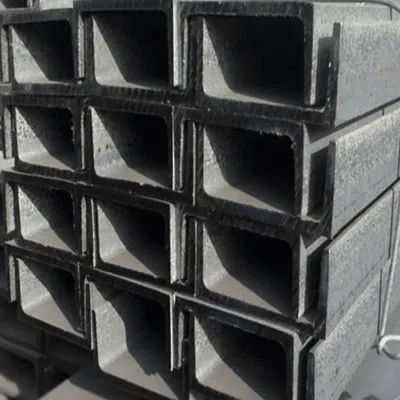


The ASTM A612 standard covers high-strength, killed carbon-manganese-silicon steel plates suitable for welded pressure vessels and boilers operating in medium- and low-temperature environments. Steel plates conforming to this standard offer excellent notched toughness and weldability, and are primarily used in the oil, natural gas, and petrochemical industries, where durability and structural integrity are critical.
Primary Standards:
ASTM A612/A612M (American Society for Testing and Materials) – Standard Specification for Pressure Vessel Plates, Carbon Steel, Manganese-Silicon, High Strength, for Moderate and Lower Temperature Service
ASME SA612/SA612M (American Society of Mechanical Engineers) – Certified for pressure vessel applications
Supplementary Standards:
Ultrasonic Testing: Complies with ASTM A578 (Standard Practice for Straight-Beam Ultrasonic Examination of Steel Plates)
Surface Defect Treatment: Follows ASME SA-20M (Standard Specification for General Requirements for Steel Plates for Pressure Vessels)

ASTM A612 Steel Plates for Mid-Low Temperature
ASTM A612 Chemical Composition
ASTM A612 is a carbon-manganese-silicon pressure vessel steel plate. The chemical composition mainly consists of carbon, manganese, and silicon, with controlled phosphorus and sulfur content to ensure good weldability and toughness.
| Element | Heat Analysis Range / Max | Product Analysis Range / Max |
|---|---|---|
| Carbon (C) | ≤0.25 | ≤0.29 |
| Manganese (Mn) | 1.00–1.50 | 0.92–1.62 |
| Silicon (Si) | 0.15–0.50 | 0.13–0.55 |
| Phosphorus (P) | ≤0.025 | ≤0.025 |
| Sulfur (S) | ≤0.025 | ≤0.025 |
| Copper (Cu) | ≤0.35 | ≤0.38 |
| Nickel (Ni) | ≤0.25 | ≤0.28 |
| Chromium (Cr) | ≤0.25 | ≤0.29 |
| Molybdenum (Mo) | ≤0.08 | ≤0.09 |
| Vanadium (V) | ≤0.08 | ≤0.09 |
Mechanical Properties of ASTM A612 / ASME SA612 Steel Plate
1. Tensile Properties
| Property | Specification Value |
|---|---|
| Minimum Yield Strength (YS) | ≥ 345 MPa (50 ksi) |
| Tensile Strength (TS) | Thin plate (≤12.5mm): 570–725 MPaThick plate (>12.5mm): 560–695 MPa |
| Elongation (50 mm gauge length) | ≥ 22 % |
| Elongation (200 mm gauge length) | ≥ 16 % |
| Maximum Brinell Hardness | ≤ 207 HB |
2. Charpy V-Notch Impact Toughness (Supplementary Requirement S5)
Default mandatory test temperature: -40 ℃, transverse specimens
| Impact Index | Required Energy Value |
|---|---|
| Average of 3 specimens | ≥ 27 J |
| Single individual specimen | ≥ 20 J |
- Grain Size: Austenitic grain size ≥ ASTM No.5, fine grain structure guarantees stable low-temperature toughness
- Delivery Condition: Normalized or Normalized & Tempered (NT); as-rolled is not acceptable for pressure vessel PVQ service
- Carbon Equivalent: CE ≤ 0.48, guarantees excellent weldability without heavy preheating for thickness ≤150mm
Click to view ASTM A612 inventory status
Why ASTM A612 Is Suitable for Welding Mid-Low Temperature Pressure Vessels
ASTM A612 is specifically designed for welded pressure vessels operating under low- to medium-temperature conditions. In practical industrial applications, it is typically used in environments ranging from approximately -20°C to 200°C, where both strength and toughness are required. Compared to traditional carbon steel plates, ASTM A612 offers higher resistance to brittle fracture at low temperatures, helping to maintain structural integrity under fluctuating pressure and temperature conditions.
For projects with operating temperatures below -20°C, additional impact testing and engineering evaluations should be conducted to verify compliance with applicable pressure vessel design codes.
Impact Toughness Properties of ASTM A612
One of the key advantages of ASTM A612 is its ability to maintain good toughness even under moderately low-temperature conditions. Pressure vessels are frequently subjected to thermal cycling, start-up and shutdown operations, or exposure to cold environments, all of which increase the risk of brittle cracking.
The balanced carbon-manganese-silicon composition of ASTM A612 helps enhance its resistance to crack initiation and propagation. This makes the material particularly suitable for vessels storing compressed gases, process fluids, and chemical media, where low-temperature toughness is a critical design consideration.
During the manufacturing of pressure vessels, a Charpy V-notch impact test is typically conducted when project specifications require verification of low-temperature performance.
Properties of the Heat-Affected Zone (HAZ) During Welding
ASTM A612 offers good weldability and consistent HAZ properties, thanks to its controlled carbon content and balanced alloy composition. When the proper welding procedures are followed, this material maintains satisfactory toughness and strength in the welded joint area.

ASTM A612 Suitable for Welding Mid-Low Temperature Pressure Vessels
Project:ASTM A612 Pressure Vessel Steel Plate for Mid-Low Temperature Ammonia Storage Vessel
Customer:Indonesia Fertilizer Manufacturer
Material:ASTM A612
Thickness:20-40 mm
Quantity:180 MT
Application:Liquid Ammonia Storage Tank
Inspection:UT ASTM A578 Level II
Certification:EN10204 3.1

The low carbon equivalent of ASTM A612 helped minimize hardness in the heat-affected zone, reducing the probability of hydrogen-induced cracking and improving overall weld quality.
The project owner reported lower maintenance requirements and reduced lifecycle costs due to the combination of good weldability and reliable pressure-retaining performance.
Typical Applications of ASTM A612 Steel Plates in Med-Low Temperature Environments
ASTM A612 steel plates are widely used in equipment operating in medium- and low-temperature environments, where reliable weldability and toughness are required.
- Ammonia storage tanks
- Liquefied petroleum gas (LPG) and process gas containers
- Petrochemical pressure vessels
- Heat exchangers and process equipment
- Fertilizer and chemical storage equipment

Different Types of Pressure Vessel Equipment
Its combination of strength, weldability, and toughness makes it the material of choice for welded pressure equipment operating under medium- and low-temperature conditions.
How to Select ASTM A612 Steel Plates for Pressure Vessel Projects
| Property | ASTM A612 | ASTM A516 Gr70 |
|---|---|---|
| Yield Strength | Higher | Lower |
| Weldability | Excellent | Excellent |
| Low Temperature Toughness | Better | Good |
| Cost | Higher | Lower |
| Application | Pressure Vessel | General PVQ |
| Grade | Steel Type | Strength Level | Low-Temperature Toughness | Weldability | Cost Level | Typical Application |
|---|---|---|---|---|---|---|
| ASTM A612 | Carbon-Manganese-Silicon Steel | Medium | Good | Excellent | Medium | General pressure vessels, boilers |
| ASTM A516 Gr.70 | Carbon Steel PVQ Plate | Medium-High | Good | Excellent | Low-Medium | Storage tanks, pressure vessels |
| ASTM A537 Cl.1 | Heat-Treated Pressure Vessel Steel | High | Good | Good | Medium-High | High-pressure vessels |
| ASTM A204 Gr.B | Mo-Alloy Pressure Vessel Steel | High | Very Good | Good | High | Elevated-temperature service |
| ASTM A387 Gr.11 | Cr-Mo Alloy Steel | Very High | Good | Moderate | High | High-temperature pressure vessels |
Therefore, for pressure vessels, storage tanks, separators, heat exchangers, and boiler components operating under normal medium- and low-temperature conditions, ASTM A612 remains a highly practical and cost-effective material choice.
GNEE'S ASTM A612/A612M Pressure Vessel Steel Plate Details
ASTM A612/A612M Standard Stock Inventory List
| Thickness (mm) | Standard Width (mm) | Standard Length (mm) | Minimum Stock Tonnage |
|---|---|---|---|
| 8 | 1500 / 1800 | 6000 / 8000 | ≥ 50 MT |
| 10 | 1500 / 1800 | 6000 / 8000 | ≥ 80 MT |
| 12 | 1500 / 2000 | 6000 / 9000 | ≥ 100 MT |
| 14 | 1500 / 2000 | 6000 / 9000 | ≥ 60 MT |
| 16 | 1500 / 2000 | 6000 / 10000 | ≥ 120 MT |
| 20 | 1800 / 2200 | 6000 / 10000 | ≥ 150 MT |
| 25 | 1800 / 2200 | 6000 / 10000 | ≥ 80 MT |
| 30~50 | 2000 / 2500 | 6000 / 12000 | Stock availability to be confirmed per order |
ASTM A612/A612M Dimensional Tolerance
| Nominal Thickness Range | Thickness Tolerance (Width ≤1500mm) | Thickness Tolerance (Width 1500~2500mm) | Thickness Tolerance (Width >2500mm) | Corresponding Width Tolerance | Corresponding Length Tolerance | Flatness Tolerance | Camber Tolerance |
|---|---|---|---|---|---|---|---|
| 6 ~ 10 | -0.3 / +0.7 | -0.3 / +0.8 | -0.4 / +0.9 | ±3 | ±5 | ≤3mm/m | ≤2mm/m |
| 10 ~ 20 | -0.3 / +0.8 | -0.4 / +0.9 | -0.4 / +1.0 | ±5 | ±5 | ≤3mm/m | ≤2mm/m |
| 20 ~ 30 | -0.4 / +0.9 | -0.4 / +1.0 | -0.5 / +1.1 | ±5 | ±10 | ≤3mm/m | ≤2mm/m |
| 30 ~ 50 | -0.4 / +1.0 | -0.5 / +1.1 | -0.5 / +1.2 | ±8 | ±10 | ≤3mm/m | ≤2mm/m |
| 50 ~ 100 | -0.5 / +1.1 | -0.5 / +1.2 | -0.6 / +1.3 | ±8 | ±15 | ≤3mm/m | ≤2mm/m |
| 100 ~ 150 | -0.6 / +1.3 | -0.6 / +1.4 | -0.7 / +1.5 | ±8 | ±15 | ≤3mm/m | ≤2mm/m |
We maintain a year-round inventory of genuine ASTM A612 and SA612 steel plates, complete with factory certificates, and welcome third-party inspections. Contact us today.
Packaging and Delivery
| item | key packaging points for ASTM A612 |
|---|---|
| inner layer | waterproof anti-rust paper |
| edge protection | edge corner guards |
| stacking & binding | anti-scratch pads + steel strapping |
| outer support | fumigated wooden pallets / crates |
| marking | ASTM A612 grade, heat number, size marks |
| extra protection (optional) | full stretch film wrapping |

EN 10204 3.1 Material Test Certificate (MTC)

Get a Free Quote for ASTM A612
ASTM A612 Equivalent Grades
| ASTM | ASME | EN |
|---|---|---|
| A612 | SA612 | P355GH (similar application) |
Is ASTM A612 equivalent to SA612?
Yes. ASTM A612 and ASME SA612 are equivalent pressure vessel steels with similar chemical compositions and mechanical properties, and are suitable for welded pressure vessels.
What is the maximum thickness of ASTM A612 steel plates?
ASTM A612 steel plates are commonly available in thicknesses ranging from 6 mm to 100 mm. Depending on the steel mill's production capacity, thicker plates can also be provided upon customer request.
Does ASTM A612 require post-weld heat treatment (PWHT) after welding?
Post-weld heat treatment is not always required. It depends on the plate thickness, design code requirements, and the specific operating conditions of the vessel.
What is the difference between ASTM A612 and ASTM A516 Grade 70 steel?
ASTM A612 has a higher yield strength and better low-temperature toughness, while ASTM A516 Grade 70 steel is more commonly used for general pressure vessel applications.
Can ASTM A612 be used at temperatures below -20°C?
It can be used in medium- and low-temperature environments, but its suitability below -20°C must be verified through impact testing and in accordance with design code requirements.
In which industries is ASTM A612 steel plate commonly used?
ASTM A612 is widely used in industries such as petrochemicals, chemicals, fertilizers, power generation, and pressure vessel manufacturing.
Is ASTM A612 easy to weld?
Yes. ASTM A612 has good weldability and can be welded using common processes such as SMAW, SAW, GMAW, and FCAW.
What inspections and certifications are available for ASTM A612 steel plates?
Common documentation includes EN 10204 3.1 certificates, ultrasonic testing reports, and third-party inspection certificates, which can be provided upon request.