




Product Scope
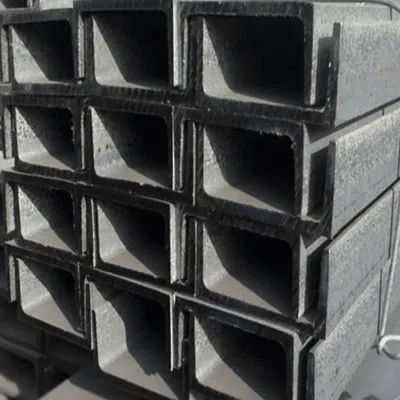
Galvanized angle bar is a hot rolled equal or unequal angle that has been dipped in molten zinc after fabrication. Slotted angle iron is the same product with a regular pattern of holes or slots punched along one or both legs, which allows adjustable bolted assemblies without site drilling. Both are used for cable management supports, racking uprights, light frames, guard rails, bracket systems and adjustable shelving.
The commercial specification has four parts: leg size and thickness, material grade, coating mass, and the slot pattern where the angle is perforated. A quotation that omits the coating mass is not comparable with another quotation, because the zinc layer is the single largest cost driver after the steel itself.
Size and Material Range
| Parameter | Typical range |
|---|---|
| Equal angle legs | 20 x 20 mm to 200 x 200 mm |
| Unequal angle legs | 25 x 16 mm to 200 x 125 mm |
| Thickness | 3 mm to 24 mm |
| Length | 6 m, 9 m or 12 m, or cut to order |
Material is normally supplied in Q235B or Q345B under the Chinese system, or in SS400 to JIS G3101, S235JR and S275JR to EN 10025-2 and S355JR to EN 10025-2. S355JR provides a minimum yield strength of 355 MPa for thickness up to 16 mm with 470-630 MPa tensile strength, and is chosen where the racking or frame is load-rated rather than purely architectural. S235JR gives a minimum yield strength of 235 MPa and is the economical choice for light support work.
Coating Requirements in Numbers
Coating is specified as a minimum average mass per unit area. ASTM A123/A123M requires 610 g per square metre minimum average for steel products 6.4 mm thick and heavier. Because zinc has a density of about 7.14 g per cubic centimetre, that coating mass corresponds to a layer approximately 85 micrometres thick, which is the figure designers should compare against the corrosion allowance assumed in the durability calculation. ISO 1461 sets the equivalent requirement for European fabricated steelwork.
Coating quality depends on surface preparation as much as on the zinc bath. The steel must be degreased, pickled and fluxed, and the chemistry of the base steel should keep silicon and phosphorus within the ranges that produce a normal, adherent coating, since excessive silicon can produce a dull, over-thick and brittle layer that flakes during handling.
Fabrication Checks Before Dipping
Three checks avoid almost all galvanizing complaints. First, complete all cutting, punching, welding and drilling before dipping, because any subsequent operation destroys the coating and leads to site touch-up of a repair that is inferior to the original layer. Second, provide vent and drain holes so that air can escape and zinc can flow into every enclosed space, which prevents trapped air pockets and zinc explosions. Third, allow for the small dimensional change caused by the coating thickness on threaded or close-tolerance features. Slotted angle benefits from a rigid punching pattern, since hole spacing determines the adjustment increment of the finished assembly.
Frequently Asked Questions
Q: How thick is the zinc coating on a galvanized angle?
A: For steel 6.4 mm thick and heavier, ASTM A123/A123M specifies a minimum average coating of 610 g per square metre, equivalent to approximately 85 micrometres.
Q: Is galvanized angle stronger than bare angle?
A: The zinc coating does not change the mechanical properties of the steel, but it protects the section from section loss by corrosion, which preserves the design capacity over the service life.
Q: Can slotted angle be galvanized?
A: Yes, provided all slots and holes are punched before dipping so that the zinc coats the cut surfaces and no further machining is needed afterwards.
Q: Which grade is used for load-rated racking?
A: S355JR or an equivalent higher-yield grade, because the upright is designed to a defined load capacity per level and deflection limits usually govern.
Q: How should galvanized angle be stored on site?
A: Keep it dry, ventilated and off the ground. White rust, a bulky zinc hydroxide product, forms where wet galvanized surfaces are stacked without air circulation.
Q: What is the usual delivery condition of the cut ends?
A: Ends are cut square or to the ordered angle, and cut faces after galvanizing are protected with a zinc-rich repair coating where the specification requires full coating continuity.