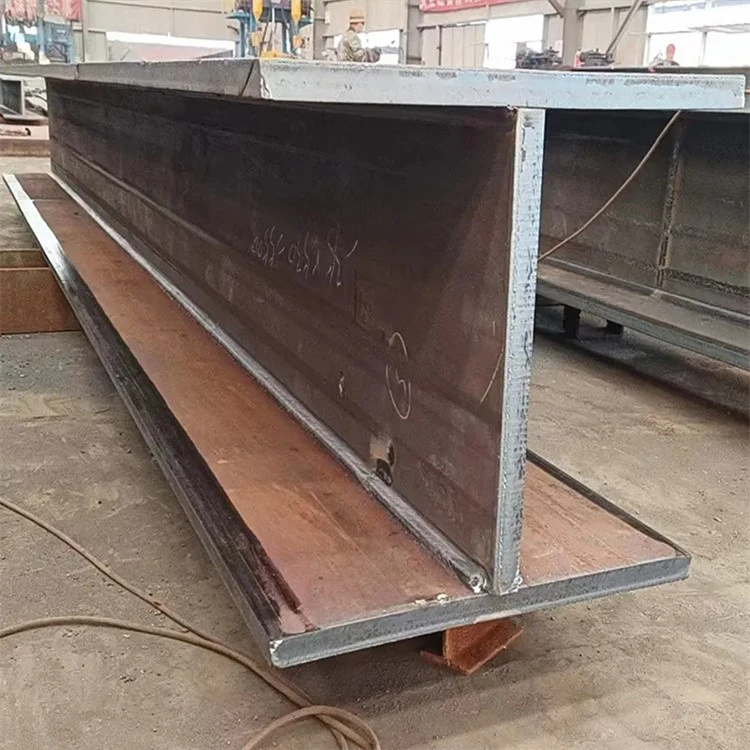
Our H Section Steel and I Beam-encompassing hot rolled and welded carbon steel profiles in premium grades S275jr, Q235, and S355jr-serve as the backbone of modern building steel structures, delivering exceptional structural performance, versatility, and durability tailored to diverse construction needs. These profiles integrate advanced material science, precision manufacturing, and optimized cross-sectional design, making them indispensable for engineers and contractors working on residential, commercial, industrial, and public infrastructure projects.
Material Grades: Tailored Strength for Building Demands
Each carbon steel grade is engineered to address specific load, environmental, and fabrication requirements in building steel structures:
Q235: A foundational low-carbon steel grade compliant with China's GB/T 700 standard, Q235 offers a minimum yield strength of 235 MPa and tensile strength of 375–500 MPa. Its standout attributes-superior ductility, excellent weldability, and cost-effectiveness-make it ideal for light to medium-load building components, such as floor joists, roof purlins, and non-critical columns in low-rise residential and commercial buildings. It performs reliably under static loads and simplifies on-site fabrication, a key advantage for fast-track construction projects.
S275jr: Aligned with European EN 10025-2 standards, S275jr is a versatile carbon-manganese steel with a minimum yield strength of 275 MPa (for thicknesses ≤16mm) and tensile strength of 370–530 MPa. The "jr" designation indicates it meets room-temperature impact toughness requirements, enhancing its suitability for temperate-climate building structures. It balances strength and workability, making it suitable for medium-span beams, secondary columns in commercial complexes, and industrial warehouse frames-where moderate load-bearing capacity and consistent performance are critical.
S355jr: Also compliant with EN 10025-2, S355jr is a high-strength carbon steel grade with a minimum yield strength of 355 MPa (for thicknesses ≤16mm) and tensile strength of 470–630 MPa. It delivers exceptional load-bearing capacity and impact resistance (even at slightly lower temperatures), making it the top choice for heavy-duty building applications: high-rise building columns, long-span roof trusses, industrial crane beams, and infrastructure components like stadium supports. Its strength allows for thinner profiles, reducing overall steel usage and building weight-lowering foundation costs while maintaining structural integrity under dynamic loads (e.g., wind, seismic activity).
Manufacturing Processes: Hot Rolled vs. Welded-Optimized for Performance
Two core manufacturing processes define these H Section Steel and I Beam profiles, each offering unique benefits for building steel structures:
Hot Rolled Profiles: The majority of H and I beams for buildings are hot rolled, a process where steel billets are heated to over 1,000°C (exceeding the steel's recrystallization point) and extruded through precision rolling stands. This process refines the steel's grain structure, boosting tensile strength, ductility, and impact resistance. Hot rolled profiles feature tight dimensional tolerances (critical for aligning prefabricated steel frames) and a smooth surface that improves adhesion for protective coatings (e.g., galvanization, epoxy). They are ideal for load-bearing components like main beams and columns, where structural integrity and consistency are non-negotiable.
Welded Profiles: For custom sizes or specialized building designs (e.g., extra-wide flanges, non-standard web thicknesses), welded H/I beams are employed. Fabricated by welding steel plates (flanges and web) using advanced submerged arc welding (SAW) or gas metal arc welding (GMAW) techniques, these profiles offer design flexibility. Welded beams undergo strict quality control (including ultrasonic testing of welds) to ensure no internal defects, making them suitable for bespoke building projects-such as curved roof beams in architectural structures or custom-sized columns for retrofitting existing buildings. While hot rolled profiles excel in standardization, welded profiles cater to unique design requirements without compromising strength.
H Section vs. I Beam: Structural Design for Building Applications
The distinct cross-sectional designs of H Section Steel and I Beam make them suited to specific roles in building steel structures:
H Section Steel: Characterized by parallel, equal-width flanges connected by a central web, the H-shape delivers balanced performance in both horizontal (beam) and vertical (column) applications. Its wide flanges efficiently resist bending stress (critical for floor and roof beams), while the web transfers shear stress evenly. The symmetric design ensures predictable load behavior, simplifying structural calculations and ensuring compliance with building codes. H sections are the primary choice for main columns in high-rises, long-span floor beams, and industrial building frames-where multi-directional load resistance is essential.
I Beam (Universal Beam): Similar in structure to H sections but with narrower flanges and a thicker web, I beams excel in resisting bending stress in a single plane. They are ideal for secondary structural components, such as roof rafters, floor joists, and lintels-where load direction is consistent. Their compact design reduces material usage, making them cost-effective for non-main load-bearing roles. In building steel structures, I beams often work in tandem with H sections: H sections as primary frames, I beams as secondary supports.
Application Versatility in Building Steel Structures
These carbon steel profiles are integral to nearly every type of building steel structure:
Residential & Commercial Buildings: Q235 and S275jr hot rolled I beams serve as floor joists and roof purlins, while S355jr H sections act as main columns and long-span beams in high-rises. Welded profiles may be used for custom architectural features (e.g., exposed steel beams in modern interiors).
Industrial Facilities: S355jr hot rolled H sections support heavy equipment, overhead cranes, and large-span warehouse roofs, where high strength and durability are critical. Welded beams cater to custom crane runway designs.
Public Infrastructure: Stadiums, airports, and train stations rely on S355jr H sections for long-span roof trusses and support columns, while S275jr profiles are used for secondary structures like concourse beams. In seismic-prone regions, the ductility of Q235 and S275jr ensures structures can absorb energy during earthquakes.
Quality Compliance & Sustainability
All profiles adhere to global standards (GB/T, EN, ASTM) and undergo rigorous testing to ensure building safety:
Mechanical Testing: Tensile, yield, and impact tests verify strength and toughness, ensuring compliance with building codes (e.g., China's GB 50017, Europe's EC3).
Dimensional & Weld Inspection: Laser measurements confirm profile accuracy, while ultrasonic testing (for welded beams) detects weld defects-guaranteeing compatibility with prefabricated frames.
Sustainability: Carbon steel is 100% recyclable (over 90% of steel in construction is reused), aligning with green building certifications (LEED, BREEAM, China's Green Building Label). The efficient design of H/I beams reduces material waste, and hot rolling minimizes energy consumption compared to other manufacturing methods-lowering the carbon footprint of building projects.
Conclusion
Our H Section Steel and I Beam-hot rolled and welded, in grades Q235, S275jr, and S355jr-are engineered to meet the diverse demands of building steel structures. From low-rise homes to skyscrapers, from warehouses to stadiums, these profiles deliver the strength, versatility, and sustainability required for modern construction. By matching the right grade, manufacturing process, and profile type to specific project needs, engineers can create safe, durable, and cost-effective steel structures that stand the test of time.
|
Product name |
Best Quality Price Astm A36 Universal h Beam/I Beam Steel Profile Carbon h Beam Steel for Building Frames |
|
Shape |
H&I beam |
|
Technique |
Hot rolled / Welded |
|
Standard |
ASTM / AS / BS / GB / JIS |
|
Materials |
Q235B, SS400, A-36, AS300B, S355J0, S450J0-T, S275JR |
|
Size |
100*50*5*7-900*300*16*28mm |
|
Surface treatment |
Galvanized / Black |
|
Length |
1-12m or customized |
|
Delivery time |
In 10-30 days after receiving the deposit or L/C |