





In building and bridge steel structure engineering, the HEA550 S355J0 section (540×300×12.5×24) is an important load-bearing component, widely used in critical structural areas to carry loads and provide stable structural support.
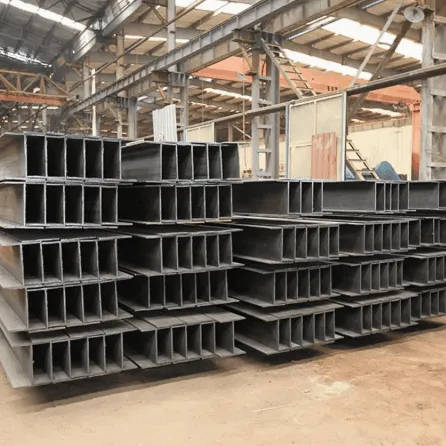
Chemical Composition of HEA550 S355J0 Steel Plate
| Element | Content |
|---|---|
| Carbon (C) | ≤ 0.22% |
| Silicon (Si) | ≤ 0.55% |
| Manganese (Mn) | ≤ 1.60% |
| Phosphorus (P) | ≤ 0.030% |
| Sulfur (S) | ≤ 0.030% |
| Nitrogen (N) | ≤ 0.012% |
| Copper (Cu) | ≤ 0.55% |
Physical Properties of HEA550 S355J0 Steel Plate
| Property | Value |
|---|---|
| Steel Grade | S355J0 |
| Standard | EN 10025-2 |
| Section Type | HEA 550 (European wide flange beam) |
| Dimensions | 540×300×12.5×24 mm |
| Yield Strength | ≥ 355 MPa (thickness dependent) |
| Tensile Strength | 470 – 630 MPa |
| Impact Toughness | 27 J at 0°C |
| Elongation | ≥ 22% |
| Elastic Modulus | 210 GPa |
| Density | 7.85 g/cm³ |
| Poisson's Ratio | 0.30 |
| Hardness (approx.) | 150–200 HB |
The 540 mm depth ensures strong flexural rigidity; the 300 mm flange width provides lateral stability and helps prevent torsional buckling of the beam; the 12.5 mm web thickness is sufficient to resist internal shear stresses; and the 24 mm flange thickness ensures resistance to local buckling under high compressive loads.
Application of HEA550 S355J0 H sections
In a large-scale heavy manufacturing industrial plant project in Europe, HEA550 S355J0 sections (540×300×12.5×24) were used as secondary beams and platform main beams within the steel floor system.
The plant was designed for heavy equipment installation and continuous production operations, requiring high load-bearing capacity, excellent bending stiffness, and long-term structural stability.

The total steel consumption of the project was approximately 800–1200 tons, of which HEA550 S355J0 H sections accounted for around 180–260 tons. These were mainly installed in long-span floor beams and localized high-load platform areas, enabling column-free spaces with spans of 12–18 meters.
In terms of quality control, the materials were strictly inspected under a full-process quality system in accordance with EN 10025-2 standards. Dimensional accuracy was fully controlled, with 100% inspection of key parameters such as flange width, web thickness, and straightness, ensuring consistency with design requirements.
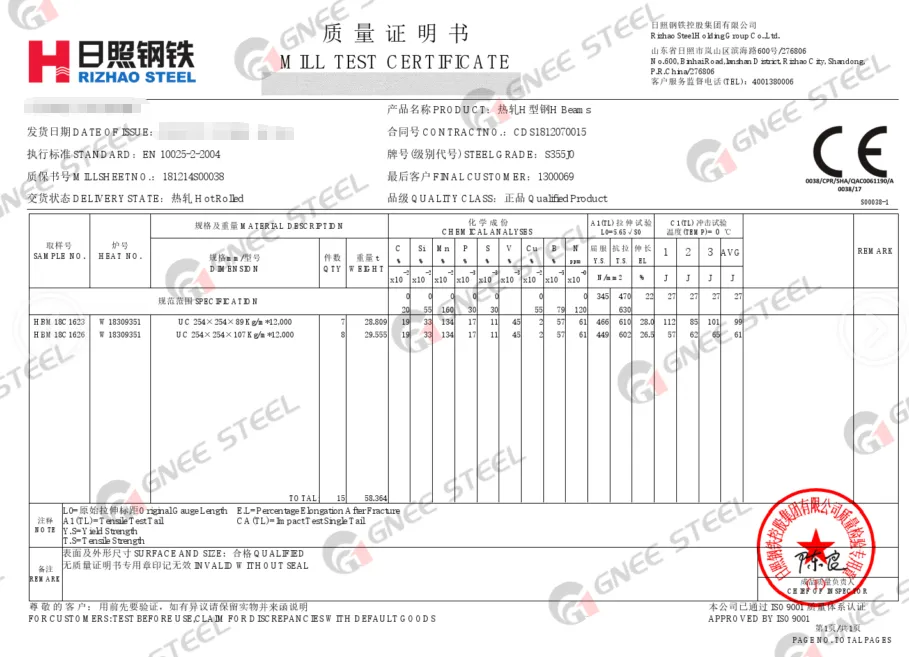
For critical load-bearing components, ultrasonic testing (UT) was carried out on 10%–15% of the materials to identify potential internal defects. In addition, some batches were re-inspected by third-party organizations such as SGS or BV for verification. The overall factory pass rate remained consistently above 99%, ensuring that the materials met the safety and reliability requirements of industrial building structures.
Contact now to get the S355J0 H Beam Quote
If you require HEA550 (540×300×12.5×24) S355J0 H-beams as well as other sizes of H-beam sections, we can provide tailored section selection based on your load design, span requirements, and construction conditions, along with customized cutting, full technical documentation, and inspection reports to help you quickly complete engineering selection and procurement decisions.
What grade of steel is S355J0?
S355J0 is a non-alloy structural steel grade defined by the EN 10025-2 standard. The "S" denotes "structural," indicating its use in constructing buildings, machinery, or infrastructure.
Is S355 mild steel or stainless steel?
What S235, S275 & S355 Really Mean Under BS EN 10025. S235, S275 and S355 are structural mild steel grades defined under BS EN 10025-2, which sets the technical delivery conditions for hot rolled non-alloy structural steels.
What is the difference between S355JR and S355J0?
While both S355JR and S355J0 are structural steels with similar chemical compositions, the key difference lies in their impact requirements and usage scenarios. S355J0 possesses slightly stronger mechanical properties, making it suitable for applications requiring higher strength.
Is S355 equivalent to A36?
S355JR and A36 are not directly equivalent, as S355JR has higher strength (yield 355 MPa vs. A36's 250 MPa) and guaranteed impact toughness, making it closer to ASTM A572 Grade 50 than A36. A36 is often equivalent to S235JR (yield 235 MPa), a lower EN grade.