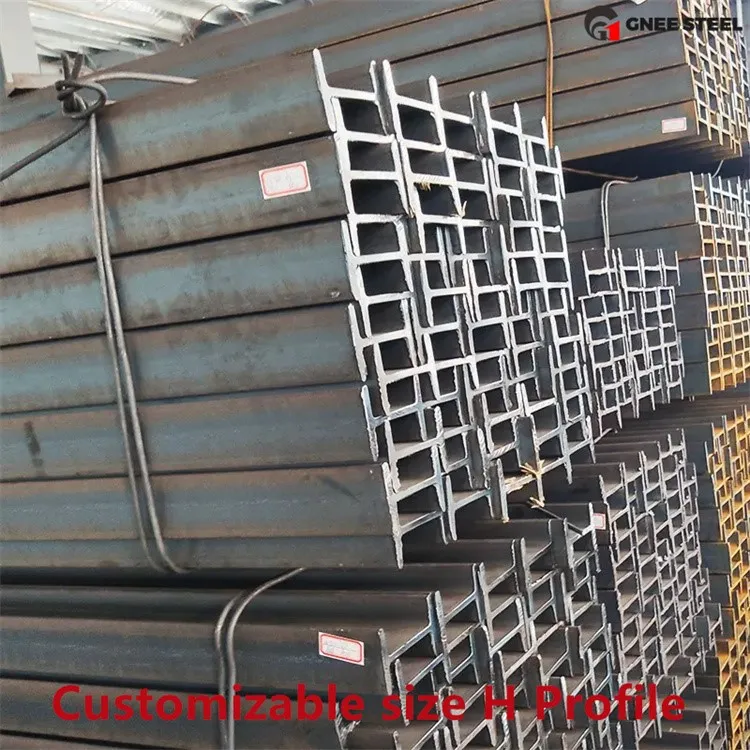
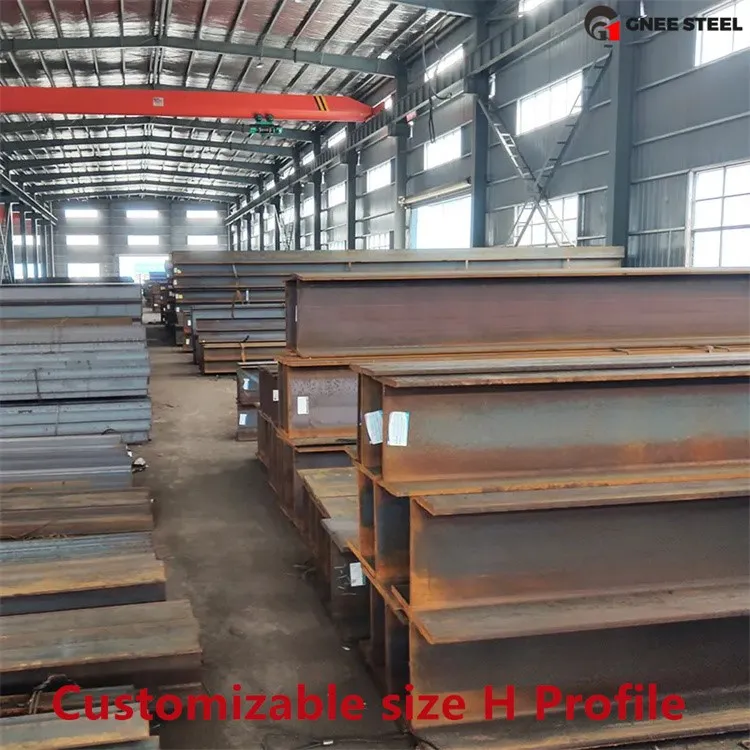
Group 1
What makes Q235B H beam a high-strength structural steel?
Q235B has a yield strength of around 235MPa, providing sufficient strength for many structural needs. Its hot-rolled process enhances structural integrity, making it strong enough for light to medium-duty applications like building frames and workshops.
How does Q235B differ from Q235A H beam?
Q235B undergoes impact testing at 20°C, ensuring better toughness than Q235A (which may lack such testing). This makes Q235B more reliable in environments with minor temperature variations or light stress.
What's the advantage of hot-rolled wide flange in Q235B H beam?
Wide flanges distribute loads evenly, boosting stability. Hot rolling creates a seamless structure, enhancing strength and making the beam resistant to bending in wide-span applications like roof supports.
Where is Q235B hot-rolled H beam commonly used?
Widely used in residential buildings, small bridges, and factory structures. Its balance of strength, weldability, and cost suits projects needing reliable support without extreme load demands.
Is Q235B suitable for outdoor structural projects?
Yes, with proper protection. Painting or galvanizing prevents corrosion, allowing it to perform well in outdoor settings like garden sheds or outdoor canopies.
Group 2
What's the weldability of Q235B H beam?
Excellent. Its low carbon content (0.12-0.20%) allows easy welding without cracking, simplifying on-site assembly and making it popular for custom structural designs.
How does the width of Q235B H beam affect its performance?
Wider flanges increase load-bearing capacity. A wider beam resists lateral buckling better, making it suitable for longer spans in structures like warehouse roofs.
Can Q235B H beam replace higher-grade steels in some cases?
Yes, for light to medium loads. It's more cost-effective than Q345 or S355, so using it in low-stress projects avoids unnecessary expenses while meeting structural needs.
What's the typical length range of Q235B hot-rolled H beam?
Usually 6-12 meters. Longer lengths are available via customization, but transportation becomes trickier, so standard lengths fit most construction needs.
How does Q235B handle static loads?
Well. Its consistent strength makes it reliable for bearing static loads like walls, floors, and fixed machinery, common in residential and commercial buildings.
Group 3
What's the chemical composition highlight of Q235B H beam?
Contains around 0.12-0.20% carbon, 0.30-0.65% manganese, and low sulfur/phosphorus. This mix ensures good ductility and weldability, key for structural use.
Why is Q235B preferred for professional structural projects?
It meets strict quality standards, ensuring consistent performance. Its availability and proven track record in construction make it a trusted choice for engineers and builders.
How does hot rolling improve Q235B H beam's properties?
Hot rolling refines the steel's grain structure, increasing density and reducing defects. This process enhances toughness and makes the beam more resistant to wear and tear.
What's the weight range of Q235B wide flange H beam?
Typically 10-60 kg/m. Lighter beams suit small structures, while heavier ones (with thicker flanges) work for medium-duty supports like factory columns.
Does Q235B H beam require heat treatment after rolling?
No, it's ready for use as-rolled. Hot rolling already achieves the desired mechanical properties, saving time and cost in production.
Group 4
How does Q235B perform in cold weather?
Adequate for mild cold. It retains strength at above-freezing temperatures, but in extreme cold (below -10°C), its toughness may drop, so additional testing is wise.
What's the cost advantage of Q235B H beam over imported steels?
Locally produced in China, it avoids import tariffs and shipping costs. This makes it cheaper than ASTM A36 in Chinese markets for similar applications.
Can Q235B H beam be cut to custom sizes easily?
Yes. It's easy to cut with plasma or saws, allowing quick adaptation to project-specific dimensions, a plus for unique structural designs.
What's the lifespan of Q235B H beam in indoor use?
50+ years with proper maintenance. Indoor environments protect it from harsh weather, so it remains structurally sound in homes, offices, and indoor warehouses.
How does Q235B compare to S235jr H beam in performance?
They're similar. Both have ~235MPa yield strength and suit light structures. Q235B is common in China, S235jr in Europe, with comparable weldability and durability.
Group 5
What's the maximum load Q235B H beam can bear?
Depends on size: a 200x100mm beam (27 kg/m) handles ~5-8 tons; larger sections (300x150mm, 46 kg/m) bear 10-15 tons. Engineers calculate based on span and application.
Why is Q235B ideal for prefabricated structures?
Its consistency in size and strength ensures easy prefabrication. Modules made with Q235B H beam fit together seamlessly, speeding up on-site construction.
How does the web thickness of Q235B H beam affect its use?
Thicker webs increase vertical load capacity. They resist shear forces better, making the beam suitable for supporting heavy floors or small machinery.
Is Q235B H beam recyclable?
Yes, fully. It's carbon steel, so it can be melted and reused to make new beams or other steel products, aligning with sustainable building practices.
What standards ensure Q235B H beam quality?
Complies with Chinese standard GB/T 700, regulating chemical composition and mechanical properties. This ensures consistent quality for structural safety.