


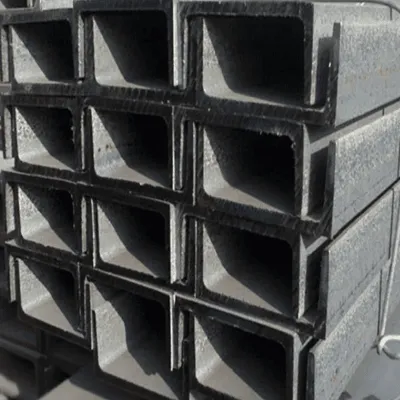


The A36 steel developed by ASTM international is one of the popular and widely used carbon structural steels which is mild and hot rolled. ASTM A36 has ultimate welding properties and it is perfectly suitable for punching, grinding, drilling, tapping and machining processes. Unlike higher-performance alloys, these structural steel plate properties allow the steel to be used in many applications.

Chemical composition of A36 steel plate
It consists of carbon (C) content 0.25 – 0.29%, Copper (Cu) content 0.20%, Iron (Fe) content 98.0 percentage, Manganese (Mn) content 1.03 percentage, Phosphorus (P) content 0.04 percentage, Silicon (Si) content 0.280 percentage and Sulfur (S) content 0.050 percentage. With excellent properties, this steel plate can be bolted, riveted and welded in the construction of buildings, bridges, and buildings and for any general structural purposes.
A36 Steel Equivalent materials
ASTM A36 is said to be same as EN S275 steel plate. A36 steel is a very low carbon steel that blends great strength with form ability. It can be safely welded with minimum caution. This structural steel plate can be galvanized to give enhanced corrosion resistance which ensures superior quality.
A36 low carbon (mild) steel plate advantages and usage
ASTM A36 low carbon and structural steel plate is highly used in construction of oil rigs and in forming bins, tanks, bearing plates, rings, jigs, cams, forgings, templates, gears, base plates, stakes, fixtures, sprockets, forgings, brackets, ornamental works, stakes, agricultural equipment, automotive equipment, machinery parts and frames. This steel plate is also used for various parts that are produced by flame cutting. The parts include walkways, boat landing ramps, parking garages, and trenches. The ductility of this steel plate allows the alloy to be used neither as cable nor as reinforcing bar. This steel is strictly regulated by ASTM that is by American Society for Testing and Lindenhurst health and fitness center Materials.
Good machinability and weldability
The machinability rate of this steel plate is approximately 72 percent, and the average surface cutting feed of this A36 is 120 feet per min. This ASTM steel plate is an easy steel to weld and it can be welded by using any type of welding methods and also the welds and joints that are formed are of top-notch quality. Coming to the heating treatment, any standard carburizing and the hardening methods of AISI 1018 steel is perfect for this steel plate.
Heat treatment methods and performances for A36 steel plate
ASTM A36 steel plate is subjected to the normalization treatment at 899°C to 954°C that is at 1650°F to 1750°F, to annealing treatment at 843°C to 871°C that is at 1550°F to 1600°F, to stress relieving process at 677°C to 927°C that is at 1250°F to 1700°F, to carburizing process at 899°C to 927°C that is 1650°F to 1700°F and to hardening process at 788°C to 816°C that is 1450°F to 1500°F. Hardening process is strongly required when hardness and strength are the desired prime properties in design. Normalization treatment is done as the final treatment after the manufacturing process.
The properties of this steel plate allow it to deform steadily as the stress is increased beyond its yield strength in order to allow the bridges, buildings and any other constructions to stand long enough by allowing the inhabitants to exit safely before any collapse takes place. This steel plate has very good yield strength that is it has yield strength of 36,000 psi and it also has a high allowable bending stress of 22,000 psi.