


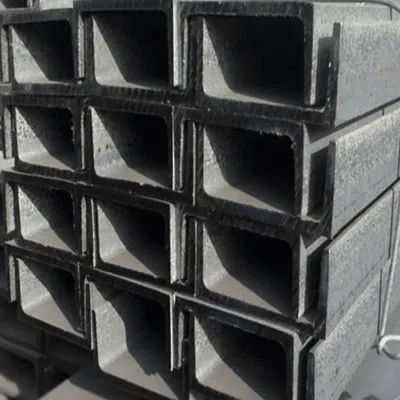


Hot rolled L-shaped mild steel angle bar, compliant with the ASTM standard and available in two high-performance steel grades-Q235 and S355-is a versatile and essential structural component widely applied in industrial construction, machinery manufacturing, bridge engineering, and infrastructure projects. Characterized by its distinctive L-shaped cross-section, this angle bar combines structural rigidity, excellent processability, and adaptability to diverse load-bearing scenarios, making it a preferred choice for both general and heavy-duty applications across various industries.
As core material grades of this product, Q235 and S355 mild steel each possess unique mechanical properties tailored to different application requirements, while both adhering to the strict quality and dimensional standards specified by ASTM (American Society for Testing and Materials). Q235, a carbon structural steel grade, features a minimum yield strength of 235 MPa, tensile strength ranging from 375-450 MPa, and good ductility and weldability. With a moderate carbon content (0.12%-0.20%), it offers an optimal balance of performance and cost-effectiveness, suitable for general load-bearing structures such as building frames, brackets, and light-duty equipment supports.
In contrast, S355 is a high-strength low-alloy (HSLA) steel grade, boasting superior mechanical performance with a minimum yield strength of 355 MPa and tensile strength between 470-630 MPa. It exhibits enhanced toughness, impact resistance (27J at -20℃ for S355JR), and corrosion resistance compared to Q235, making it ideal for heavy-duty, high-stress applications such as bridge components, heavy machinery frames, offshore structures, and large-scale industrial equipment bases. Both grades are classified as mild steel (low carbon steel), ensuring excellent weldability, machinability, and formability, allowing for easy cutting, bending, and assembly to meet custom project needs.
The product is manufactured through a precision hot-rolling process, which is critical to optimizing its structural and mechanical properties. Steel billets are heated to approximately 1200℃-above the recrystallization temperature-to soften the material, then subjected to rough rolling to form the initial L-shaped cross-section, followed by precision rolling to ensure dimensional accuracy, uniform leg thickness, and smooth surface finish. After rolling, the angle bars undergo controlled cooling to refine the grain structure, reduce internal stresses, and enhance overall toughness and structural stability. The hot-rolling process also ensures consistent material uniformity across the entire product batch, guaranteeing reliable performance in practical applications.
Adhering strictly to ASTM standards (including ASTM A36 for general structural steel and ASTM A572 for high-strength low-alloy steel), this hot rolled L-shaped angle bar meets rigorous requirements for dimensions, shape, weight, and mechanical properties. Its specifications cover a wide range to accommodate diverse project demands: leg lengths range from 20mm to 200mm, thicknesses from 3mm to 24mm, and standard lengths of 6m, 9m, or 12m. Both equal leg (symmetrical L-shape) and unequal leg (asymmetrical L-shape) configurations are available. Equal leg angle bars ensure uniform force distribution, suitable for balanced load-bearing structures, while unequal leg angle bars provide directional strength, ideal for special-shaped frames and asymmetric support systems. Customized sizes, including leg length, thickness, and cutting length, are also offered to meet specific design requirements.
The L-shaped design of this angle bar provides inherent structural advantages, including strong bending resistance and stable load distribution, making it suitable for a wide array of applications. It is commonly used in the construction of steel frames, roof trusses, wall brackets, and foundation supports; in machinery manufacturing for equipment frames, brackets, and connecting components; in bridge engineering for auxiliary structures and reinforcements; and in infrastructure projects such as power transmission towers, railway accessories, and urban construction. The dual material options (Q235 and S355) allow for flexible selection based on project load requirements and budget considerations, while compliance with ASTM standards ensures international compatibility and quality reliability. With its robust performance, versatile applications, and strict quality control, this hot rolled L-shaped mild steel angle bar serves as a foundational structural component for modern industrial and construction projects worldwide.


