


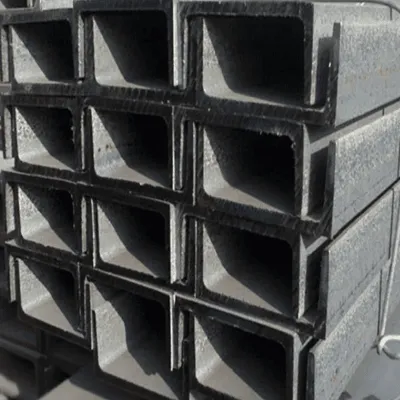


S235 Angle Bar: What the Grade Designation Means
S235 is a non-alloy structural steel grade defined in EN 10025-2, the European standard for hot rolled products of structural steels in the non-alloy quality group. The number 235 states the minimum specified yield strength in megapascals for material up to 16 mm thick, so an S235 angle bar is guaranteed to reach 235 MPa in yield and 360–510 MPa in tensile strength in that thickness range. The letter S marks a structural steel, and the suffix letters classify the impact test conditions. Angles rolled to this grade are made from plain carbon steel with a controlled chemistry, which is why the profile welds, bends and machines with ordinary fabrication equipment and why it is a standard choice for frames, bracing, lintels, stair stringers and general engineering work in Europe and in projects written to EN practice.
S235JR, S235J0, S235J2 and S235K2 Sub-grades
Impact toughness is the property that separates the sub-grades, and specifying the wrong suffix is one of the most common errors on an angle order.
| Sub-grade | Impact test temperature | Minimum absorbed energy | Suitable climate or service |
|---|---|---|---|
| S235JR | +20 °C | 27 J | Temperate indoor and outdoor structures |
| S235J0 | 0 °C | 27 J | Cooler sites, general outdoor steelwork |
| S235J2 | −20 °C | 27 J | Cold regions, winter erection |
| S235K2 | −20 °C | 40 J | Cold regions with higher toughness demand |
Chemistry is also fixed by EN 10025-2 for the S235 family: carbon is limited to 0.17%, manganese to 1.40%, phosphorus to 0.035%, sulphur to 0.035%, nitrogen to 0.012% and copper to 0.55%, with the exact figures quoted for product analysis depending on thickness at the time of casting. Limiting carbon and sulphur is what protects weldability and prevents the low-temperature brittleness that would otherwise cancel the benefit of the J2 impact class.
Size Range, Section Mass and Tolerances
Hot rolled S235 equal angles are produced across the same size ladder as other carbon steel angle grades, from 20 × 20 × 3 mm up to 200 × 200 × 24 mm, and supplied in 6 m, 9 m and 12 m lengths. Unequal-leg angles in the same grade cover the cases where a rectangular support footprint is needed. Section mass can be estimated from geometry:
W (kg/m) = t × (2e − t) × 0.00785, where e is leg length in millimetres and t is leg thickness in millimetres, using a steel density of 7.85 g/cm³. Published tables normally show a slightly higher value than the simple formula because they also account for the rounded corner radius, so a nominal 100 × 100 × 6 mm angle is listed at about 9.22 kg/m while the basic calculation returns about 9.14 kg/m. Dimensional control covers leg length, leg thickness, leg squareness, straightness and the permissible camber of the rolled length.
One recurring table error is worth checking on any size chart: occasional published sheets repeat the mass of a lighter gauge against a heavier one, as happens when a 90 × 90 × 9 mm angle is shown at the 9.59 kg/m figure belonging to the 7 mm wall section. Mass per metre must always increase with leg thickness at constant leg length, so any table that shows otherwise should be corrected before it is used for estimating or for a delivery note.
Cutting, Drilling and Welding
S235 angle bar is cut with band saws, abrasive discs or plasma torches, drilled or punched with high-speed steel tooling, and welded with all common arc processes. With a carbon level capped at 0.17% and a low carbon equivalent, the material does not demand the preheat that higher-strength micro-alloyed grades require: sections under 20 mm thick can usually be welded in mild conditions without preheat, and preheat in the 50–100 °C range is sufficient for thicker sections or for cold site conditions below 0 °C. Basic electrodes such as E42 or E43 series consumables match the parent metal strength, and more careful matching is needed only when a design mixes S235 with S355 members, where the weld should be sized for the weaker member or upgraded to the stronger grade according to the connection design. The flat, parallel legs of an angle make tacking and alignment straightforward, and the metallurgical corner carries the weld load without a fabricated joint.
Surface Condition and Corrosion Protection
S235 is a plain carbon steel with no chromium, nickel or other passivating addition, so it has no inherent resistance to atmospheric corrosion and will rust once the mill scale breaks down. Claims that a carbon steel angle is naturally rust resistant are misleading, and protection must be designed into the project. The usual routes are hot-dip galvanizing to EN ISO 1461 or ASTM A123/A123M, which gives a zinc coating normally in the range of 70–85 µm on sections 6 mm and heavier; shop priming or a full paint system of epoxy or polyurethane for sheltered interiors; and duplex systems that combine galvanizing with a topcoat for coastal or chemical atmospheres. Steel remains fully recyclable at end of life, which is a genuine sustainability advantage, but that property is separate from corrosion performance and does not remove the need for a coating. Before dispatch, material is verified by mill test report to EN 10204 3.1, covering chemical analysis by optical emission spectrometry, tensile and bend testing, and dimensional inspection of leg length, thickness and straightness.
Frequently Asked Questions
Q: What does the S235 grade designation mean?
S235 is an EN 10025-2 non-alloy structural steel with a minimum yield strength of 235 MPa for thickness up to 16 mm and a tensile strength of 360–510 MPa. The letter S denotes structural steel and the number states the minimum yield strength in megapascals.
Q: What is the difference between S235JR, S235J0 and S235J2?
The grades differ in impact testing only. S235JR is tested at +20 °C, S235J0 at 0 °C and S235J2 at −20 °C, all with a minimum absorbed energy of 27 J. S235K2 also tests at −20 °C but requires 40 J, so cold-region projects should specify J2 or K2 rather than JR.
Q: Is S235 angle bar corrosion resistant?
No. S235 is plain carbon steel with no alloying element that resists rust, so unprotected material will corrode when exposed to moisture and oxygen. Corrosion resistance comes from a coating system such as hot-dip galvanizing, a zinc-rich primer with a topcoat, or a duplex galvanized and painted finish in aggressive environments.
Q: What size range is available in S235 equal angles?
Rolled S235 equal angles cover leg sizes from 20 × 20 × 3 mm to 200 × 200 × 24 mm, delivered in 6 m, 9 m and 12 m lengths. Sizes up to 50 × 50 mm suit brackets and secondary framing, mid-range sections serve trusses and beam connections, and heavier sizes carry base plates and bracing.
Q: How does S235 compare with Q235 and SS400?
All three sit in the same strength band: S235 has a 235 MPa minimum yield strength, Q235 the same 235 MPa under GB/T 700-2006, and SS400 a 245 MPa minimum yield strength with a 400 MPa minimum tensile strength under JIS G 3101. Performance is comparable, so the choice usually follows the standard required by the project specification.
Q: What welding consumables suit S235 angle bar?
Electrodes and filler wires in the E42 or E43 strength class match the parent metal, with shielded metal arc, gas metal arc and flux-cored processes all suitable. Sections above 20 mm thick, or welding below 0 °C, should be preheated to about 50–100 °C, and joints between S235 and higher-strength grades should follow the connection design rather than the weaker member alone.