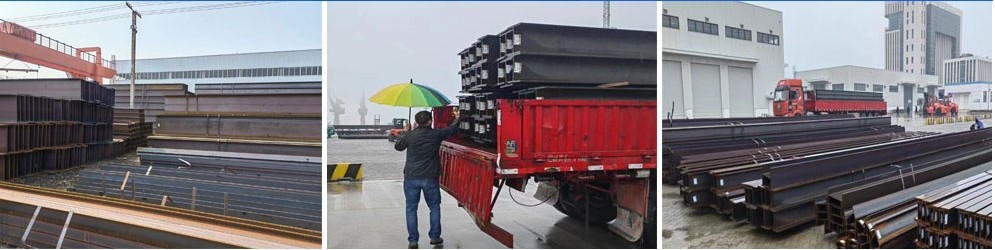
Global projects require H-beams compliant with multiple standards, impacting specifications and supply:
North America (AISC/ASTM):
Projects like the Mexican Maya Train demand H-beams certified to ASTM A992 (weldable structural steel), with dimensions in inches (e.g., W14×61) and strict camber tolerances (≤L/1000) for bridge girders.
Europe (EN 10034):
The Belt and Road Initiative's Budapest-Belgrade Railway uses HEB beams with CE marking, ensuring compliance with EN 1993-1-1 for fatigue resistance and dimensional accuracy (flange width tolerance ±1.0mm for HEB 300).
Middle East (GCC Standards):
Saudi Arabia's NEOM project specifies H-beams meeting both AISC and GCC-S 150-2019, with additional requirements for desert corrosion (zinc coating ≥90μm) and high-temperature strength (retaining 70% yield strength at 400°C).
China (GB/T 11263):
African infrastructure projects funded by China use GB/T 11263-compliant H-beams (e.g., HM 400×300), balancing cost and performance for markets like Nigeria, where local engineers are familiar with metric dimensions and Chinese design codes.
Dual-certified H-beams (e.g., meeting both AISC and EN) are increasingly popular, reducing compliance risks in multinational projects and expanding export opportunities for steel manufacturers