





Looking for reliable ASTM A992 H-Beams suppliers? GNEE is a premier manufacturer and supplier of ASTM A992 and A36 structural H-beams with over 20 years of experience.

ASTM A992 H-Beams
In this article, we break down the differences between A992 and A36 H-beams, helping engineers and fabricators choose the right material for bridges, buildings, and industrial frameworks.
What Is A992 Steel?
ASTM A992 H-Beams are designed for modern structural applications requiring high strength, ductility, and weldability.
- Features:
Higher strength and consistency than A36
Excellent weldability and ductility
CVN toughness testing ensures low-temperature performance
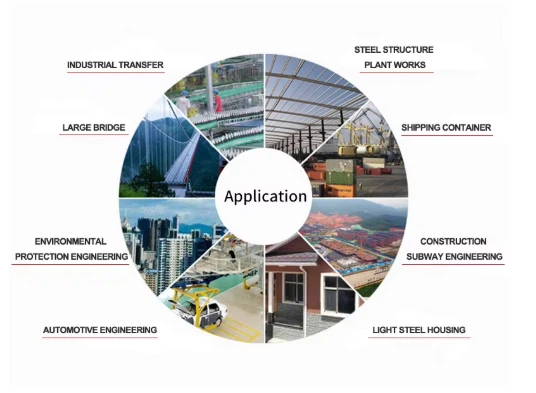
- Applications:
High-rise buildings
Large-span bridges
Industrial frameworks
- Key Specs:
Minimum yield strength: 50 ksi (345 MPa)
Minimum tensile strength: 65 ksi (450 MPa)
Maximum yield-to-tensile ratio: 0.85
A992 vs A36 H-Beams – Side-by-Side Comparison
| Property | A36 H-Beams | ASTM A992 H-Beams |
|---|---|---|
| Yield Strength | 36 ksi | 50 ksi |
| Tensile Strength | 58–80 ksi | 65 ksi (min) |
| Weldability | Good | Excellent |
| Ductility | Moderate | High (regulated) |
| CVN Toughness | Not required | Required |
| Common Use | General purpose | Structural beams (W-shapes) |
| Cost | Slightly lower | Slightly higher |
Why ASTM A992 H-Beams Are Preferred
A992 H-beams address the limitations of A36 when used for wide-flange and heavy-load structures:
- Higher yield strength allows lighter designs using less material.
- CVN toughness ensures improved low-temperature performance.
- Excellent weldability reduces risk in critical joints.
- Tight chemical composition ensures batch-to-batch consistency.
A36 still works well for plates, flat shapes, and lower-load applications. But for bridges, skyscrapers, and industrial frameworks, A992 H-beams are the modern standard.
Sizes, Delivery, and Mechanical Specifications
| Property | ASTM A992 H-Beam | A36 H-Beam |
|---|---|---|
| Yield Strength | 345 MPa | 250 MPa |
| Tensile Strength | 450 MPa | 400–550 MPa |
| Elongation | 18% | 20% |
| Thickness | 4–150 mm | 4–150 mm |
| Width | Up to 4000 mm | Up to 4000 mm |
| Length | Up to 12 m | Up to 12 m |
| Delivery Type | Hot-rolled, Normalized, Quenched & Tempered | Hot-rolled |
For high-strength structural H-beams, ASTM A992 H-Beams outperform A36 in strength, toughness, and weldability, making them ideal for bridges, high-rise buildings, and industrial frameworks.
Contact us for the latest ASTM A992 H-Beam price list and secure high-strength H-beams directly from the mill.
Contact us for latest ASTM A992 H-Beam price list
Application
What is grade A992 steel?
ASTM A992 is currently the most available steel type for structural wide-flange beams. The industry's technical institute describes the standard thus: "ASTM A992 (Fy = 50 ksi, Fu = 65 ksi) is the preferred material specification for wide-flange shapes, having replaced ASTM A36 and A572 grade 50.
What is the difference between A992 and A572?
A992 is primarily available as structural shapes, not plates or bars, and is the standard for wide-flange beams in the U.S. Key Difference: A572 Gr 50 is a broader specification for various forms and general structural use, while A992 is tailored for wide-flange shapes in building construction with enhanced properties.
Is A992 the same as A36?
ASTM A992 outperforms A36 in structural strength, weld consistency, and seismic resilience-making it ideal for modern construction. Still, A36 remains a solid, cost-effective choice for lighter-duty and non-critical applications. Choose based on structural requirements, budget, and project design.
Is the ASTM A992 galvanized?
No. Steel beams are galvanized to ASTM A123. You would need to order galvanization from the steel supplier. ASTM A992 is just the standard for strength requirements and metallurgy of structural steel shape you receive.
Is A572 stronger than A36?
The higher presence of strengthening alloys, such as manganese and silicon, in A572 plate grades give the material greater strength as compared to A36. This higher strength allows A572 steel to bear more weight and withstand greater forces without breaking or failing, which is crucial in structural applications.