Group 1
Question: What are the main chemical components of A36 carbon steel angle bars?
Answer: A36 carbon steel angle bars primarily consist of iron as the base metal. They contain approximately 0.25-0.29% carbon, which gives them good strength and weldability. Manganese content ranges from 0.80-1.20%, aiding in enhancing toughness. There are small amounts of phosphorus (max 0.04%) and sulfur (max 0.05%), which are controlled to avoid brittleness. These components work together to provide the steel with its characteristic mechanical properties.
Question: How does A53 steel differ from A36 steel in terms of mechanical properties?
Answer: A53 steel typically has a lower tensile strength compared to A36. A36 has a tensile strength of 58,000-79,800 psi, while A53 ranges around 48,000-60,000 psi. A53 is often used for pressure piping, so it has better ductility for forming. A36 offers higher yield strength, making it suitable for structural applications. Both have good weldability, but A53 may have stricter requirements for impact resistance in piping uses. These differences make them suited for distinct industrial needs.
Question: What are the common applications of L-shaped angle iron bars made from A36 steel?
Answer: A36 L-shaped angle bars are widely used in construction for framing and bracing structures. They are essential in building bridges, providing support for beams and girders. In manufacturing, they serve as brackets and supports for machinery. They are also used in making storage racks, where their strength helps bear heavy loads. Additionally, they find use in automotive frames, contributing to the overall structural integrity of vehicles.
Question: Can A53 steel angle bars be used in outdoor environments?
Answer: Yes, A53 steel angle bars can be used outdoors, but they require proper protection. Without treatment, they are prone to rust due to exposure to moisture and oxygen. Applying a protective coating like paint or galvanization helps prevent corrosion. Galvanized A53 angle bars have a zinc layer that acts as a barrier, extending their lifespan outdoors. They are commonly used in outdoor piping systems and structural supports where corrosion resistance is needed.
Question: What is the typical length range for L-shaped carbon steel angle bars?
Answer: L-shaped carbon steel angle bars usually come in standard lengths ranging from 20 feet to 40 feet. Some manufacturers offer shorter lengths, such as 10 feet, for specific projects. Custom lengths can also be ordered based on customer requirements, though this may incur additional costs. The length is often chosen based on the structural design, with longer bars reducing the number of joints needed. This range ensures versatility for various construction and industrial applications.
Group 2
Question: How is the thickness of an L-shaped angle bar measured?
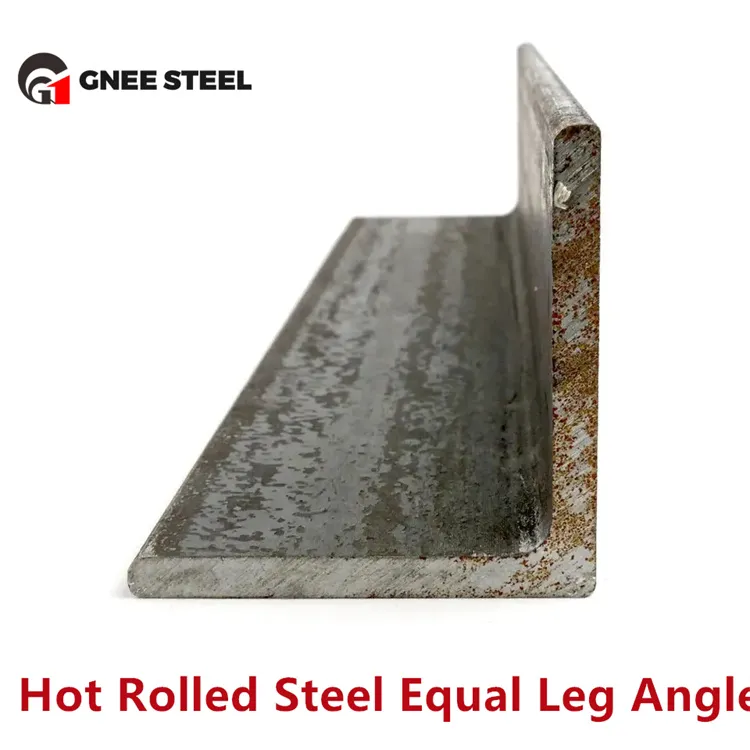
Answer: The thickness of an L-shaped angle bar is measured as the thickness of the legs, which are the two perpendicular sides. Each leg can have the same thickness (equal leg angle) or different thicknesses (unequal leg angle). Measurements are taken from the outer edge to the inner edge of each leg. For example, a 2x2x0.25 angle bar has legs 2 inches long with a thickness of 0.25 inches. This measurement is crucial for determining the load-bearing capacity of the angle bar.
Question: What advantages do A36 steel angle bars offer in structural applications?
Answer: A36 steel angle bars provide excellent strength-to-weight ratio, making them efficient for structural use. They have good ductility, allowing them to bend without breaking under stress. Their weldability is a key advantage, as they can be easily joined to other steel components. A36 steel is also readily available and cost-effective compared to higher-grade steels. These properties make them a popular choice for building frames, supports, and other load-bearing structures.
Question: Are A53 steel angle bars suitable for high-temperature applications?
Answer: A53 steel angle bars can handle moderate high-temperature applications but have limitations. They maintain their strength up to around 600°F (315°C). Beyond this temperature, their mechanical properties start to degrade, reducing their load-bearing capacity. For applications involving very high temperatures, such as industrial furnaces, specialized heat-resistant steels are better suited. However, in systems like hot water pipelines with controlled temperatures, A53 angle bars perform adequately.
Question: What is the difference between equal leg and unequal leg L-shaped angle bars?
Answer: Equal leg angle bars have both legs of the same length, providing balanced strength in both directions. They are commonly used in symmetric structural designs, such as frames and braces. Unequal leg angle bars have one leg longer than the other, offering more strength in one direction. They are ideal for applications where support is needed along a longer axis, like in shelving or edge reinforcements. The choice between them depends on the specific load and structural requirements of the project.
Question: How are L-shaped carbon steel angle bars manufactured?
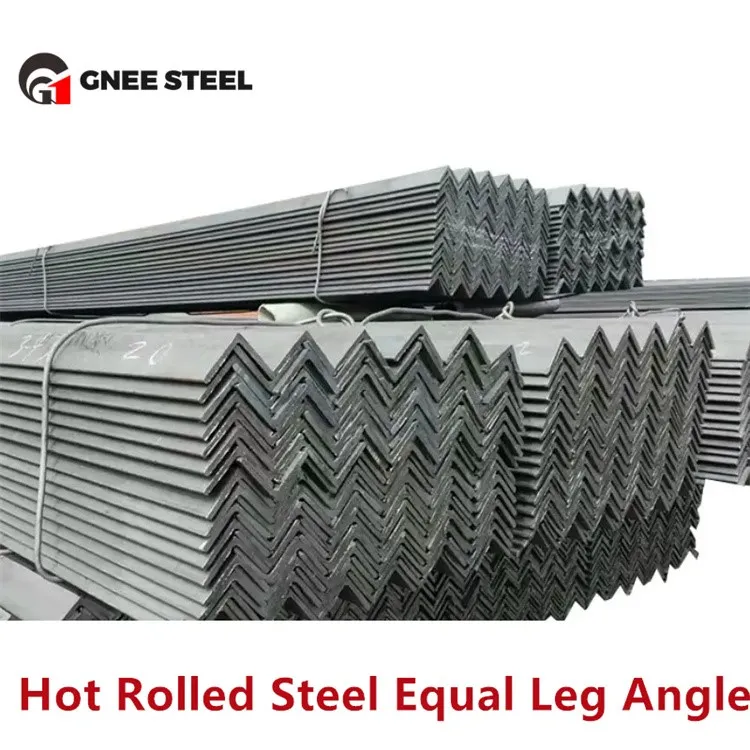
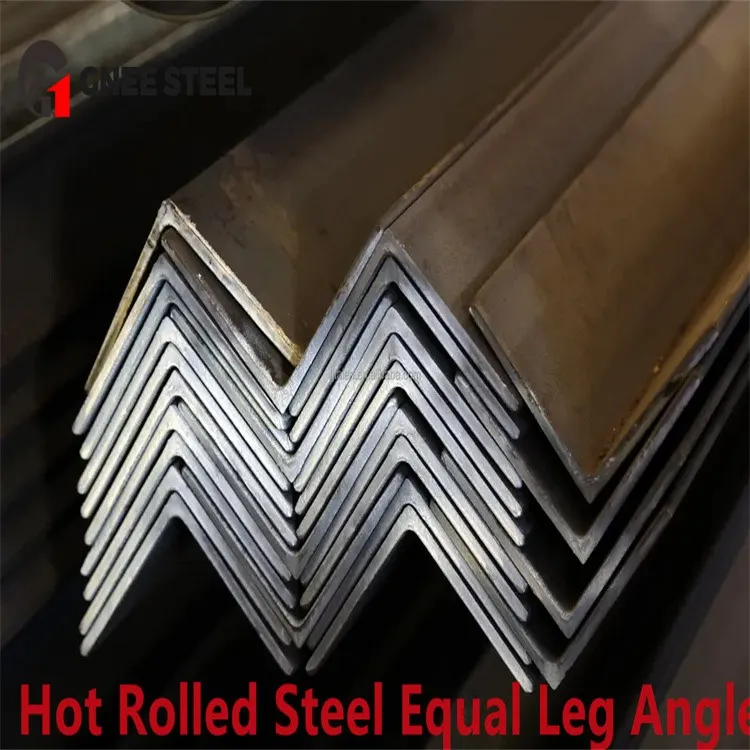
Answer: L-shaped carbon steel angle bars are typically manufactured through a rolling process. Hot rolling involves heating the steel billet to high temperatures and passing it through rolls that shape it into the L-shape. This process enhances the steel's strength and ductility. Cold rolling may be used for smaller sizes to achieve tighter tolerances and a smoother surface finish. After rolling, the angle bars are cut to standard lengths and may undergo surface treatments like galvanization or painting to improve corrosion resistance.
Group 3
Question: What is the load-bearing capacity of A36 steel angle bars?
Answer: The load-bearing capacity of A36 steel angle bars depends on factors like size, length, and how they are supported. Generally, a 3x3x0.375 inch A36 angle bar can bear several thousand pounds when used as a vertical support. Longer bars have lower capacity due to increased deflection under load. Engineers calculate the exact capacity using structural formulas that consider the bar's dimensions and the type of load (tensile, compressive, or bending). Proper installation, including secure connections, also affects how much weight the angle bar can safely carry.
Question: Can L-shaped angle bars be cut to custom sizes on-site?
Answer: Yes, L-shaped angle bars can be cut to custom sizes on-site using appropriate tools. Tools like angle grinders with cutoff wheels, hacksaws, or plasma cutters are commonly used. It's important to wear protective gear, such as goggles and gloves, during cutting. Cutting on-site allows for adjustments to fit specific project dimensions, reducing waste from pre-cut bars. However, precise measurements are necessary to ensure the cut bars fit correctly into the structure, maintaining its integrity.
Question: What is the purpose of galvanizing L-shaped carbon steel angle bars?
Answer: Galvanizing L-shaped carbon steel angle bars is primarily to protect them from corrosion. The process involves coating the steel with a layer of zinc, which acts as a sacrificial anode, corroding instead of the steel. This significantly extends the lifespan of the angle bars, especially in humid or outdoor environments. Galvanized angle bars require less maintenance than uncoated ones, as the zinc layer prevents rust formation. They are often used in marine applications, outdoor construction, and areas with high moisture levels.
Question: How does the price of A36 steel angle bars compare to A53?
Answer: The price of A36 and A53 steel angle bars is generally similar, but can vary based on market conditions and supplier. A36 is more commonly used in structural applications, so it may be more readily available, leading to slightly lower prices in some cases. A53 is often used for piping, which may involve specific manufacturing processes, making it marginally more expensive at times. Both prices are influenced by factors like steel scrap costs, production volumes, and transportation expenses. It's best to check current quotes from suppliers for accurate comparisons.
Question: What are the common grades of carbon steel used for L-shaped angle bars besides A36 and A53?
Answer: Besides A36 and A53, other common grades include A572, which offers higher strength and is used in structural applications requiring greater load capacity. A1011 is a low-carbon steel grade often used for general purposes due to its good formability. A106 is similar to A53 but is specifically designed for high-temperature pressure piping. A363 is a cold-rolled steel grade with a smooth surface, used for applications where appearance matters. Each grade has unique properties that make it suitable for specific industrial and construction needs.
Group 4
Question: How do L-shaped angle bars contribute to the stability of a structure?
Answer: L-shaped angle bars enhance structural stability by distributing loads evenly across joints and connections. They act as braces, preventing lateral movement and reducing the risk of structural sway. When used in frames, they reinforce corners, adding rigidity to the overall structure. Their perpendicular legs allow them to connect two surfaces at a right angle, creating a strong bond that resists bending or twisting. In construction, they are often used in trusses and frameworks to ensure the structure can withstand external forces like wind or earthquakes.
Question: What is the maximum temperature A36 steel angle bars can withstand without losing strength?
Answer: A36 steel angle bars can withstand temperatures up to approximately 750°F (399°C) without significant loss of strength. Beyond this temperature, their tensile strength and yield strength start to decrease. At around 1000°F (538°C), the strength drops more noticeably, making them unsuitable for high-heat applications like industrial ovens. For projects involving continuous exposure to high temperatures, heat-resistant alloys or higher-grade steels are recommended. It's important to consider the operating temperature when selecting A36 angle bars for a project.
Question: Can L-shaped carbon steel angle bars be painted?
Answer: Yes, L-shaped carbon steel angle bars can be painted, and it's a common practice to protect them from corrosion. Before painting, the surface should be cleaned to remove rust, dirt, and oil, ensuring good adhesion. Primer is often applied first to further enhance paint bonding and add an extra layer of protection. Various types of paint, such as epoxy or alkyd-based paints, are suitable for steel. Painting not only prevents rust but also allows for color coding, which can help in identifying different parts of a structure or system.
Question: What are the standard tolerances for the dimensions of L-shaped angle bars?
Answer: Standard tolerances for L-shaped angle bars vary by size and manufacturing standards, such as ASTM. For leg length, tolerances are typically around ±1/16 inch for smaller bars and ±1/8 inch for larger ones. Thickness tolerances are usually ±0.01 inch to ±0.03 inch, depending on the bar's size. The angle between the legs is generally within ±1 degree of 90 degrees. These tolerances ensure that the angle bars fit together properly during assembly and meet the structural requirements of the project. Manufacturers provide specific tolerance details based on their production processes.
Question: How are L-shaped angle bars connected to other structural components?
Answer: L-shaped angle bars are connected using various methods, including welding, bolting, and riveting. Welding provides a strong, permanent connection by fusing the angle bar to the other component with heat. Bolting uses bolts and nuts to create a removable connection, allowing for adjustments or disassembly. Riveting involves inserting a rivet into pre-drilled holes and hammering it to secure the connection, though it's less common today. The choice of method depends on factors like the application, load requirements, and whether the connection needs to be permanent or removable.
Group 5
Question: What is the difference between hot-rolled and cold-rolled L-shaped angle bars?
Answer: Hot-rolled angle bars are manufactured by rolling steel at high temperatures, which makes the steel more malleable. They have a rougher surface finish and slightly less precise dimensions but are stronger and more ductile. Cold-rolled angle bars are processed at room temperature, resulting in a smoother surface, tighter tolerances, and higher strength due to work hardening. Hot-rolled bars are more cost-effective and suitable for structural applications, while cold-rolled ones are used where precision and appearance matter, such as in machinery or decorative projects.
Question: Can A36 steel angle bars be used in marine environments?
Answer: A36 steel angle bars can be used in marine environments, but they require extensive corrosion protection. The saltwater and humidity in marine settings accelerate rusting, so galvanization or heavy-duty epoxy coatings are necessary. Even with protection, regular maintenance is needed to inspect and repair coatings. For critical marine applications, stainless steel or other corrosion-resistant alloys are better options, but A36 can be used in less demanding marine structures with proper care to extend its service life.
Question: What factors affect the weight of an L-shaped angle bar?
Answer: The weight of an L-shaped angle bar is primarily determined by its dimensions: leg length, leg thickness, and overall length. Longer legs or thicker legs increase the volume of steel, thus increasing weight. The type of steel also plays a role, as different grades have slightly varying densities, though the difference is minimal. Additionally, any surface treatments like galvanization add a small amount of weight, but this is usually negligible compared to the weight of the steel itself.
Question: What is the purpose of using L-shaped angle bars in shelving units?
Answer: L-shaped angle bars are used in shelving units to provide structural support and stability. They reinforce the corners of the shelving frame, preventing it from wobbling or collapsing under the weight of stored items. The perpendicular legs allow them to connect the vertical posts to the horizontal shelves, distributing the load evenly across the structure. They also help maintain the shelf's shape, ensuring it doesn't sag over time. In adjustable shelving, angle bars can be used as brackets to hold shelves at different heights, adding versatility to the unit.
Question: How do A53 steel angle bars perform in pressure piping systems?
Answer: A53 steel angle bars are well-suited for pressure piping systems due to their good ductility and ability to withstand moderate pressure. They are designed to handle the internal pressure of fluids flowing through pipes, making them a common choice for water, gas, and oil pipelines. Their weldability allows for secure connections between pipes and fittings, ensuring leak resistance. A53 steel also has sufficient toughness to withstand the stresses of installation and operation. However, for very high-pressure systems, higher-grade steels with enhanced strength may be required.