


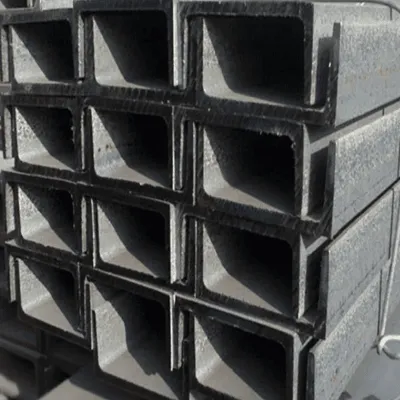


Product Description
Product | Steel Angle Bar |
Standard | GB ASTM, JIS, SUS, DIN, EN etc |
Thickness | 0.8mm - 25mm |
Width | 25mm*25mm-200mm*125mm / 50mm*37mm-400mm*104mm |
Length | 1m - 12m , or according to your requests. |
Shape | Equal |
Usage | Mechanical & Manufacture, Steel strcuture, Shipbuilding, Bridging, Automobile Chassis. |
Main market | Middle East, Africa, Asia and some Uropean country, America, Australia, etc. |
Technique Processing | Cold Drawn, Hot Rolled, Bending, Welding |
| Sectional properties and theoretical weight of hot-rolled equilateral angle steel | ||||||||||||||||
| Size(mm) | CSA | Theoretical Weight | center | consistency | resistance…Wx | Radius of gyration | Double angle steel turning radius…iy…(cm) | |||||||||
| Wing width | wing | radius | A | y0 | Ix | MAX | MIN | ix | iu | iv | a(mm): | |||||
| b | t | R | (cm2) | kg/m | (cm) | cm4 | cm3 | cm | cm | cm | 0 | 6 | 8 | 10 | 12 | |
| 20 | 3 | 3.5 | 1.13 | 0.89 | 0.60 | 0.40 | 0.66 | 0.29 | 0.59 | 0.75 | 0.39 | 0.85 | 1.08 | 1.17 | 1.25 | 1.34 |
| 4 | 1.46 | 1.15 | 0.64 | 0.50 | 0.78 | 0.36 | 0.58 | 0.73 | 0.38 | 0.87 | 1.11 | 1.19 | 1.28 | 1.37 | ||
| 25 | 3 | 3.5 | 1.43 | 1.12 | 0.73 | 0.82 | 1.12 | 0.46 | 0.76 | 0.95 | 0.49 | 1.05 | 1.27 | 1.36 | 1.44 | 1.53 |
| 4 | 1.86 | 1.46 | 0.76 | 1.03 | 1.34 | 0.59 | 0.74 | 0.93 | 0.48 | 1.07 | 1.30 | 1.38 | 1.43 | 1.55 | ||
| 30 | 3 | 4.5 | 1.75 | 1.37 | 2.85 | 1.46 | 1.72 | 0.68 | 0.91 | 1.15 | 0.59 | 1.27 | 1.47 | 1.55 | 1.63 | 1.71 |
| 4 | 2.28 | 1.79 | 0.89 | 1.84 | 2.08 | 0.87 | 0.90 | 1.13 | 0.58 | 1.26 | 1.49 | 1.57 | 1.65 | 1.74 | ||
| 36 | 3 | 4.5 | 2.11 | 1.66 | 1.00 | 2.58 | 2.59 | 0.99 | 1.11 | 1.39 | 0.71 | 1.49 | 1.70 | 1.78 | 1.86 | 1.94 |
| 4 | 2.76 | 2.16 | 1.04 | 3.29 | 3.18 | 1.28 | 1.09 | 1.38 | 0.70 | 1.51 | 1.73 | 1.80 | 1.89 | 1.97 | ||
| 5 | 3.38 | 2.65 | 1.07 | 3.95 | 3.68 | 1.56 | 1.08 | 1.36 | 0.70 | 1.52 | 1.75 | 1.83 | 1.91 | 1.99 | ||
| 40 | 3 | 5 | 2.36 | 1.85 | 1.09 | 3.59 | 3.28 | 1.23 | 1.23 | 1.55 | 0.79 | 1.65 | 1.86 | 1.94 | 2.01 | 2.09 |
| 4 | 3.09 | 2.42 | 1.13 | 4.60 | 4.05 | 1.60 | 1.22 | 1.54 | 0.79 | 1.66 | 1.88 | 1.96 | 2.04 | 2.12 | ||
| 5 | 3.79 | 2.98 | 1.17 | 5.53 | 4.72 | 1.96 | 1.21 | 1.52 | 0.78 | 1.68 | 1.90 | 1.98 | 2.06 | 2.14 | ||
| 45 | 3 | 5 | 2.66 | 2.09 | 1.22 | 5.17 | 4.25 | 1.58 | 1.39 | 1.76 | 0.90 | 1.85 | 2.06 | 2.14 | 2.21 | 2.29 |
| 4 | 3.49 | 2.74 | 1.26 | 6.65 | 5.29 | 2.05 | 1.38 | 1.74 | 0.89 | 1.87 | 2.08 | 2.16 | 2.24 | 2.32 | ||
| 5 | 4.29 | 3.37 | 1.30 | 8.04 | 6.20 | 2.51 | 1.37 | 1.72 | 0.88 | 1.89 | 2.10 | 2.18 | 2.26 | 2.34 | ||
| 6 | 5.08 | 3.99 | 1.33 | 9.33 | 6.99 | 2.95 | 1.36 | 1.71 | 0.88 | 1.90 | 2.12 | 2.20 | 2.28 | 2.36 | ||
Project Construction


Angle steel production
Angle steel belongs to carbon structural steel for construction. It is a simple section steel, mainly used for metal components and frames of factory buildings. In use, it is required to have good weldability, plastic deformation performance and certain mechanical strength. The raw material billet for the production of angle steel is low-carbon billet, and the finished angle steel is delivered in the state of hot rolling, normalizing or hot rolling.High Strength
Adequate inventory
The specifications and inventory of angle steel are complete, expressed in dimensions of edge length and edge thickness. The specification of angle steel is 2-20, with the number of centimeters of the side length as the number. The same size angle steel often has 2-7 different side thicknesses. Imported angle steel shall be marked with the actual dimensions and edge thickness on both sides, and relevant standards shall be indicated. Generally, those with a side length of 12.5cm or more are large angle steels, those between 12.5cm and 5cm are medium angle steels, and those with a side length of 5cm or less are small angle steels.


Attention to detail
The surface quality of angle steel is stipulated in the standard, and it is generally required that there should be no harmful defects in use, such as delamination, scarring, cracks, etc.
The allowable range of geometric shape deviation of angle steel is also stipulated in the standard, generally including bending degree, side width, side thickness, top angle, theoretical weight, etc., and it is stipulated that the angle steel must not have significant torsion.
Applicable scene
Angle steel can be composed of various stress components according to different needs of the structure, and can also be used as a connector between components. Widely used in various building structures and engineering structures, such as beams, bridges, transmission towers, lifting and transportation machinery, ships, industrial furnaces, reaction towers, container racks and warehouse shelves, etc.

1.What is an angle steel?
Angle material is rolled steel with a cross section that is "L" shaped. It has two legs that may or may not be equal in length. Angles are used extensively as connection materials for structural members. Other uses include curb angles, roof frames, edge angles, facia framing, lintels and braces.
2.How strong is angle steel?
A-iron is stronger than non-structural steel because the two perpendicular flanges work in conjunction to give angle iron cross-sectional structural integrity, resistance to bending from pressure applied from the top or bottom, left or right.
3.Is angle steel rust resistant?
Mild steel angle is strong and affordable but needs protection against rust. Aluminium angle is lightweight, corrosion-resistant, and easy to work with. Brass angle is decorative and corrosion-resistant but softer and more expensive. Galvanised steel angle is tough and highly rust-resistant, ideal for outdoor use.
4.What are the disadvantages of using angle steel?
Angle steel often faces surface-related issues such as burrs, scales, rust, and other contaminants. These problems not only detract from the steel's appearance but also shorten its service life by promoting corrosion and weakening the material over time.
5.Is angle iron stronger than wood?
Thanks to the 90-degree bend, angle iron is extremely strong along its length, and resists bending. It can easily support larger loads than similar thicknesses of flat steel and it is much stronger than wood or many composites pound for pound.