


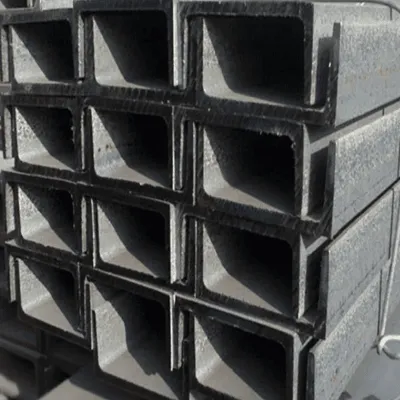


The Product and Its Role
Q355B is a high-strength low-alloy structural steel that is widely applied in shipbuilding and marine engineering. Hull blocks, deck structures, hatch coamings, offshore platform nodes and port equipment all benefit from the higher yield strength of Q355B, which reduces plate thickness and welded tonnage compared with mild steel.
Although dedicated hull grades are classified by the classification societies, Q355B is accepted in many marine structures when supplied with the required inspection documentation and impact testing.
Mechanical Properties
Q355B per GB/T 1591 guarantees a minimum yield strength of 355 MPa for thickness up to 16 mm and 345 MPa for 16 to 40 mm, with a tensile strength of 470 to 630 MPa. Grade B provides an impact energy of 34 J at 20 degrees Celsius.
Yield strength: 355 MPa minimum up to 16 mm plate thickness.
Tensile strength: 470 to 630 MPa.
Impact energy: 34 J at 20 degrees Celsius, with lower-temperature grades available.
Weldability: good carbon equivalent designed for shipyard welding practice.
Comparison with Hull Structural Grades
Ship hull steel is normally specified to rules such as GB/T 712 or the international classification standards, with grades such as A, B, D and E, and high-strength grades AH32, DH36 and EH36. Q355B offers strength in the same range as AH36 and DH36, whose minimum yield is 355 MPa, so it is frequently used for non-classed vessels, harbor craft and marine equipment where classification society approval is not mandatory.
Plate Supply and Sizes
Marine projects require plate in thicknesses from 6 mm to 100 mm, widths up to 3200 mm and lengths to 12 m or more. Plates are supplied with normalized or thermomechanical rolled delivery conditions where toughness is critical, and edges are trimmed square for butt welding. Large quantities are typically shipped in steel-banded bundles with full traceability from heat to final plate.
Corrosion Protection in Marine Service
In seawater environments the steel surface must be protected. Standard schemes include shop primer for fabrication followed by epoxy and antifouling paint systems, with cathodic protection for submerged parts. For splash-zone members, increased corrosion allowance or higher alloy cladding is specified.
Frequently Asked Questions
Q: Is Q355B approved by classification societies?
Q355B itself is a GB/T 1591 grade. Where classification is required, equivalent certified hull grades such as AH36 or DH36 are supplied with society certificates.
Q: What is the difference between Q355B and EH36?
Both have a minimum yield of 355 MPa, but EH36 is a certified hull grade with guaranteed impact performance at minus 40 degrees Celsius and stricter production control.
Q: Can Q355B plate be cut by plasma or laser?
Yes, both processes give clean edges. Plasma cutting is standard for thick plate, and laser cutting is used for thinner plate and profile work.
Q: How is impact toughness verified for marine steel?
Charpy V-notch tests are carried out on each heat at the specified temperature, and the results are recorded on the mill certificate.
Q: What surface preparation is required before painting?
Shot blasting to Sa 2.5 grade and application of a shop primer within the specified time window give the correct base for marine paint systems.