Group 1
Question: What is a Q235 carbon structural steel angle iron bar?
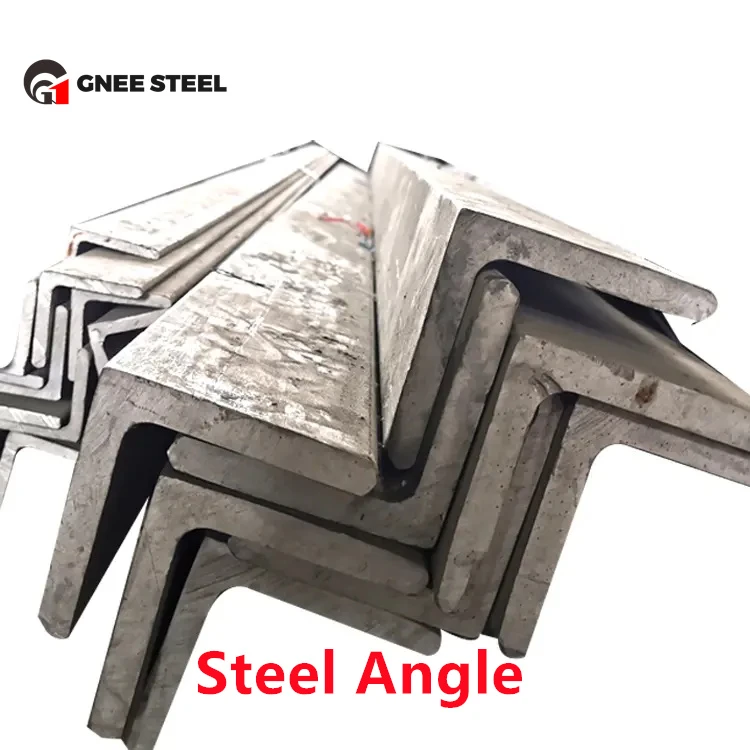
Answer: A Q235 carbon structural steel angle iron bar is a hot-rolled steel product with a right-angled cross-section, made from low-carbon steel conforming to Chinese standard GB/T 700. It gets its name from its minimum yield strength of 235 MPa, which balances strength and workability. This angle iron is widely used in building structures due to its affordability and versatility. Its carbon content (typically 0.14-0.22%) ensures good weldability and machinability, making it easy to cut, bend, and shape on construction sites. It comes in various sizes, with equal or unequal legs, to suit different structural needs.
Question: What are the key mechanical properties of Q235 steel angle iron?
Answer: Q235 steel angle iron has a tensile strength ranging from 375 to 500 MPa, providing sufficient resistance to pulling forces. Its elongation rate (minimum 26%) allows it to deform under stress without breaking, which is crucial for absorbing impacts in construction. The steel has moderate hardness, making it easy to drill and fasten with bolts. It exhibits good ductility, enabling it to be bent into various shapes without cracking. These properties collectively make Q235 angle iron reliable for load-bearing and bracing applications in buildings.
Question: How is Q235 angle iron used in building frameworks?
Answer: In building frameworks, Q235 angle iron serves as vertical supports for wall panels and roof trusses, distributing weight evenly to the foundation. It acts as bracing between beams to enhance structural stability, especially against lateral forces like wind. It is used to connect different structural components, such as joining steel columns to floor joists. Its equal-leg variants are ideal for framing door and window openings, providing rigid edges. The material's consistency ensures uniform performance across the framework, reducing the risk of weak points.
Question: What advantages does Q235 angle iron offer for low-rise building construction?
Answer: For low-rise buildings, Q235 angle iron is cost-effective, reducing overall construction expenses compared to higher-grade steels. Its ease of handling and installation speeds up the building process, which is beneficial for small-scale projects. The steel's sufficient strength meets the load requirements of low-rise structures without over-engineering. It is readily available in local markets, ensuring a steady supply for construction timelines. Its compatibility with other building materials, like concrete and wood, simplifies integration into mixed-material structures.
Question: How does the hot-rolling process affect Q235 angle iron's properties?
Answer: The hot-rolling process, done at temperatures above 1000°C, gives Q235 angle iron a rough, scaled surface that improves adhesion for paints and coatings. It refines the steel's grain structure, enhancing its ductility and toughness. Hot-rolling allows for precise control over dimensions, ensuring consistent leg lengths and thicknesses across batches. The process reduces internal stress in the steel, minimizing the risk of warping during subsequent cutting or welding. This method also makes the angle iron more affordable to produce, contributing to its widespread use in construction.
Group 2
Question: What sizes of Q235 steel angle iron are commonly used in construction?
Answer: Common sizes of Q235 steel angle iron include equal-leg variants like 30x30x3mm, 50x50x5mm, and 100x100x8mm, suitable for different load capacities. Unequal-leg sizes, such as 50x32x4mm, are used where strength is needed in one direction more than the other. Longer lengths (6m, 9m, or 12m) are preferred for large frameworks to reduce the number of joints. Smaller sizes (25x25x3mm) are ideal for light-duty applications like furniture framing within buildings. These size options make Q235 angle iron adaptable to diverse construction needs, from minor supports to major structural elements.
Question: How does Q235 angle iron perform in terms of corrosion resistance?
Answer: Q235 angle iron has basic corrosion resistance due to its low alloy content, making it suitable for dry indoor environments without additional protection. In humid or outdoor settings, it is prone to rusting, so protective measures like painting or galvanizing are necessary. Galvanized Q235 angle iron, with a zinc coating, can withstand outdoor exposure for years by preventing direct contact between steel and moisture. Regular maintenance, such as repainting, extends its lifespan in corrosive conditions. Despite this, its cost-effectiveness makes it a popular choice where corrosion risks are manageable with proper care.
Question: What role does Q235 angle iron play in reinforcing concrete structures?
Answer: In reinforced concrete, Q235 angle iron is embedded in beams and columns to enhance tensile strength, as concrete alone is weak in tension. It forms the framework for concrete slabs, preventing cracking under load. Angle iron is used to anchor concrete walls to foundations, ensuring a secure connection. It reinforces the edges of concrete staircases, adding durability to high-traffic areas. The steel's bond with concrete, improved by its rough surface, ensures that stress is evenly transferred between the two materials, boosting overall structural integrity.
Question: How does Q235 angle iron compare to higher-grade steels in building applications?
Answer: Q235 is more affordable than higher-grade steels like Q345, making it preferable for budget-conscious projects. It has lower yield strength, so it is better suited for light to medium loads rather than heavy-duty structures. Q235 is easier to weld and shape, which is an advantage for on-site modifications. Higher-grade steels offer better performance in extreme conditions, but Q235 meets the requirements of most standard building projects. For low-rise buildings and non-critical structures, Q235 provides a cost-effective balance of strength and workability.
Question: What are the welding techniques suitable for Q235 angle iron?
Answer: Shielded Metal Arc Welding (SMAW), or stick welding, is commonly used for Q235 angle iron due to its simplicity and suitability for on-site work. Gas Metal Arc Welding (GMAW), or MIG welding, offers faster deposition rates for large-scale projects. Flux-Cored Arc Welding (FCAW) is ideal for outdoor welding, as it doesn't require a shielding gas. Q235's low carbon content reduces the risk of weld cracking, even with minimal preheating. Proper cleaning of the angle iron's surface, removing rust and scale, ensures strong and reliable welds.
Group 3
Question: How is Q235 angle iron used in industrial building construction?
Answer: In industrial buildings, Q235 angle iron frames machinery platforms, providing sturdy surfaces for equipment. It constructs mezzanines and storage racks, supporting heavy loads of raw materials. Angle iron reinforces the walls of factories and warehouses, withstanding vibrations from machinery. It forms the structure of conveyor systems, ensuring smooth material transport. Its resistance to wear, when combined with protective coatings, makes it suitable for harsh industrial environments where durability is key.
Question: What are the storage and handling best practices for Q235 angle iron?
Answer: Q235 angle iron should be stored in a dry, covered area to prevent rusting, especially if uncoated. It should be stacked on level supports to avoid bending, with separators between layers to prevent surface damage. When handling, lifting equipment like cranes or forklifts should be used for long or heavy pieces to prevent injury. Care should be taken to avoid dropping the angle iron, as impacts can cause deformation. Storing different sizes separately simplifies inventory management and ensures quick access during construction.
Question: How does Q235 angle iron contribute to sustainable building practices?
Answer: Q235 is made from recycled steel in many cases, reducing the need for virgin raw materials and lowering carbon emissions. Its long lifespan in structures minimizes the need for frequent replacements, reducing waste. The steel is fully recyclable at the end of a building's life, contributing to a circular economy. Its lightweight nature compared to some building materials reduces transportation energy. Using Q235 in prefabricated components cuts on-site waste, as parts are precision-made off-site.
Question: What are the dimensional tolerances for Q235 angle iron?
Answer: Q235 angle iron follows GB/T 9787 standards for equal legs, with leg length tolerances of ±1mm and thickness tolerances of ±0.4mm for most sizes. Unequal-leg variants (GB/T 9788) have similar tolerances, ensuring compatibility with other structural components. Length tolerances typically allow ±50mm for 6m to 12m pieces, accommodating on-site cutting needs. These tolerances are tight enough for structural integrity while allowing for minor variations in manufacturing. Consistent dimensions ensure that angle iron pieces fit together seamlessly during assembly.
Question: How is Q235 angle iron used in residential construction?
Answer: In residential buildings, Q235 angle iron reinforces roof rafters, preventing sagging under snow or rain loads. It frames balcony railings, providing safety without compromising on appearance. Angle iron is used to support floor joists in upper levels, enhancing stability. It constructs garage door frames, withstanding repeated use. Its versatility allows it to be used in custom features like built-in shelves or window boxes, combining functionality with design flexibility.
Group 4
Question: What factors influence the choice of Q235 angle iron size for a building project?
Answer: The load-bearing requirement is key-heavier loads demand larger, thicker angle iron (e.g., 100x100x8mm). The span length between supports affects size; longer spans need larger sections to prevent deflection. Environmental conditions, like wind or seismic activity, may require thicker legs for added rigidity. The type of connection (welded vs. bolted) influences size, as bolted joints need sufficient leg width for fasteners. Budget constraints may favor smaller sizes where possible, as larger angle iron is more expensive.
Question: How does Q235 angle iron perform in cold climates?
Answer: Q235 angle iron retains most of its strength in moderately cold climates (above -10°C), making it suitable for regions with mild winters. In extremely low temperatures (below -20°C), it may lose some toughness, increasing the risk of brittle fracture under impact. For cold climates, using thicker sections of Q235 can compensate for reduced toughness. Proper welding techniques, like preheating, help maintain joint strength in cold weather. While not ideal for polar regions, Q235 works well in most temperate and cold-moderate zones with appropriate design adjustments.
Question: What are the common surface treatments for Q235 angle iron in building applications?
Answer: Painting is a common treatment, with primer and topcoat layers to protect against rust and improve aesthetics. Galvanizing applies a zinc coating, providing long-term corrosion resistance for outdoor use. Powder coating offers a durable, decorative finish in various colors, suitable for visible parts like railings. Phosphating creates a protective layer that enhances paint adhesion, used as a pre-treatment before painting. Oil coating is temporary, protecting angle iron during storage and transportation until installation.
Question: How is Q235 angle iron used in temporary building structures?
Answer: In temporary structures like construction site offices, Q235 angle iron forms lightweight frames that are easy to assemble and disassemble. It constructs scaffolding supports, providing a stable platform for workers. Angle iron is used in temporary fencing, securing job sites while allowing quick removal. It frames event tents and pavilions, withstanding short-term weather exposure. Its reusability makes it cost-effective for temporary projects, as it can be repurposed for multiple sites.
Question: What quality standards ensure the reliability of Q235 angle iron?
Answer: Q235 angle iron must meet GB/T 700, which specifies chemical composition and mechanical properties. GB/T 9787 and GB/T 9788 govern dimensional tolerances for equal and unequal legs, respectively. Manufacturers conduct tensile and impact tests to verify strength and toughness. Visual inspections check for surface defects like cracks or unevenness. Third-party certifications, such as ISO 9001, ensure consistent quality management in production. Adherence to these standards guarantees that Q235 angle iron performs as expected in building applications.
Group 5
Question: How does Q235 angle iron interact with other building materials like wood?
Answer: Q235 angle iron connects wooden beams in hybrid structures, providing metal reinforcement where wood alone may fail. It brackets wooden floor joists to steel columns, ensuring a secure transition between materials. Angle iron is used to anchor wooden walls to concrete foundations, preventing shifting. It reinforces wooden roof trusses at stress points, extending their lifespan. The steel's rigidity complements wood's flexibility, creating balanced structures that withstand various loads.
Question: What are the cost considerations when using Q235 angle iron in construction?
Answer: The initial cost of Q235 angle iron is lower than higher-grade steels, reducing upfront project expenses. Its ease of installation lowers labor costs, as it requires less specialized equipment for cutting and welding. Maintenance costs are manageable, especially with protective coatings to prevent rust. Larger sizes cost more per meter but may reduce the number of pieces needed, balancing overall expenses. Bulk purchasing often leads to discounts, making Q235 even more cost-effective for large projects.
Question: How is Q235 angle iron used in infrastructure projects like bridges?
Answer: In small bridges, Q235 angle iron reinforces guardrails, protecting vehicles from falling. It forms part of the bracing system for bridge decks, stabilizing them against traffic loads. Angle iron connects bridge components like girders and supports, ensuring structural cohesion. It is used in drainage systems under bridges, framing channels for water flow. Its durability in dry conditions makes it suitable for non-critical bridge components, where higher-grade steels are unnecessary.
Question: What are the environmental impacts of producing Q235 angle iron?
Answer: Producing Q235 angle iron emits CO2 during steelmaking, though modern mills use energy-efficient processes to reduce emissions. Mining iron ore for raw materials disrupts ecosystems, but recycling steel reduces this impact. The hot-rolling process consumes significant energy, but advancements in technology have improved efficiency. Waste from production, like scale and scrap, is often recycled, minimizing landfill use. Overall, Q235 has a lower environmental footprint than specialty steels due to its simpler composition and widespread recycling.
Question: How does the design of Q235 angle iron enhance its structural efficiency?
Answer: The right-angled shape of Q235 angle iron distributes stress evenly across both legs, maximizing load-bearing capacity. Equal-leg designs provide balanced strength in two directions, ideal for symmetric structures. Unequal-leg variants concentrate strength in one leg, optimizing material use for directional loads. The thickness of the legs is proportioned to resist bending, ensuring rigidity without excess weight. The angle's sharp internal corner (with a small radius) strengthens the joint between legs, preventing failure at this critical point.