


Overview
S355J2 low alloy steel angles are hot rolled structural steel products manufactured in accordance with the European standard EN 10025-2. These steel angles are supplied in L profile form and are widely used in load-bearing structural applications requiring high strength and good low-temperature toughness.
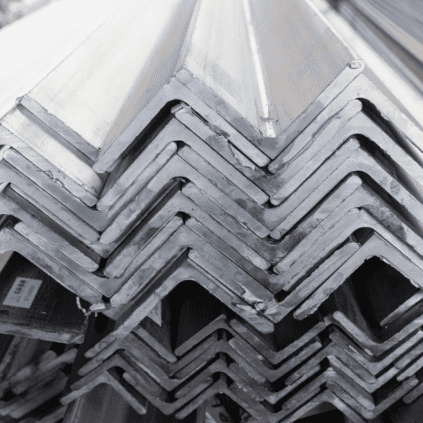
Gnee maintains stock of several thousand tons of S355J2 steel angles in various sizes, including equal angles, unequal angles, inverted angles, and custom-rolled S355J2 angle steel sections to meet different engineering requirements.
Full Data
Technical Requirements and Additional Services
Low-temperature impact testing can be performed to verify toughness at −20°C in accordance with the J2 designation requirements.
Rolling can be carried out under NACE MR-0175 standards, including HIC (Hydrogen Induced Cracking) and SSCC (Sulfide Stress Corrosion Cracking) control, upon request.
Ultrasonic testing is available according to EN 10160, ASTM A435, ASTM A577, and ASTM A578 standards to ensure internal soundness.
Original mill test certificates can be issued in compliance with EN 10204, Format 3.1 or 3.2.
Additional processing services such as shot blasting, painting, cutting, and welding can be provided according to end user specifications.
Technical Details
Mechanical Properties of S355J2 Low Alloy Steel Angles
The minimum yield strength of S355J2 steel angles is 355 MPa for thicknesses up to 16 mm. As thickness increases, the guaranteed yield strength gradually decreases in accordance with EN 10025-2 requirements, while maintaining reliable structural performance.
The tensile strength of S355J2 steel angles typically ranges from 470 MPa to 630 MPa depending on thickness, offering a strong balance between strength and ductility for structural use.
S355J2 steel angles also provide reliable impact toughness at −20°C, making them suitable for applications in cold or low-temperature environments.
Chemical Composition of S355J2 Low Alloy Steel Angles
S355J2 steel angles feature controlled chemical composition based on ladle analysis. The carbon content is limited to ensure good weldability, while manganese and silicon are added to enhance strength and mechanical performance.
Phosphorus and sulfur contents are strictly controlled to improve toughness and reduce the risk of brittleness. Copper content is limited to improve atmospheric corrosion resistance where required. Nitrogen levels are controlled according to standard requirements.
For thicknesses up to 16 mm, the maximum carbon content is 0.20%. For thicknesses above 40 mm, the maximum carbon content may increase slightly to 0.22%, in line with EN 10025-2 limits.
1. What is S355J2 steel?
S355J2 is a non-alloy structural steel grade specified in EN 10025-2. "S" denotes structural steel, "355" refers to the minimum yield strength of 355 MPa, and "J2" indicates a Charpy impact test requirement at low temperature.
2. What does J2 mean in S355J2?
The J2 designation means the steel must achieve a minimum impact energy of 27 Joules at −20°C. This makes S355J2 suitable for structures exposed to cold or moderately low-temperature environments.
3. What is the minimum yield strength of S355J2?
S355J2 has a minimum yield strength of 355 MPa for thicknesses up to 16 mm. As thickness increases, the guaranteed yield strength is reduced according to EN 10025-2.
4. What is the tensile strength of S355J2?
The tensile strength of S355J2 typically ranges from 470 to 630 MPa, providing high load-bearing capacity and good structural reliability.
5. What are the mechanical properties of S355J2?
S355J2 combines high yield strength, good elongation, and reliable impact toughness at low temperatures, making it suitable for demanding structural applications.
6. Is S355J2 suitable for low-temperature applications?
Yes. Due to its guaranteed impact performance at −20°C, S355J2 is commonly used in cold climates and applications where improved toughness is required compared to JR or J0 grades.
7. What is the chemical composition of S355J2?
S355J2 is a low-carbon steel alloyed mainly with manganese and silicon. Controlled levels of phosphorus and sulfur ensure good toughness and weldability.
8. Is S355J2 easy to weld?
Yes. S355J2 has good weldability using standard welding processes such as MIG, MAG, TIG, and manual arc welding. Preheating is usually not required for thin sections, but may be recommended for thicker plates or cold conditions.
9. Can S355J2 be cold-formed or hot-formed?
S355J2 offers good cold-forming properties and can be bent or rolled without cracking. Hot forming is also possible when proper temperature control and cooling procedures are followed.
10. What product forms are available in S355J2?
S355J2 is supplied in plates, sheets, beams, channels, angles, hollow sections, and other structural profiles.
11. What are the typical applications of S355J2 steel?
Typical applications include bridges, high-rise buildings, offshore structures, cranes, heavy machinery, wind turbine towers, and steel structures in cold regions.
12. How does S355J2 compare with S355JR?
S355J2 offers better low-temperature impact toughness than S355JR. While both grades have similar strength, S355J2 is preferred for applications requiring improved safety in colder environments.
13. Is S355J2 corrosion-resistant?
S355J2 does not provide inherent corrosion resistance. Protective measures such as painting, galvanizing, or coating are required for outdoor or corrosive environments.
14. What standards and equivalents are associated with S355J2?
S355J2 is commonly compared with ASTM A572 Grade 50 and other high-strength structural steels, though exact equivalency depends on project specifications.