





H piles (e.g., HP 310x125) transfer structural loads through weak soil to stable bedrock. Their high section modulus resists bending during driving. Common in skyscrapers and bridges, they reduce settlement risks. Corrosion-resistant coatings like epoxy are applied for longevity. HP piles can be spliced for depths exceeding 50 meters.
How to select between universal beams (UB) and H beams for a project?
UB beams (e.g., UB 203x133) have tapered flanges for lighter loads, while H beams (e.g., HEA 300) offer uniform thickness for heavy-duty use. UB beams are cheaper for residential frames, whereas H beams suit industrial halls. Consider span length-H beams excel beyond 10 meters. Always verify local building codes for material approvals.
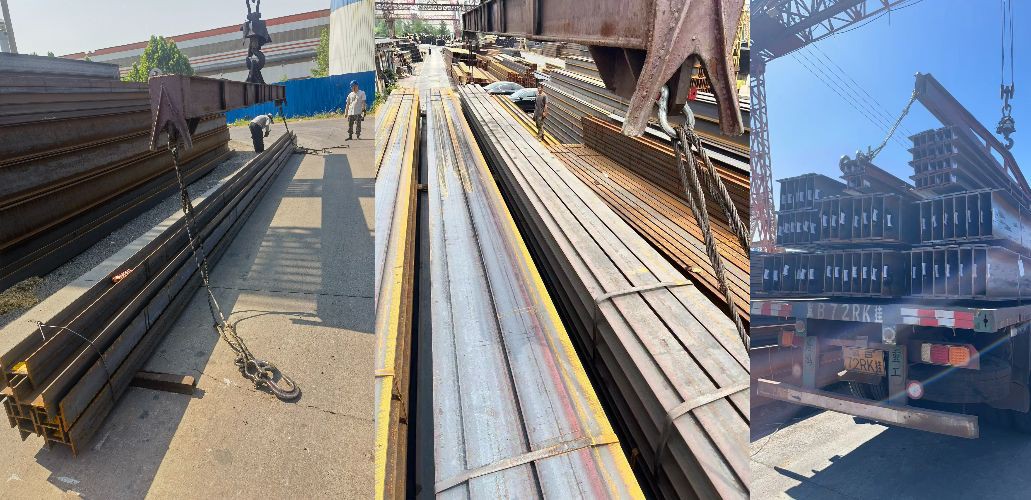
What are the fireproofing methods for H beams in commercial buildings?
Intumescent paint swells under heat, insulating beams for 60–120 minutes. Concrete encasement is cost-effective but adds weight. Mineral wool boards provide lightweight protection. Fire engineering calculations determine the required Fire Resistance Rating (FRR). Regular inspections ensure coatings remain intact post-construction.
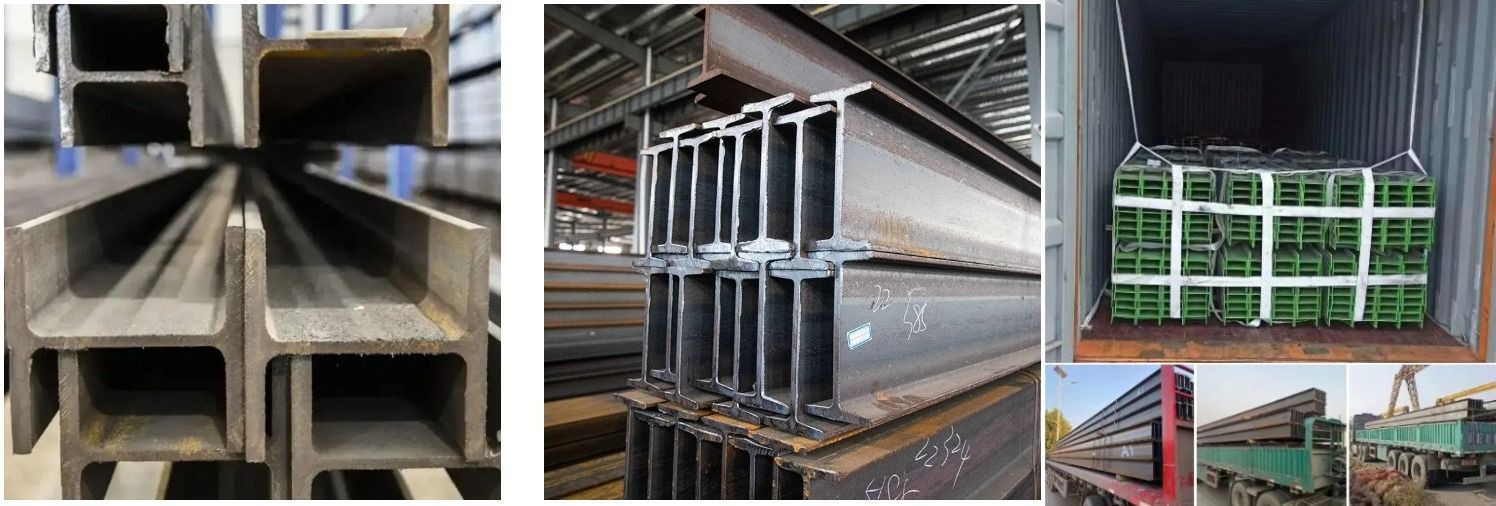
Why are S355JR H beams preferred for high-stress applications?
S355JR offers a 355 MPa yield strength, 50% higher than S235JR, with excellent impact resistance at low temperatures. Its chemical composition (controlled carbon/manganese) enhances weldability. These beams are used in crane rails and offshore rigs. Certification includes mandatory Charpy testing. Cost premiums are justified for critical structures.
How to cut H beams accurately on-site?
Use plasma cutters for thick sections (≥20mm) or abrasive saws for cleaner edges. Mark cuts with chalk and guide rails to prevent deviations. Cool the beam with air/water to minimize heat distortion. For mass production, CNC cutting ensures precision. Always wear PPE against sparks and metal fumes.