




Both S355J2 and S355JR are non-alloy structural steel grades defined under the European standard BS EN 10025-2, covering hot-rolled products for structural applications.

These two grades share very similar chemical compositions, yield strength, and tensile strength, which often leads to confusion during material selection.
However, despite their similarities, the key difference lies in impact test requirements and service temperature environments, which directly affects their applicable use cases.
Core Difference: Impact Toughness and Service Temperature
The primary distinction between S355J2 and S355JR is the Charpy V-notch impact test temperature:
S355JR:
Impact test: 27 J at +20°C (room temperature)
Suitable for general structural applications in normal environments
S355J2:
Impact test: 27 J at –20°C
Designed for low-temperature service environments
Because of this stricter toughness requirement, S355J2 is preferred for structures exposed to cold climates or harsh environments, such as offshore platforms, marine structures, and cold-region infrastructure. In contrast, S355JR is widely used for standard construction projects where low-temperature toughness is not critical.
Typical Application Environmentsescription
| Steel Grade | Recommended Service Environment | Typical Applications |
|---|---|---|
| S355JR | Normal temperature conditions | Buildings, bridges, platforms, general steel structures |
| S355J2 | Low-temperature or harsh conditions | Offshore platforms, marine structures, cold-region infrastructure |
Product Forms and Supply Range
Both S355J2 and S355JR can be supplied in a wide variety of hot-rolled structural products, including:
Steel plates and coils
Steel pipes and tubes
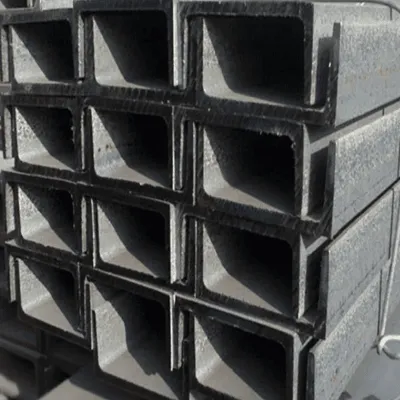
Steel angles and channels
H beams, I beams, and wide flange beams
Mill Test Certificates (MTC) can be issued in accordance with:
EN 10204 2.1
EN 10204 2.2
EN 10204 3.1
EN 10204 3.2, with third-party inspection if required
This ensures full material traceability and compliance with project specifications.
Chemical Composition Comparison
Heat Analysis, Maximum (%)
| Standard | Grade | C | Mn | P | S | Si | N | Cu |
|---|---|---|---|---|---|---|---|---|
| EN 10025-2 | S355J2 | 0.20 | 1.60 | 0.025 | 0.025 | 0.55 | 0.012 | 0.55 |
| EN 10025-2 | S355JR | 0.24 | 1.60 | 0.035 | 0.035 | 0.55 | 0.012 | 0.55 |
Note: S355J2 has stricter limits on carbon, phosphorus, and sulfur, contributing to improved toughness at low temperatures.
Mechanical Properties Comparison
Thickness ≤ 16 mm
| Standard | Grade | Yield Strength (MPa, Min.) | Tensile Strength (MPa) |
|---|---|---|---|
| EN 10025-2 | S355J2 | ≥ 355 | 470 – 630 |
| EN 10025-2 | S355JR | ≥ 355 | 470 – 630 |
Mechanically, both grades perform almost identically in terms of strength. The difference is not strength, but toughness at lower temperatures.
Selection Recommendation
Choose S355JR when:
Operating at normal ambient temperatures
Cost efficiency is a priority
Used in buildings, bridges, and general steel structures
Choose S355J2 when:
Structures are exposed to low temperatures
Offshore, marine, or cold-climate applications are involved
Higher safety margins against brittle fracture are required
While S355JR and S355J2 share similar strength and composition, their impact test requirements define their true difference. Selecting the correct grade based on service temperature is essential for ensuring structural safety, durability, and compliance with engineering standards.

Q1: What are S355JR steel beams?
S355JR steel beams are structural steel sections manufactured in accordance with EN 10025-2. The grade S355JR indicates a minimum yield strength of 355 MPa and impact toughness tested at room temperature, making it suitable for general structural applications.
Q2: Which standard applies to S355JR steel beams?
S355JR steel beams are produced under EN 10025-2, the European standard for hot-rolled structural steels. This standard defines chemical composition, mechanical properties, impact test requirements, and delivery conditions.
Q3: What mechanical properties does S355JR steel offer?
S355JR steel typically provides a minimum yield strength of 355 MPa, tensile strength ranging from approximately 470 to 630 MPa, and good elongation. These properties ensure reliable load-bearing capacity and structural safety.
Q4: What does the "JR" designation mean in S355JR?
The "JR" designation indicates that the steel has a minimum impact energy of 27 J tested at +20°C. This confirms adequate toughness for structures operating under normal ambient temperature conditions.
Q5: How does S355JR compare with S275JR steel beams?
Compared with S275JR, S355JR offers higher yield and tensile strength, allowing for reduced section sizes or higher load capacity. This often results in weight savings and improved structural efficiency.
Q6: Is S355JR steel beam suitable for welding?
Yes, S355JR steel beams exhibit good weldability due to controlled carbon content and low carbon equivalent (CE). Standard welding methods can be applied with proper welding procedures and preheating when required by thickness.
Q7: Can S355JR steel beams be used in bolted and riveted connections?
S355JR steel beams are well suited for bolted and riveted connections. Their mechanical properties ensure reliable performance under static and dynamic loads when proper design standards are followed.
Q8: What types of steel beams are commonly supplied in S355JR?
S355JR is widely available in I-beams, H-beams, HEA, HEB, HEM sections, and universal beams. Availability depends on rolling mill capabilities and regional standards.
Q9: What are typical applications of S355JR steel beams?
S355JR steel beams are commonly used in industrial buildings, commercial structures, bridges, platforms, power plants, warehouses, and heavy machinery frames where strength and reliability are required.
Q10: How does S355JR perform in low-temperature environments?
S355JR is suitable for standard temperature environments. For low-temperature service, grades such as S355J0 or S355J2 are recommended due to their improved impact toughness at lower test temperatures.
Q11: What surface condition is supplied for S355JR steel beams?
S355JR steel beams are typically supplied in the hot-rolled, as-rolled condition with mill scale on the surface. Additional surface treatments such as shot blasting, priming, galvanizing, or painting can be applied upon request.
Q12: What length and size ranges are available for S355JR steel beams?
S355JR steel beams are commonly supplied in standard lengths such as 6 m, 12 m, or customized cut-to-length options. Section sizes depend on beam type and mill production range.