


The S355JR channel steel is a high-strength structural steel widely used in Europe, conforming to the EN 10025-2 standard. With a minimum yield strength of 355 MPa and excellent weldability, it is ideal for construction, industrial, and infrastructure projects. Its C-shaped channel profile provides excellent structural support for beams, frameworks, and load-bearing applications.
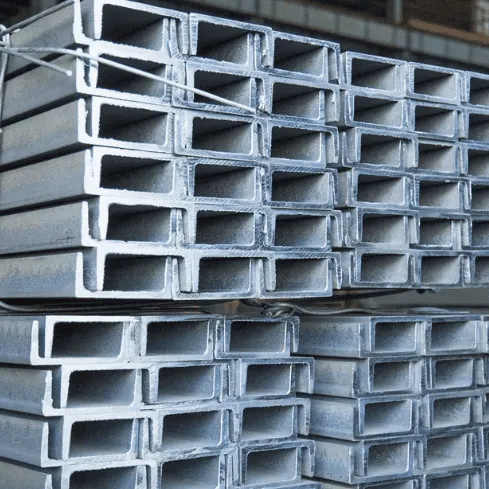
For global sourcing and engineering applications, S355JR has several international equivalent grades with comparable mechanical properties and chemical composition, enabling engineers and procurement teams to select suitable materials based on regional availability.
International Equivalent Grades
| Region | Equivalent Grade | Key Notes |
|---|---|---|
| USA | ASTM A572 Grade 50 | High-strength low-alloy structural steel, comparable yield and tensile strength, widely used in bridges and construction |
| Germany | DIN ST52-3 | Non-alloy structural steel with similar mechanical performance and weldability, commonly used in machinery |
| Japan | JIS SM490A | Rolled steel for welded structures, matching S355JR in strength and toughness |
| China | GB Q345B | Low-alloy high-strength steel, equivalent yield strength and impact properties, widely used in buildings and machinery |
| France | NFA 35-501 / E 36-2 | Structural steel with similar composition and performance for construction applications |
| Italy | UNI 7070 Fe 510 B | Non-alloy structural steel, comparable tensile strength for general applications |
| UK | BS 4360 50 B | Traditional British standard, matching strength for welded structures |
| Spain | UNE 36.080 AE 355 B | Structural steel with similar chemical and mechanical properties for engineering projects |
These equivalents are selected based on chemical composition, mechanical performance, and application suitability, ensuring consistent quality and performance across different standards.
Chemical Composition Comparison (% max by weight)
| Element | EN 10025-2 S355JR | ASTM A572 Gr 50 | DIN ST52-3 | JIS SM490A | GB Q345B | NFA 35-501 E36-2 | UNI 7070 Fe 510 B | BS 4360 50 B | UNE 36.080 AE 355 B |
|---|---|---|---|---|---|---|---|---|---|
| C | 0.24 | 0.23 | 0.20 | 0.18 | 0.20 | 0.22 | 0.22 | 0.20 | 0.22 |
| Mn | 1.60 | 1.35 | 1.60 | 1.60 | 1.70 | 1.60 | 1.60 | 1.50 | 1.60 |
| P | 0.035 | 0.040 | 0.040 | 0.035 | 0.035 | 0.040 | 0.040 | 0.040 | 0.040 |
| S | 0.035 | 0.050 | 0.040 | 0.035 | 0.035 | 0.045 | 0.050 | 0.050 | 0.050 |
| Si | 0.55 | 0.40 | 0.55 | 0.55 | 0.50 | 0.55 | 0.55 | 0.55 | 0.55 |
| Cu | 0.55 | – | – | – | 0.30 | – | – | 0.35 | – |
| N | 0.012 | – | 0.009 | – | – | – | – | – | – |
| Fe | Balance | Balance | Balance | Balance | Balance | Balance | Balance | Balance | Balance |
S355JR: Balanced for European standards, with low phosphorus and sulfur for improved toughness.
ASTM A572 Gr 50: Slightly lower C and Mn, optimized as HSLA (High-Strength Low-Alloy) steel.
DIN ST52-3: Similar to S355JR with tighter nitrogen control for fine grain.
JIS SM490A: Low carbon for better weldability.
GB Q345B: Higher manganese content, widely used in Chinese construction.
Other European standards (NFA, UNI, BS, UNE): Minor variations in P/S for corrosion resistance and weldability.
S355JR Channel Steel – Features and Applications
Material: High-strength low-alloy structural steel
Cross-Section: C-shaped channel, suitable for structural frameworks
Strength: Minimum yield 355 MPa, tensile strength 470–630 MPa
Weldability: Excellent, compatible with MIG, TIG, and arc welding
Formability: Good ductility for bending, cutting, and drilling
Applications:
Construction frameworks, beams, and columns
Bridges, industrial machinery supports, and infrastructure projects
General welded structures requiring high strength-to-weight ratio
Certification & Quality Assurance:
EN 10204 3.2 mill certificates available
Third-party inspection options: BV, DNV-GL, CCS, TUV, LR, SGS

What is S355JR Channel Steel?
S355JR Channel Steel is a structural steel profile conforming to EN 10025-2 with a minimum yield strength of 355 MPa. The "JR" designation indicates it is impact tested at 20°C, making it suitable for general structural applications in moderate-temperature environments. Channel steel is widely used in building frameworks, industrial sheds, bridges, and heavy machinery components.
What are the mechanical properties of S355JR Channel Steel?
S355JR Channel Steel provides a minimum yield strength of 355 MPa and a tensile strength ranging from 470 to 630 MPa, depending on the section and thickness. It has good ductility, allowing it to absorb stresses without sudden failure, and exhibits reliable toughness suitable for welded and fabricated structures.
How does S355JR Channel Steel perform under welding?
Due to its low carbon equivalent, S355JR Channel Steel is easily weldable using standard welding processes such as SMAW, GMAW, or FCAW. However, for thicker sections or highly restrained joints, controlling heat input and following proper welding procedures is recommended to prevent residual stress buildup or softening in the heat-affected zone (HAZ).
Why is impact toughness important for S355JR Channel Steel?
Impact toughness prevents brittle fracture under dynamic or sudden loads. S355JR has been tested at 20°C to ensure it can withstand normal operational stresses. For projects in colder climates, other grades like S355J0 or S355J2 may be selected for lower-temperature impact requirements.
How does S355JR Channel Steel compare with other structural steels?
Compared with S275JR, S355JR offers higher yield strength, allowing lighter sections and reduced material usage while maintaining structural integrity. Compared to high-strength quenched-and-tempered steels like S690, S355JR is easier to fabricate and weld, though it has lower maximum strength, making it more cost-effective for general construction applications.
What are the typical applications of S355JR Channel Steel?
S355JR Channel Steel is commonly used in building frames, bridges, industrial equipment, machinery bases, and infrastructure projects. Its combination of strength, weldability, and toughness ensures safety and durability in a wide range of structural and engineering applications.