





ASTM A36 H-Beam Steel is one of the most widely used low-carbon structural steels for load-bearing applications. As a professional steel manufacturer and global exporter, GNEE Steel supplies ASTM A36 H-beams with stable mechanical performance, excellent weldability, and reliable toughness for construction, machinery, shipbuilding, and industrial projects worldwide.
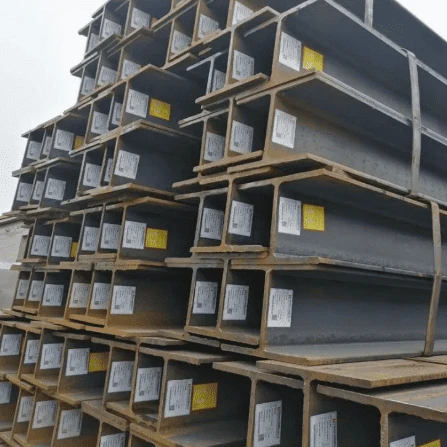
ASTM A36 H-Beam Steel
Within the first stage of project planning, choosing the right structural steel directly affects safety, fabrication efficiency, and long-term maintenance costs.
Thanks to its low carbon content and balanced alloy design, ASTM A36 H-Beam Steel offers an ideal combination of strength, ductility, and processability, making it a preferred material for engineers and contractors.
Chemical Composition of ASTM A36 H-Beam Steel
The chemical composition of ASTM A36 H-Beam Steel strictly complies with ASTM A36/A36M standards. The low-carbon design ensures superior weldability while maintaining sufficient strength for structural use.
| Element | Typical Content |
|---|---|
| Carbon (C) | ≤0.25% |
| Silicon (Si) | ≤0.40% |
| Manganese (Mn) | 0.80–1.20% |
| Phosphorus (P) | ≤0.04% |
| Sulfur (S) | ≤0.05% |
| Copper (Cu) | ≤0.20% (optional) |
| Chromium (Cr) | 0.75–1.20% (optional) |
Carbon is carefully controlled to reduce cold cracking during welding and to preserve impact toughness. Manganese improves strength and hardenability, while silicon contributes to overall rigidity.
Optional alloying elements such as copper and chromium may be added upon request. These elements help enhance atmospheric corrosion resistance and surface stability, especially for outdoor or semi-exposed environments.
Mechanical Properties of ASTM A36 H-Beam Steel
ASTM A36 H-Beam Steel is designed to perform reliably under static and dynamic loads. GNEE ensures all beams meet or exceed the required mechanical properties before delivery.
| Property | Requirement |
|---|---|
| Tensile Strength | ≥560 MPa |
| Yield Strength | ≥460 MPa |
| Elongation | ≥10% |
| Reduction of Area | ≥45% |
| Impact Energy (Akv) | ≥39 J |
| Impact Toughness | ≥49 J/cm² |
| Brinell Hardness | ≤229 HB |
High tensile and yield strength allow the H-beam to resist bending and deformation under heavy loads. Adequate elongation and area reduction ensure ductile behavior, reducing the risk of sudden brittle failure.
Impact toughness performance is especially important for structures exposed to vibration, wind loads, or occasional impact forces, such as bridges and industrial platforms.
Welding and Fabrication Performance of ASTM A36 H-Beam Steel
One of the key advantages of ASTM A36 H-Beam Steel is its outstanding fabrication performance. The low carbon equivalent significantly reduces welding-related defects.
Suitable for SMAW, MIG, TIG, and submerged arc welding
Minimal risk of hydrogen-induced cracking
Stable weld joints with uniform penetration
For machining operations, ASTM A36 H-beams can be easily cut, drilled, milled, or shaped using standard workshop equipment. For thick sections exceeding 30 mm, controlled preheating at 100–120°C is recommended to manage thermal stress.
ASTM A36 H-Beam Steel is commonly supplied in TMCP condition. Additional heat treatments such as normalizing or tempering can be arranged to meet specific project requirements.
Corrosion Resistance and Surface Treatment Options
By nature, ASTM A36 is a carbon structural steel and does not offer inherent corrosion resistance like stainless steel. However, several surface treatment methods significantly extend its service life.
- Anti-corrosion painting systems
- Hot-dip galvanizing
- Aluminum diffusion coating
Copper-containing grades may form a dense oxide film on the surface, slowing down atmospheric corrosion. While not a replacement for weathering steel or stainless steel, this solution is cost-effective for many construction projects.
ASTM A36 H-Beam Steel Size and Dimension Range
GNEE supplies ASTM A36 H-Beams in a wide range of standard and customized sizes to support different structural designs.
| Beam Type | Height (mm) | Width (mm) | Web Thickness (mm) | Flange Thickness (mm) |
|---|---|---|---|---|
| H100 | 100 | 100 | 6 | 8 |
| H200 | 200 | 200 | 8 | 12 |
| H300 | 300 | 300 | 10 | 15 |
| Customized | Up to request | Up to request | As required | As required |
Custom cutting, drilling, and surface treatment services are also available based on drawings.
Applications of ASTM A36 H-Beam Steel in Industry
Due to its balanced performance, ASTM A36 H-Beam Steel is widely applied across multiple sectors.
In construction, it is used for steel frames, columns, and bridge structures. In machinery manufacturing, it serves as support beams and load-bearing components. Shipbuilding and vehicle industries rely on its toughness and weldability for hull structures and chassis systems.
It is also commonly used in storage tanks, pressure vessels, and industrial platforms, especially where structural stability and fabrication efficiency are critical.
Choosing ASTM A36 H-Beam Steel from GNEE means choosing stable quality, excellent weldability, and dependable mechanical performance. As a professional manufacturer and exporter, we support third-party inspection, fast delivery, and customized processing services to meet global project demands.
Contact us for the latest ASTM A36 H-Beam Steel price list and technical support.
What is A36 grade steel equivalent to?
The ASTM A36 plate is equivalent to grades like ASTM A283C, JIS G3101 SS400, JIS G3106 SM400A, EN10025-2 S235JR, DIN17100 ST37-2, and FE360B.
What does A36 stand for?
A36 is designated by its mechanical properties instead of its chemical properties. In the American Society for Testing Materials (ASTM) system, the A stands for ferrous metal, while the 36 refers to its minimum yield strength of 36,000 PSI.
Is A36 high strength steel?
A36 steel in plates, bars, and shapes with a thickness of less than 8 inches (203 millimeters) has a minimum yield strength of 36 ksi (250 MPa) and ultimate tensile strength of 58–80 ksi (400–550 MPa).
Does A36 steel rust easily?
The material can be easily machined, making it suitable for manufacturing processes. Corrosion Resistance: While A36 steel has some resistance to corrosion, it is often coated or painted to enhance its durability in harsh environments.
What makes A36 steel so popular?
This steel plate is known for its high strength, formability, and weldability. It's also an excellent magnetic field conductor. Together, these benefits make A36 one of the most-used grades of carbon steel. The American Society for Testing and Materials (ASTM) designated it A36.
Is A36 good for bending?
ASTM A36 is the most commonly used mild and hot-rolled steel. It has excellent welding properties and is suitable for grinding, punching, tapping, drilling and machining processes. Yield strength of ASTM A36 is less than that of cold roll C1018, thus enabling ASTM A36 to bend more readily than C1018.