


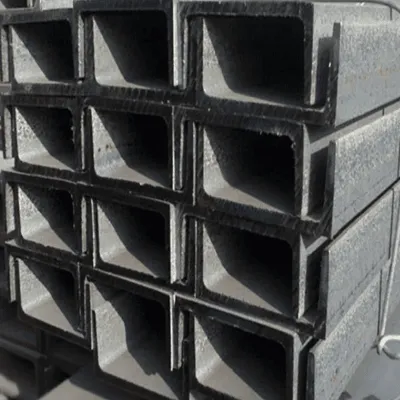


The impact resistance of flat steel refers to its ability to withstand sudden blows or shocks without breaking. This property is influenced by the steel's composition, microstructure, and processing. Low-carbon flat steel generally has good impact resistance due to its ductility. It can absorb energy from impacts by deforming rather than fracturing, making it suitable for applications where there is a risk of sudden loads or collisions, such as in automotive bumpers or protective barriers. Medium-carbon flat steel, while stronger than low-carbon steel, has slightly lower impact resistance but still performs well in many industrial applications. High-carbon flat steel, on the other hand, is more brittle and has lower impact resistance, making it less suitable for applications where impact loading is expected. Alloy flat steels, which are designed to have specific properties, can have excellent impact resistance. For example, nickel-alloyed flat steel has improved toughness at low temperatures, making it suitable for use in cold environments, such as in refrigeration equipment or in polar region constructions. The impact resistance is tested using methods like the Charpy impact test, which measures the energy absorbed during fracture. This property is crucial in applications where safety is a concern, as it ensures that the flat steel can withstand unexpected impacts without failure.