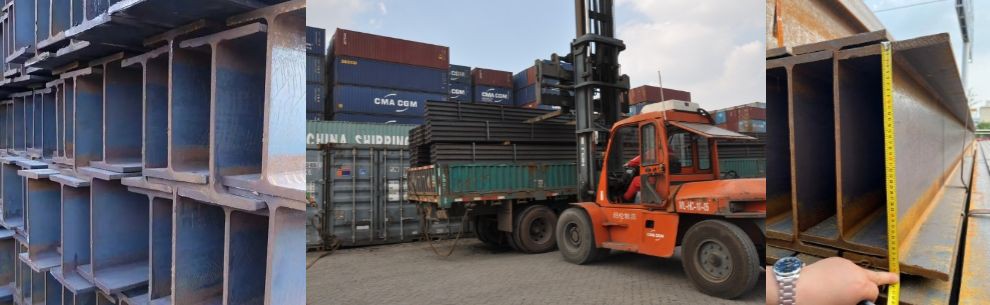
The web - to - flange thickness ratio is significant in H - beam steel design. A proper ratio ensures the beam's stability and strength. If the web is too thin relative to the flange, local buckling of the web may occur under compressive loads. On the other hand, if the web is too thick, it may lead to an inefficient use of material. Designers need to consider this ratio according to the specific load - bearing requirements and relevant design codes.
1.How does the choice of H - beam steel affect the thermal insulation performance of a building?
The choice of H - beam steel can impact the thermal insulation performance of a building. Since steel is a good conductor of heat, using H - beam steel without proper thermal insulation measures will lead to poor thermal insulation. To improve thermal insulation, additional insulation materials such as rock wool or foam insulation need to be installed around the steel beams to reduce heat transfer.
2.What are the design considerations for H - beam steel structures in high - wind areas?
In high - wind areas, design considerations for H - beam steel structures include wind load calculations. The shape and size of the structure need to be optimized to reduce wind pressure. Bracing systems need to be strengthened to resist the lateral forces caused by the wind. Connections between components should be designed to ensure they can withstand wind - induced loads without failure.
3.How is the residual stress in H - beam steel generated during the manufacturing process?
Residual stress in H - beam steel is generated during the manufacturing process, mainly due to uneven cooling during hot - rolling. When different parts of the steel cool at different rates, internal stresses are created. For example, the outer parts may cool faster than the inner parts, leading to tensile and compressive stresses within the material. These residual stresses can affect the mechanical properties and stability of the H - beam.
4.What are the advantages of using H - beam steel in pre - engineered buildings?
In pre - engineered buildings, H - beam steel offers several advantages. It allows for quick and easy assembly as the components are pre - fabricated. H - beam steel provides high structural integrity, enabling large - span designs. It is also durable and can withstand various environmental conditions, reducing maintenance costs over the long term.