


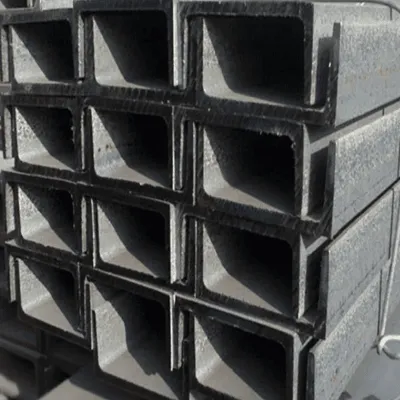


Prefabricated construction pushes as much fabrication as possible into a controlled workshop and leaves only assembly for the site. Hot-rolled H-beams fit that model better than almost any other structural section, because their profile, tolerances and connection behaviour are already standardised across mills. A member rolled to GB/T 11263, EN 10025 or ASTM A992 can be framed into a module designed by another team, in another country, without re-engineering the joint. Modular buildings, prefabricated wall frames, floor trusses and mezzanine systems all default to the wide-flange shape for the same reason: predictability.
Standard Sections Remove Design and Fit-Up Risk
Fabrication cost is driven by tolerance and rework. When the section is a standard product, the shop can program a saw, a drill line and a welding station against published dimensions instead of measuring every delivery. The governing tables are consistent across the main systems:
| Standard | Scope | Typical grades |
|---|---|---|
| GB/T 11263 | Hot-rolled H-beams and split T-sections (HW, HM, HN series) | Q235B, Q355B |
| EN 10025-2 and EN 10025-3 | Hot-rolled structural steels, including low-temperature qualities | S275JR, S355J2, S355NL |
| ASTM A992 and ASTM A572 | W-shapes for building frames, plus high-strength plate and shapes | A992, A572 Grade 50 |
| ASTM A6/A6M | Permitted dimensional tolerances for rolled shapes | Applies to all of the above |
Design and execution rules sit alongside the product standards: GB 50017 for member design, AISC 360 for the US route, and EN 1090-2 when fabrication is executed as a European project. Depth, flange width and web thickness are identical between suppliers following the same table, so an element produced in one workshop bolts to an element produced in another. That interchangeability is the property on which any modular, multi-factory supply chain depends.
Shop Welding, Cutting and Drilling Are Predictable
Flat, parallel flanges give a stable datum for tacking stiffeners, end plates and shear tabs.
Square-cut webs allow simple square-groove or single-bevel joints and fewer weld passes.
A constant cross-section lets one welding procedure specification be reused across a whole batch of modules.
Drilling a flat web is a simple plate operation, so CNC lines can drill, cope and mark a beam in one pass.
Shop welding is qualified under ISO 3834 or AWS D1.1 depending on the project route, so a documented procedure can be repeated module after module. Accuracy achieved indoors, with controlled temperature, tooling and inspection, is much higher than anything achievable on a scaffold in wind and rain. Studs, shear connectors and lifting points can all be fitted while the member is still in a jig, which removes the most common source of site rework.
Weight and Transport Efficiency
An H-section concentrates material in the flanges where bending stress is highest and thins the web where it is not. For the same load capacity, a wide-flange member is lighter than a built-up plate girder or a solid section, which pays twice: less steel purchased, and lower freight cost per module. Flat-packed wall frames and floor trusses can be nested, shipped and then craned into position and bolted within days rather than formed and poured on site. Faster erection also cuts scaffolding, formwork, wet trades and weather exposure, and with them site waste.
Low-Temperature Toughness Governs Cold-Climate Projects
Cold climates expose steel to brittle fracture. Plain carbon steel can lose impact toughness below about -20 °C, so cold-region projects specify grades with guaranteed Charpy V-notch energy. The property is verified by impact testing to ISO 148-1 or ASTM E23.
| Grade | Product standard | Charpy V-notch requirement |
|---|---|---|
| S355J0 | EN 10025-2 | 27 J at 0 °C |
| S355J2 | EN 10025-2 | 27 J at -20 °C |
| S355NL | EN 10025-3 | 27 J at -50 °C |
| A572 Grade 50 | ASTM A572 | Impact testing ordered as a supplementary requirement |
| A992 | ASTM A992 | Minimum yield 345 MPa, minimum tensile 450 MPa |
One ordering detail matters in practice: the normalised low-temperature grades such as S355NL belong to EN 10025-3, not EN 10025-2. Specifying them from the wrong part of the standard is a common cause of non-conforming deliveries in cold-region modular projects.
Cyclic Loading, Thermal Behaviour and Durability
Repeated loading from traffic, cranes and machinery is handled well by a symmetric section with no tapers or sharp transitions. Stress is distributed evenly between flange and web, so fatigue cracks that would initiate at a geometric discontinuity in an irregular profile have far fewer places to start. Welded connections still deserve attention: a full-penetration weld at a flange termination creates a notch unless the detail is chosen from a qualified fatigue category, which is why bolted end plates are often preferred in repetitive modular work.
Carbon steel conducts heat at roughly 45 to 55 W/(m·K) at ambient temperature, so an exposed beam acts as a thermal bridge. Where a module forms part of a conditioned envelope, the detail usually includes a thermal break or external insulation rather than relying on the beam itself. Corrosion is managed by hot-dip galvanising to ISO 1461 or by a documented coating system, and fire performance by intumescent paint, board or concrete filling according to the required rating period.
Steel is also indifferent to termites, borers, mould and rot, unlike timber, which is a genuine advantage in humid regions. Where a module combines a steel frame with timber decking, the timber still needs its own protection, because the steel component cannot shield it.
FAQ
Q: Why are H-beams preferred over site-cast concrete for prefabricated construction?
A: They arrive as finished, dimensionally accurate members, so no curing time, formwork or wet trades are needed on site. Erection is dry, fast and reversible, and the frame can be dismantled or extended later.
Q: Which steel grade should be specified for a modular project in a cold climate?
A: Use a grade with a guaranteed Charpy energy at the design service temperature, such as S355J2 for -20 °C or S355NL to EN 10025-3 for -50 °C, and state the impact test temperature on the enquiry.
Q: Can prefabricated H-beams be galvanised?
A: Yes. Hot-dip galvanising to ISO 1461 is routine for structural H-beams, provided vent and drain holes are designed into the module so that molten zinc and air can escape from closed cells.
Q: Do steel H-beams need treatment against termites or pests?
A: No. Steel is inert to termites, ants and rodents, so floor joists and wall frames in pest-prone regions need no chemical protection. Any timber elements in the same module still require treatment.
Q: How does an H-beam perform under repeated cyclic loading?
A: The uniform, symmetric section spreads stress and avoids stress raisers, giving good fatigue life. Connection details, not the beam itself, usually determine the fatigue strength of the assembly.
Q: Are bolted or welded connections better for off-site fabrication?
A: Bolted connections with high-strength structural bolts are generally preferred, because they tolerate site tolerance better and need no site welding qualification. Shop welding is still used to fit end plates, stiffeners and shear tabs under controlled conditions.