





Hey there! As a sheet pile supplier, I've seen firsthand how crucial sheet pile cofferdams are in construction projects. They're like the unsung heroes, keeping water and soil at bay so that other construction work can go smoothly. In this blog, I'm gonna walk you through the construction techniques for sheet pile cofferdams.
Understanding Sheet Pile Cofferdams
First things first, what exactly is a sheet pile cofferdam? Well, it's a temporary structure made up of interlocking sheet piles. These piles are driven into the ground around an area where construction is set to take place, creating a barrier that keeps water out. It's commonly used in marine construction, bridge building, and other projects near water bodies.
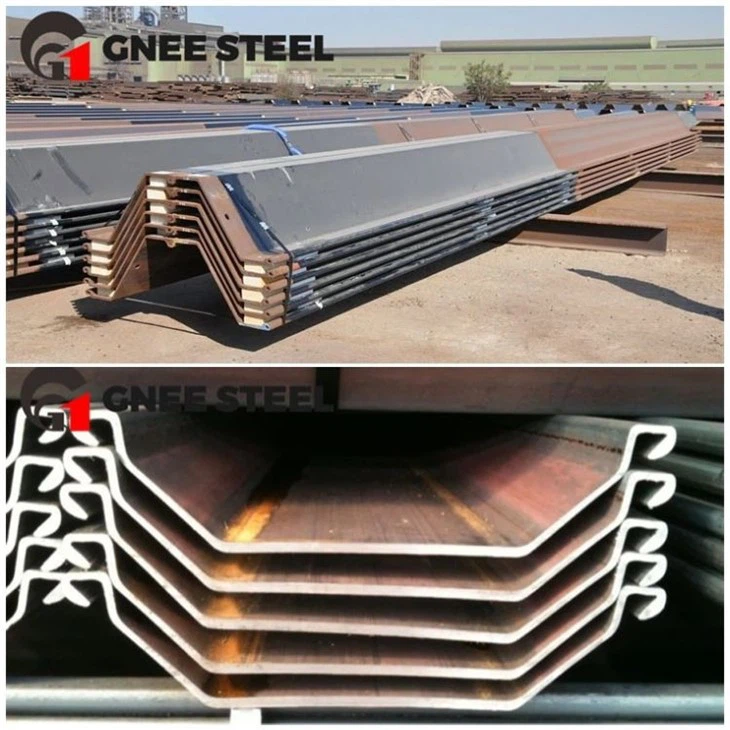
There are different types of sheet piles available, and each has its own unique features. For example, Z-shaped Piles are known for their high section modulus and excellent resistance to bending. They're great for large - scale projects where high load - bearing capacity is required. Combined Steel Sheet Pile combines the advantages of different types of sheet piles, offering a versatile solution for various construction needs. And Az46 Az48 Az50 Steel Sheet Piling is popular for its high strength and durability, often used in demanding environments.
Site Preparation
Before we start driving those sheet piles, proper site preparation is essential. The first step is to conduct a thorough site investigation. This includes checking the soil conditions, water depth, and any potential underground utilities. You don't want to accidentally hit a gas line or a water pipe while driving the piles!
Once we have a clear understanding of the site, we need to mark the boundaries where the cofferdam will be constructed. This can be done using stakes and strings. It's important to be as accurate as possible because any errors in the layout can lead to problems later on.
Next, we need to clear the site of any debris, rocks, or vegetation. This ensures that the sheet piles can be driven smoothly into the ground without any obstructions. In some cases, we might also need to level the ground to make sure the cofferdam is stable.
Sheet Pile Installation
Now, let's talk about how to install the sheet piles. There are a few different methods, but the most common ones are vibratory driving and impact driving.
Vibratory Driving
Vibratory driving is a popular method because it's relatively fast and causes less noise compared to impact driving. A vibratory hammer is attached to the top of the sheet pile. The hammer creates high - frequency vibrations that help to reduce the friction between the pile and the soil. As a result, the pile can be driven into the ground more easily.
The key to successful vibratory driving is to maintain a steady rate of descent. If the pile goes down too fast, it might not be properly aligned, and if it goes too slow, the vibrations might not be effective. We also need to monitor the verticality of the pile during driving to make sure it's straight.
Impact Driving
Impact driving, on the other hand, uses a heavy hammer to strike the top of the sheet pile. This method is more suitable for hard soils or when a deeper penetration is required. The impact force from the hammer drives the pile into the ground.
However, impact driving can be quite noisy and can cause more vibration to the surrounding area. We need to take proper precautions to minimize the impact on nearby structures and the environment. For example, we might use a cushioning material between the hammer and the pile to reduce the noise and vibration.
Interlocking the Sheet Piles
One of the most important aspects of sheet pile construction is ensuring that the piles are properly interlocked. The interlocking system is what makes the cofferdam watertight and stable.
When driving the sheet piles, we need to make sure that the interlocks of adjacent piles fit together snugly. This can be a bit tricky, especially in difficult soil conditions. Sometimes, we might need to use a special tool to help align the interlocks.
Once the piles are interlocked, we can continue driving them down to the desired depth. It's important to check the interlocks regularly during the installation process to make sure there are no gaps or misalignments.
Bracing and Support
After the sheet piles are installed, we need to provide bracing and support to the cofferdam. This helps to prevent the piles from shifting or collapsing under the pressure of the water and soil.
There are different types of bracing systems available, such as horizontal struts and vertical wales. Horizontal struts are installed between the opposite sides of the cofferdam to provide lateral support. Vertical wales are attached to the sheet piles to distribute the load evenly.
The design of the bracing system depends on the size and shape of the cofferdam, as well as the soil and water conditions. We need to calculate the forces acting on the cofferdam and design the bracing system accordingly.
Dewatering
Once the cofferdam is installed and braced, the next step is dewatering. This involves removing the water from inside the cofferdam so that the construction work can take place in a dry environment.
There are several methods of dewatering, including pumping and siphoning. Pumping is the most common method, where we use pumps to remove the water from the cofferdam. We need to make sure that the pumps are powerful enough to handle the volume of water and that they are properly installed to prevent any leaks.
Siphoning can be used in some cases, especially when the water level outside the cofferdam is higher than inside. However, this method is less reliable and is usually used as a supplementary method.
Monitoring and Maintenance
Throughout the construction process, we need to monitor the cofferdam to make sure it's performing as expected. This includes checking for any signs of leakage, deformation, or settlement.

We can use various monitoring techniques, such as installing sensors to measure the water pressure, displacement, and strain on the sheet piles. Regular inspections should also be carried out to visually check for any problems.
If any issues are detected, we need to take immediate action to address them. This might involve repairing the leaks, reinforcing the bracing system, or adjusting the dewatering process.
Conclusion
Well, that's a wrap on the construction techniques for sheet pile cofferdams. As you can see, it's a complex process that requires careful planning, precise installation, and continuous monitoring.
If you're working on a construction project that requires sheet pile cofferdams, we're here to help. We offer a wide range of high - quality sheet piles, including Z-shaped Piles, Combined Steel Sheet Pile, and Az46 Az48 Az50 Steel Sheet Piling. Our team of experts can also provide you with professional advice and support to ensure the success of your project.
If you're interested in learning more about our products or have any questions about sheet pile cofferdams, feel free to reach out to us. We're always happy to have a chat and discuss your specific needs. Let's work together to make your construction project a success!
References
- Construction Manual for Sheet Pile Structures
- Geotechnical Engineering Handbook for Sheet Piles
- Guidelines for Marine Construction using Sheet Piles