





Both A572 Grade 50 H Beam and A572 Grade 55 H Beam belong to the ASTM A572 high-strength low-alloy (HSLA) steel family. At first glance, the difference seems simple-Grade 55 is stronger.
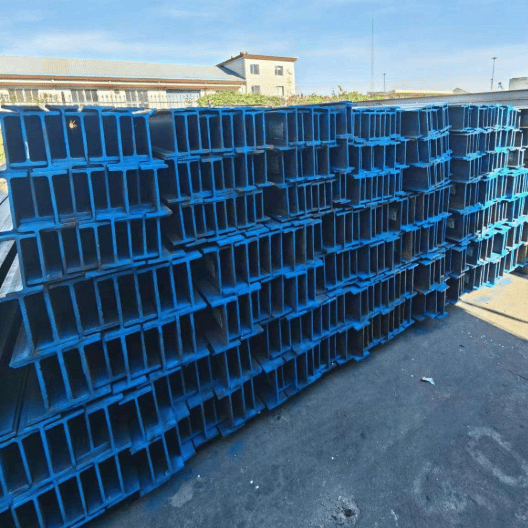
A572 Grade 50 H Beam
But in real engineering and procurement scenarios, the choice is far more complex. Strength, thickness limitations, weldability, and availability all play critical roles.
1. Core Mechanical Properties Comparison
A clear comparison table helps engineers quickly evaluate performance differences:
| Property | A572 Grade 50 | A572 Grade 55 | Key Impact |
|---|---|---|---|
| Yield Strength | ≥ 50 ksi (345 MPa) | ≥ 55 ksi (380 MPa) | +10% strength increase |
| Tensile Strength | ≥ 65 ksi (450 MPa) | ≥ 70 ksi (485 MPa) | Higher load capacity |
| Elongation | Higher | Slightly lower | Better ductility in Gr 50 |
| Alloying Elements | Standard HSLA | Microalloyed (V, Nb) | Strength enhancement |
Grade 55 achieves higher strength through precise microalloying (such as Vanadium or Columbium), while still maintaining good weldability.
2. The Hidden Limitation: Thickness Matters
This is one of the most overlooked factors in real projects.
According to ASTM A572 specifications:
- Grade 50 can typically be used for sections up to 4 inches (≈100 mm)
- Grade 55 often has stricter limits, typically around 2 inches (≈50 mm) depending on the product form
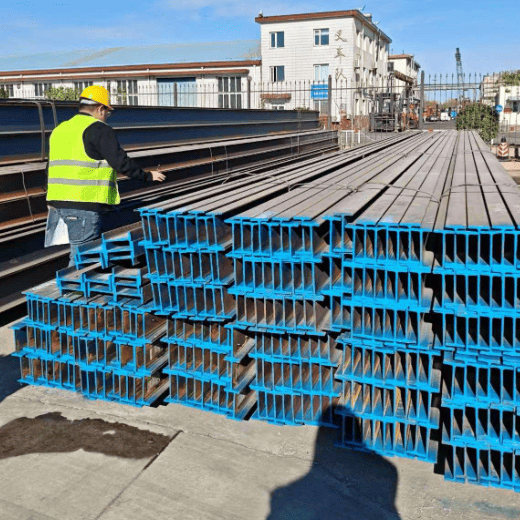
A572 Grade 50 H Beam
Why this matters:
If your project requires thick flanges or heavy sections, choosing Grade 55 may:
- Violate ASTM compliance
- Limit available sizes
- Force redesign or material substitution
Many buyers focus on strength but ignore thickness limits-this can lead to costly project delays.
3. The Trade-Off: Weldability & Formability
Both grades are part of the HSLA family, but increasing strength introduces subtle fabrication challenges.
Weldability
| Factor | Grade 50 | Grade 55 |
|---|---|---|
| Carbon Equivalent | Lower | Slightly higher |
| Weld Cracking Risk | Lower | Higher (if not controlled) |
| Welding Difficulty | Easier | Requires tighter control |
Grade 50 offers a wider safety margin during on-site welding
Grade 55 requires more precise heat input control
Formability (Cold Bending)
| Property | Grade 50 | Grade 55 |
|---|---|---|
| Ductility | Higher | Lower |
| Cold Bending Performance | Better | More limited |
If your project involves complex welding or cold forming, Grade 50 is the safer choice.
4. Commercial Perspective: Availability & Cost Strategy
For procurement managers, this is often the deciding factor.
Availability
| Factor | Grade 50 | Grade 55 |
|---|---|---|
| Market Availability | High (standard stock) | Limited |
| Size Range | Wide | Restricted |
| Delivery Time | Fast | Longer (mill production) |
| MOQ Requirement | Low | Higher |
Grade 50 is a "standard product" - widely available and ready to ship
Grade 55 is often a custom order (mill run)
Price vs Total Cost
- Grade 55 has a higher price per ton
- But its higher strength can reduce total steel usage by ~10%
Don't just look at price per ton - calculate total structural weight. In some optimized designs, Grade 55 may reduce overall project cost despite higher unit pricing.
5. Final Decision Guide: Which One Should You Choose?
Choose A572 Grade 50 H Beam if: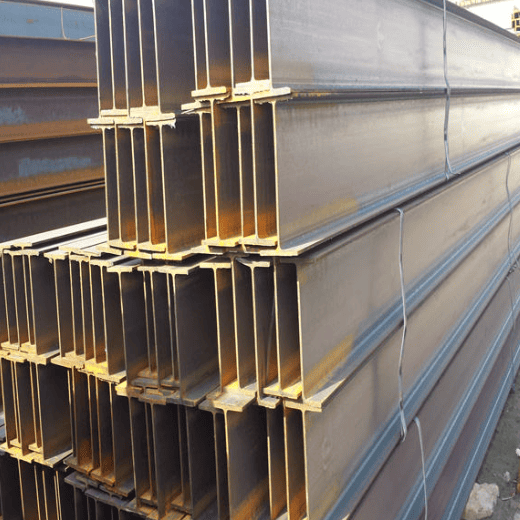
- You need standard sizes and fast delivery
- Your design involves thick sections
- The project includes complex welding or cold bending
- You want lower risk and easier fabrication
Choose A572 Grade 55 H Beam if:
- You aim to minimize structural weight
- Your project allows custom production and longer lead times
- Section thickness is within allowable limits
- You are working on high-end or optimized structural designs
While A572 Grade 55 H Beam offers higher strength, it is not always the better choice.
In many real-world projects, A572 Grade 50 H Beam remains the optimal balance between:
- Strength
- Fabrication ease
- Availability
- Cost efficiency
The best choice depends not on maximum strength-but on overall project optimization.
Contact now to get A572 Gr.50 H Beam Quote
What is A572 GR 50 material?
Grade 50 is a Columbium-Vanadium steel that offers a minimum yield of 50,000 PSI. In addition, ASTM A572 Grade 50 is noted for its increased resistance to atmospheric corrosion.
Is A572 grade 50 formable?
A572-50 steel is less formable than other grades of A572, but for the most part it has good formability, weldability, and machinability.
Is A572 grade 50 the same as A36?
Similar to A36, it utilizes carbon and manganese for strength, but it also includes additional alloys such as columbium or vanadium. These extra alloys boost its overall strength, making A572-50 typically priced at around 2.5% - 5% higher than A36.
Is A572 grade 50 equivalent to S355?
ASTM has identified A572-50 as an acceptable substitution for S355. Both grades have similar chemical compositions and are high-strength, low-alloy structural steels.
