


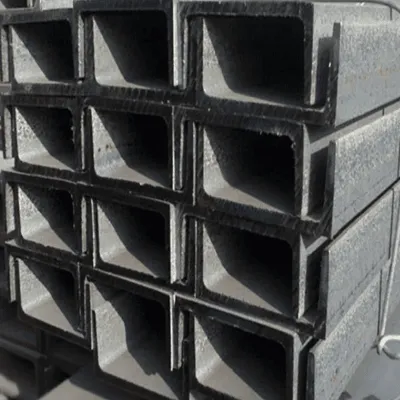


Products Description
Q235B Carbon structural steel plate is equal to steel grade ASTM A36,JIS G3101 Ss400,EN 10025-2 S235JR. Q235B steel plate represents a yield point (σs) of 235 Mpa, rank is grade B's carbon structural steel.

Q235B steel has a certain elongation, strength, good toughness and casting, easy stamping and welding, widely used in the manufacture of general mechanical parts.
Products Specification
Thickness: 2mm-650mm
Width: 1000mm-4200mm
Length: 3000mm-18000mm
Chemical Composition of Q235B Steel Plate
| Element | Max (%) | Note |
|---|---|---|
| Carbon (C) | 0.22 | Low carbon for ductility |
| Silicon (Si) | 0.35 | Deoxidizer, improves strength |
| Manganese (Mn) | 1.40 | Enhances toughness and hardness |
| Phosphorus (P) | 0.045 | Impurity limit |
| Sulfur (S) | 0.045 | Impurity limit |
| Chromium (Cr) | 0.30 | Optional alloying element |
| Nickel (Ni) | 0.30 | Optional alloying element |
| Copper (Cu) | 0.30 | Optional alloying element |
Mechanical Properties
| Property | Value Range | Note |
|---|---|---|
| Yield Strength | 185 – 235 MPa | Minimum stress to cause permanent deformation |
| Tensile Strength | 370 – 500 MPa | Maximum stress before fracture |
Products Application
Shipbuilding and Offshore Applications
Q235B steel plates are commonly applied in hull construction, decks, and offshore platforms. The low carbon content (≤0.22%) and excellent weldability enable reliable fabrication. Combined with good toughness and impact resistance, the steel can withstand marine conditions such as saltwater corrosion and mechanical stress.
Industrial Machinery and Heavy Equipment
For industrial uses, Q235B carbon steel plate is employed in machine bases, structural frames, and equipment supports. With its tensile strength up to 500 MPa and elongation of 20–25%, the material can endure operational stress, vibrations, and heavy loads without deformation or failure.
Automotive and Transportation Industry
Q235B plates are also used in vehicle chassis, railway car frames, and structural panels. Its reliable load-bearing capacity, weldability, and uniform mechanical properties ensure safe, durable, and cost-effective manufacturing. The steel meets both GB/T 700 and GB/T 3274 standards, ensuring quality consistency for high-demand transportation applications.
