


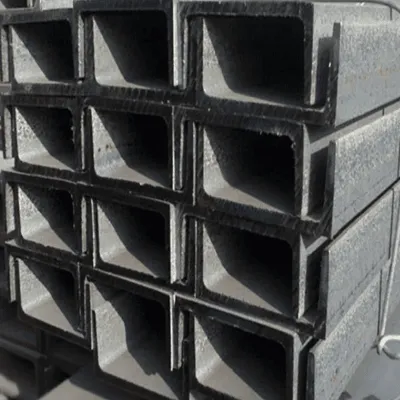


What the Steel Plate Is
A steel plate is a flat rolled product supplied in thicknesses from about 3 mm upwards, in widths up to 2500 mm or more and in lengths to suit the order. Q235B is one of the most widely used low-carbon structural grades for general engineering because it combines good strength with excellent weldability, machinability and economy.
Plate is the base material for many fabricated products: welded beams and columns, tanks, machine frames, brackets, base plates and floor plates. It is also cut into strip, blank and profile shapes for further processing.
Chemical Composition of Q235B
Q235B is specified in GB/T 700. Its low carbon content keeps the steel soft, ductile and easy to weld, while manganese provides strength and toughness.
Carbon: maximum 0.20 percent.
Silicon: maximum 0.35 percent.
Manganese: 0.30 to 0.70 percent.
Phosphorus and sulfur: each maximum 0.045 percent.
Mechanical Properties
For plate thickness up to 16 mm, Q235B guarantees a minimum yield strength of 235 MPa and a tensile strength of 370 to 500 MPa. Grade B additionally guarantees an impact energy of 27 J at 20 degrees Celsius, which is required for many building and structural applications.
For thicker plate, the guaranteed yield strength steps down: 225 MPa for 16 to 40 mm and 215 MPa for 40 to 100 mm, in line with the GB/T 700 tables.
Plate Sizes and Delivery
Q235B plate is commonly supplied in thicknesses of 3 to 100 mm, widths of 1250, 1500, 2000 and 2500 mm, and lengths of 6 to 12 m. Plates can be cut to exact size by plasma or laser cutting, and edges can be beveled for welding preparation. Surface options include hot rolled black finish, pickled and oiled, or shot blasted and primed.
Applications
Q235B plate is used in building structures, bridges, storage tanks, machinery frames, ship repairs and general fabrication. The grade is also the standard choice for chequered floor plate and for blanks that are subsequently bent, rolled or pressed into shape.
Frequently Asked Questions
Q: What is the difference between Q235A and Q235B plate?
Grade A has no guaranteed impact property, while grade B guarantees 27 J impact energy at 20 degrees Celsius. For welded structures in cold regions, Q235B or higher grades are preferred.
Q: Can Q235B plate be welded without preheating?
Yes, for normal thicknesses. The low carbon equivalent of Q235B allows welding with standard processes without preheat, although thick plate in cold weather may need minor preheating.
Q: What thickness range is considered plate?
Products from 3 mm to about 60 mm are normally called medium plate, and above 60 mm heavy plate. Material thinner than 3 mm is classified as sheet or strip.
Q: Is Q235B equivalent to ASTM A36?
Both are low-carbon structural steels with similar yield and tensile values, and A36 is the common US counterpart accepted in international projects.
Q: What surface treatments are available?
Hot rolled black finish, pickled and oiled, shot blasted and primed, and painted systems are all available depending on the application.