





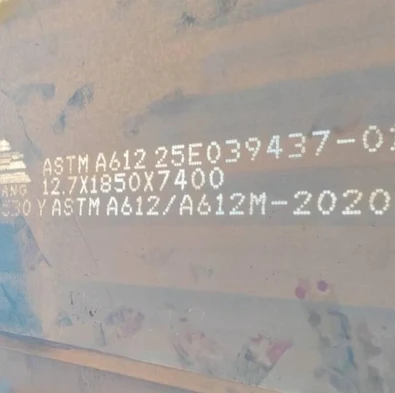
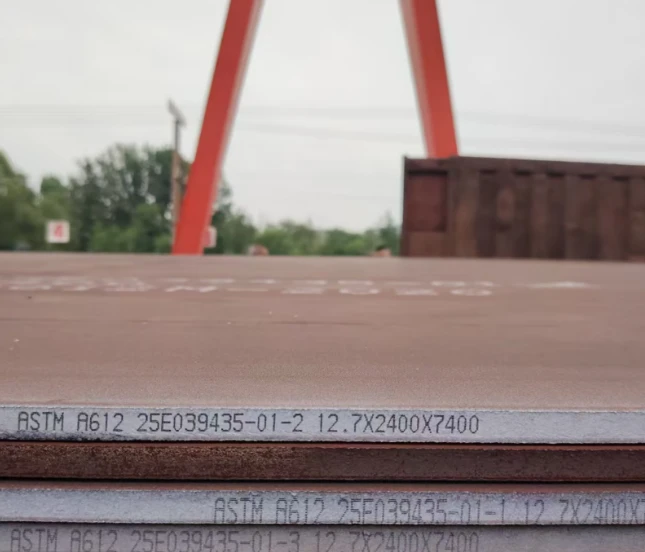
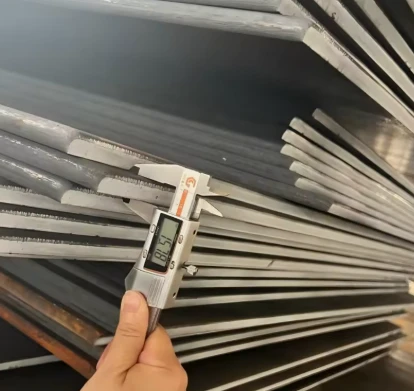
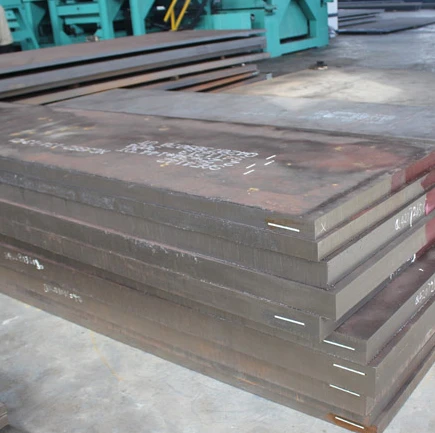
Gnee Steel (Tianjin) Co., Ltd. is one of the most professional astm a612/a612m pressure vessel steel plate for medium-low temperature welded vessels manufacturers and suppliers in China, also supports customized service. If you're going to buy astm a612/a612m pressure vessel steel plate for medium-low temperature welded vessels made in China, welcome to get free sample from our factory. Quality products and low price are available.
ASTM A612/A612M is a specification for pressure vessel plates, carbon steel, high strength, for moderate and lower temperature service. This grade of steel is primarily used in the fabrication of boilers and pressure vessels that operate at moderate and lower temperatures, where high-strength and toughness are required.
ASTM A612/A612M is typically specified with a minimum yield strength of approximately 345 MPa and a tensile strength in the range of about 550–690 MPa, which is significantly higher than conventional carbon steel pressure vessel grades such as ASTM A516 Grade 70 (with a yield strength of around 260 MPa). This represents an increase of roughly 30–40% in yield strength, allowing the material to carry higher internal pressure under the same design conditions.
In addition, ASTM A612/A612M maintains stable low-to-moderate temperature performance, typically suitable for service environments down to around -20°C (depending on impact testing requirements defined by project specifications). Combined with its controlled carbon-manganese-silicon composition, the steel provides good resistance to brittle fracture, which is critical for pressure vessels operating under fluctuating pressure and temperature cycles.

ASTM A612/A612M Pressure Vessel Steel Plate
Primary Standards:
ASTM A612/A612M (American Society for Testing and Materials) – Standard Specification for Pressure Vessel Plates, Carbon Steel, Manganese-Silicon, High Strength, for Moderate and Lower Temperature Service
ASME SA612/SA612M (American Society of Mechanical Engineers) – Certified for pressure vessel applications
The only difference: the system of units.
- A612M: The suffix "M" denotes the metric system (SI International System of Units).
- ASTM A612 (without the "M" suffix): Uses the imperial system (pound-force units).
Supplementary Standards:
Ultrasonic Testing: Complies with ASTM A578 (Standard Practice for Straight-Beam Ultrasonic Examination of Steel Plates)
Surface Defect Treatment: Follows ASME SA-20M (Standard Specification for General Requirements for Steel Plates for Pressure Vessels)
ASTM A612/A612M Steel Plate Specifications
| Item | Details |
|---|---|
| Product Name | ASTM A612/A612M High Strength Carbon Manganese Pressure Vessel Steel Plate |
| Material Grade | ASTM A612 / ASME SA-612 |
| Executed Standards |
ASTM A612/A612M, ASME SA-612/SA-612M, ASTM A20/A20M, EN, GB, ISO, JIS etc. |
| Thickness Range | 6.0 - 100.0mm |
| Standard Width | 1250, 1500, 1800, 2000, 2200mm or customized sizes |
| Length Options | Fixed Sizes: 1220×2440, 1500×6000, 1800×(6000-9000), 2200×(6000-12000)mm or as customer required |
| Dimension Tolerance | Fully comply with ASTM A612 & A20 standard tolerance rules |
| Surface Condition | Hot rolled, descaled, shot blasted, no harmful surface defects |
| Quality Management System | ISO9001, CE certification, third-party NDT inspection (UT/MT/RT), Mill Test Certificate EN 10204 3.1/3.2 |
| Lead Time | Subject to actual specifications, order quantity and processing requirements |
| Packaging | Standard seaworthy export wooden package or customized packaging as requested |
GNEE Steel supplies complete sizes of ASTM A612 pressure vessel steel plates with full material certifications. Contact us for custom cutting, technical data sheets and fast delivery arrangements.
Click to view ASTM A612 inventory status
ASTM A612/A612M Steel Plates of Chemical Composition
The chemical composition of ASTM A612 includes carbon, manganese, phosphorus, sulfur, and silicon. The material is also available in three different grades, each with different levels of tensile strength and yield strength.
| Element | Heat Analysis Range / Max | Product Analysis Range / Max |
|---|---|---|
| Carbon (C) | ≤0.25 | ≤0.29 |
| Manganese (Mn) | 1.00–1.50 | 0.92–1.62 |
| Silicon (Si) | 0.15–0.50 | 0.13–0.55 |
| Phosphorus (P) | ≤0.025 | ≤0.025 |
| Sulfur (S) | ≤0.025 | ≤0.025 |
| Copper (Cu) | ≤0.35 | ≤0.38 |
| Nickel (Ni) | ≤0.25 | ≤0.28 |
| Chromium (Cr) | ≤0.25 | ≤0.29 |
| Molybdenum (Mo) | ≤0.08 | ≤0.09 |
| Vanadium (V) | ≤0.08 | ≤0.09 |
ASTM A612/A612M Steel Plates of Mechanical Properties
1. Tensile Properties
| Property | Specification Value |
|---|---|
| Minimum Yield Strength (YS) | ≥ 345 MPa (50 ksi) |
| Tensile Strength (TS) | Thin plate (≤12.5mm): 570–725 MPaThick plate (>12.5mm): 560–695 MPa |
| Elongation (50 mm gauge length) | ≥ 22 % |
| Elongation (200 mm gauge length) | ≥ 16 % |
| Maximum Brinell Hardness | ≤ 207 HB |
2. Charpy V-Notch Impact Toughness (Supplementary Requirement S5)
Default mandatory test temperature: -40 ℃, transverse specimens
| Impact Index | Required Energy Value |
|---|---|
| Average of 3 specimens | ≥ 27 J |
| Single individual specimen | ≥ 20 J |
Grain Size: Austenitic grain size ≥ ASTM No.5, fine grain structure guarantees stable low-temperature toughness
Delivery Condition: Normalized or Normalized & Tempered (NT); as-rolled is not acceptable for pressure vessel PVQ service
Carbon Equivalent: CE ≤ 0.48, guarantees excellent weldability without heavy preheating for thickness ≤150mm
Overall, ASTM A612/A612M is an excellent material for use in the fabrication of pressure vessels that operate at moderate and lower temperatures. As a factory, it is important to produce high-quality products that meet the required safety standards and regulations, including those set by ASME.
ASTM A612/A612M Heat Treatment
Heat treatment is the core characteristic that differentiates ASTM A612 / A612M from ordinary structural steel, directly governing the stability of Charpy impact toughness at -40°C.
Standard delivery heat treatment condition: Normalized + Tempered (N+T).
Normalizing Process
Plates are uniformly heated to 880-920℃ for full austenitization, then air-cooled at a controlled rate:
✔ Uniform grain refinement across the full plate, eliminating internal structural defects from rolling.
✔ Preliminary relief of rolling internal stress, avoiding deformation during cutting and welding.
Tempering Process
After normalizing, plates are reheated to 600-680℃ for extended holding time:
✔ Complete residual stress relief, stable metallographic structure.
✔ Optimal match of strength and toughness, guaranteeing -40℃ Charpy V-notch impact energy ≥27J at any position of the plate.
✔ Stable performance after welding, adapting to on-site fabrication of pressure vessels.


Why ASTM A612/A612M Is Suitable for Welding Mid-Low Temperature Pressure Vessels
The Mid-Low Temperature Environments
ASTM A612/A612M is specifically designed for welded pressure vessels operating under low- to medium-temperature conditions. In practical industrial applications, it is typically used in environments ranging from approximately -20°C to 200°C, where both strength and toughness are required. Compared to traditional carbon steel plates, ASTM A612 offers higher resistance to brittle fracture at low temperatures, helping to maintain structural integrity under fluctuating pressure and temperature conditions.
For projects with operating temperatures below -20°C, additional impact testing and engineering evaluations should be conducted to verify compliance with applicable pressure vessel design codes.

Impact Toughness Properties of ASTM A612/A612M
One of the key advantages of ASTM A612/A612M is its ability to maintain good toughness even under moderately low-temperature conditions. Pressure vessels are frequently subjected to thermal cycling, start-up and shutdown operations, or exposure to cold environments, all of which increase the risk of brittle cracking.
During operation, pressure vessels are not only subjected to static pressure but may also be affected by temperature fluctuations, start-stop cycles, vibration, and impact loads. If the steel plate lacks sufficient toughness, there is a risk of brittle fracture.
ASTM A612/A612M possesses excellent impact toughness, which absorbs and mitigates the effects of stress concentration, thereby reducing the likelihood of crack initiation and propagation. When equipment operates in low-medium-temperature environments, its toughness advantages become even more pronounced, effectively enhancing the safe operational capability of pressure vessels.


Welding performance suitable for pressure vessel manufacturing
Welding is one of the most critical processes in the manufacture of pressure vessels. A pressure vessel is typically fabricated by rolling, assembling, and welding multiple steel plates together, and the quality of the welds directly affects the safe operation of the equipment.
By carefully controlling the content of elements such as carbon, manganese, and silicon, ASTM A612/A612Moffers good weldability and low susceptibility to weld cracking. Stable and reliable welded joints can be achieved using common welding processes such as manual metal arc welding (SMAW), submerged arc welding (SAW), and gas shielded welding (MIG/MAG).
Specific Applications of ASTM A612/A612M in Pressure Vessels
ASTM A612 is primarily used to manufacture thin-walled (typically less than 25 mm to 50 mm) vessels that are subjected to high pressure. Typical products include:
- LPG Storage Tanks: This is the most classic application for A612, whether for vertical, horizontal, or spherical tanks.
- Anhydrous Ammonia Tanks: Essential storage equipment for agricultural and industrial fertilizer production.
- Spherical Tanks: Commonly used in ports and chemical plants to store large volumes of pressurized gas. Because the spherical structure distributes stress most evenly, the strength advantages of A612 can significantly reduce the amount of steel required.
- Boiler Drums: Although primarily used for medium temperatures, A612's high reliability makes it a common choice for pressure-bearing components in medium-pressure boilers.
- Air Compressor Storage Tanks: Receiving vessels for large-scale industrial compressed air systems.


GNEE'S ASTM A612/A612M Pressure Vessel Steel Plate Details
Complete ready stock
Wide range of standard sizes are kept in stock for same-day shipment. Non-standard thicknesses support custom production with fixed lead time.
| Thickness (mm) | Standard Width (mm) | Standard Length (mm) | Minimum Stock Tonnage |
|---|---|---|---|
| 8 | 1500 / 1800 | 6000 / 8000 | ≥ 50 MT |
| 10 | 1500 / 1800 | 6000 / 8000 | ≥ 80 MT |
| 12 | 1500 / 2000 | 6000 / 9000 | ≥ 100 MT |
| 14 | 1500 / 2000 | 6000 / 9000 | ≥ 60 MT |
| 16 | 1500 / 2000 | 6000 / 10000 | ≥ 120 MT |
| 20 | 1800 / 2200 | 6000 / 10000 | ≥ 150 MT |
| 25 | 1800 / 2200 | 6000 / 10000 | ≥ 80 MT |
| 30~50 | 2000 / 2500 | 6000 / 12000 | Stock availability to be confirmed per order |
Strict surface & dimensional control
Plates follow ASTM A20/A20M surface rules with precise dimensional tolerance, rejecting defects such as cracks and laminations.
| Nominal Thickness Range | Thickness Tolerance (Width ≤1500mm) | Thickness Tolerance (Width 1500~2500mm) | Thickness Tolerance (Width >2500mm) | Corresponding Width Tolerance | Corresponding Length Tolerance | Flatness Tolerance | Camber Tolerance |
|---|---|---|---|---|---|---|---|
| 6 ~ 10 | -0.3 / +0.7 | -0.3 / +0.8 | -0.4 / +0.9 | ±3 | ±5 | ≤3mm/m | ≤2mm/m |
| 10 ~ 20 | -0.3 / +0.8 | -0.4 / +0.9 | -0.4 / +1.0 | ±5 | ±5 | ≤3mm/m | ≤2mm/m |
| 20 ~ 30 | -0.4 / +0.9 | -0.4 / +1.0 | -0.5 / +1.1 | ±5 | ±10 | ≤3mm/m | ≤2mm/m |
| 30 ~ 50 | -0.4 / +1.0 | -0.5 / +1.1 | -0.5 / +1.2 | ±8 | ±10 | ≤3mm/m | ≤2mm/m |
| 50 ~ 100 | -0.5 / +1.1 | -0.5 / +1.2 | -0.6 / +1.3 | ±8 | ±15 | ≤3mm/m | ≤2mm/m |
| 100 ~ 150 | -0.6 / +1.3 | -0.6 / +1.4 | -0.7 / +1.5 | ±8 | ±15 | ≤3mm/m | ≤2mm/m |
We maintain a year-round inventory of genuine ASTM A612 and SA612 steel plates, complete with factory certificates, and welcome third-party inspections. Contact us today.
Full processing support
We provide cutting, beveling, surface blasting, UT/MT/PT inspection and permanent marking services to meet one-stop fabrication demands.

In accordance with the general requirements specified in standard A20/A20M, a comprehensive quality assurance system has been established. This system incorporates various testing methods, including tensile testing, ultrasonic testing, and magnetic particle testing, to ensure that material quality meets the stringent requirements for pressure vessels.

High-Quality Packaging
• Moisture Resistance and Surface Protection: The surface of steel plates is usually coated with anti-rust oil. For long-distance sea freight or customers with rust prevention requirements, the outer layer will be wrapped with moisture-proof paper or plastic film, and wooden pallets or steel strips can be added for secure binding.
• Bundling and Hoisting: Steel plates are bundled to ensure that lifting equipment (such as cranes and forklifts) can be safely loaded and unloaded. The weight of individual pieces or single bundles must comply with the load limits of transport vehicles.
• Delivered by roll (if applicable): If the flat steel plate is processed from steel coils, it must meet the special uncoiling, leveling, and packaging requirements for coils specified in A20/A20M. "


ASTM A612/612M EN 10204 3.1 Material Test Certificate (MTC)

✅ 10 years of experience supplying steel for pressure vessels; one-stop provision of a full range of materials compliant with ASTM, ASME, EN, GB, and JIS standards.
✅ Our in-house inventory includes A612/SA612 and all equivalent grades (Q345R / P355N / SPV355), with thicknesses ranging from 6 to 60 millimeters, delivered in a normalized condition.
✅ We provide free technical verification reports for material substitutions to help you obtain approval from design institutes and end customers.
✅ We support small-batch trial orders to reduce your trial-and-error costs.
FAQ:
What is the maximum thickness of ASTM A612 steel plates?
ASTM A612 steel plates are commonly available in thicknesses ranging from 6 mm to 100 mm. Depending on the steel mill's production capacity, thicker plates can also be provided upon customer request.
Does ASTM A612 require post-weld heat treatment (PWHT) after welding?
Post-weld heat treatment is not always required. It depends on the plate thickness, design code requirements, and the specific operating conditions of the vessel.
In which industries is ASTM A612 steel plate commonly used?
ASTM A612 is widely used in industries such as petrochemicals, chemicals, fertilizers, power generation, and pressure vessel manufacturing.
Is ASTM A612 easy to weld?
Yes. ASTM A612 has good weldability and can be welded using common processes such as SMAW, SAW, GMAW, and FCAW.
What is the difference between ASTM A612 and ASME SA612?
ASTM A612/A612M is the material standard issued by ASTM, while ASME SA612/SA612M reproduces its full technical data for ASME pressure vessel codes. Their chemical composition and mechanical properties are identical and interchangeable; SA612 is required for ASME-stamped oil & gas equipment, and A612 applies to general low-temperature vessels.
What is the equivalent of ASTM A612 steel?
| Standard | Equivalent Grade | Description |
|---|---|---|
| European Standard (EN) | P265GH | Pressure vessel steel grade with comparable strength |
| German Standard (DIN) | St44-2 / 1.0425 | Carbon steel with excellent toughness |
| Japanese Industrial Standard (JIS) | SB450 | Steel grade for boilers and pressure vessels |
| Chinese National Standard (GB) | Q345R | High-strength steel for pressure vessel applications |